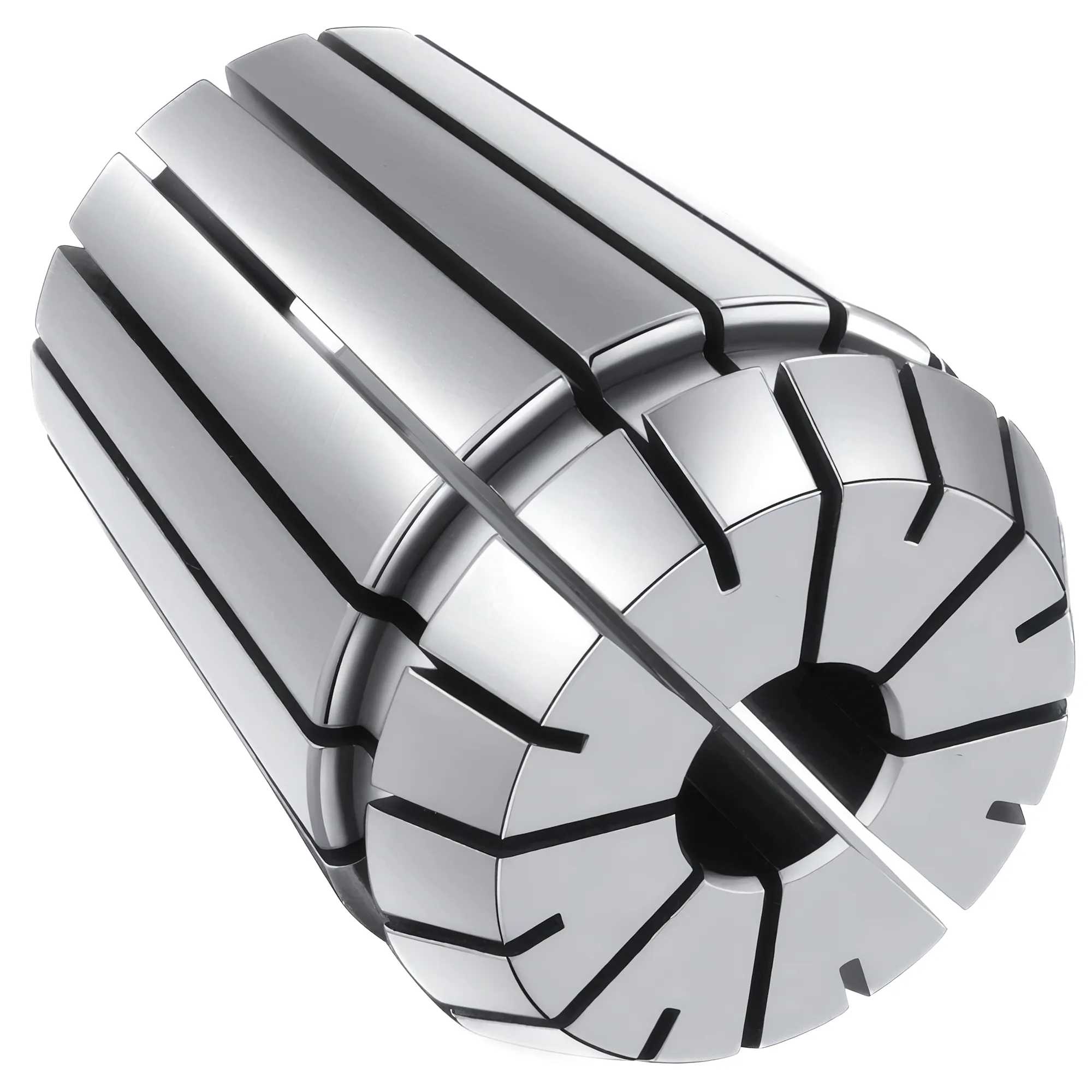
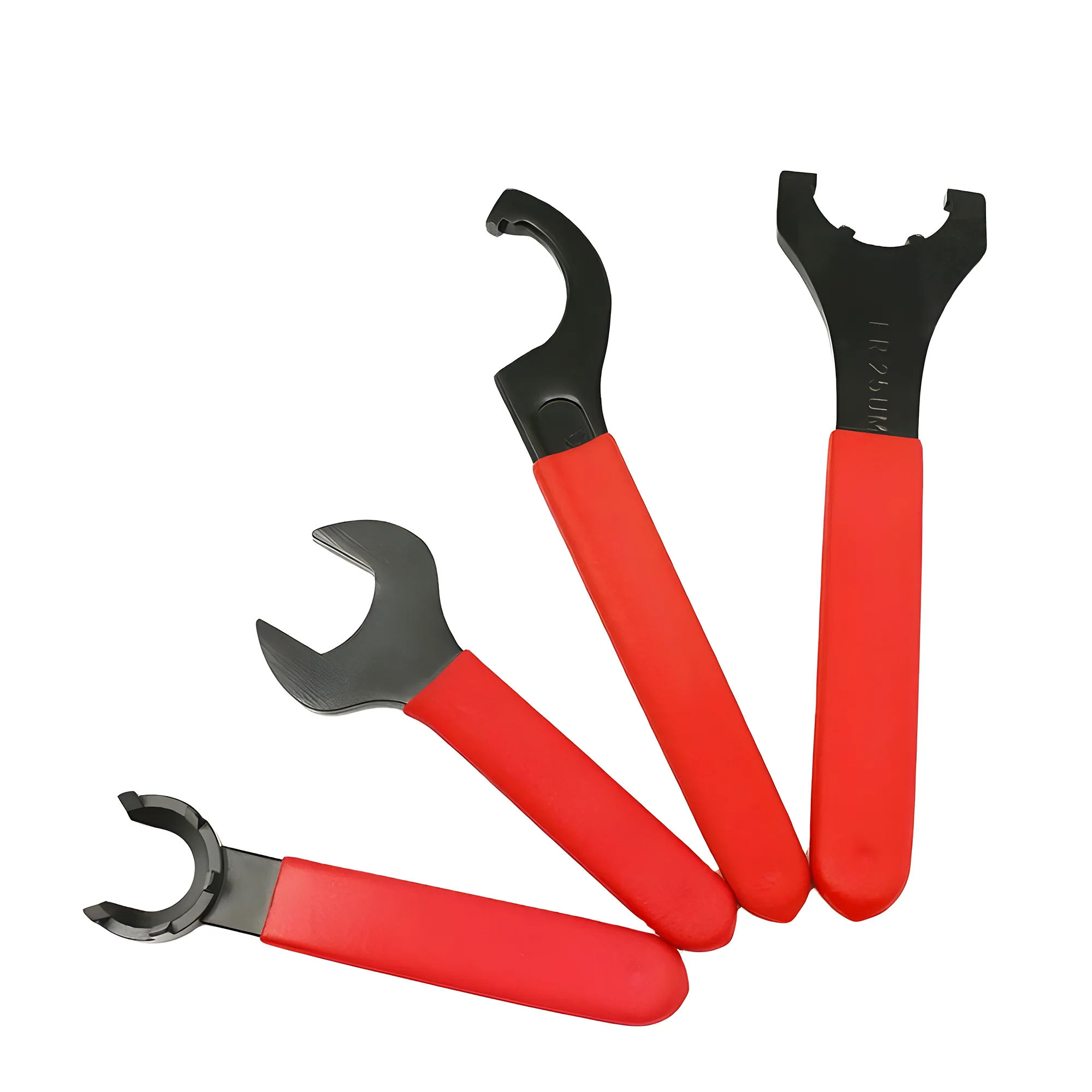
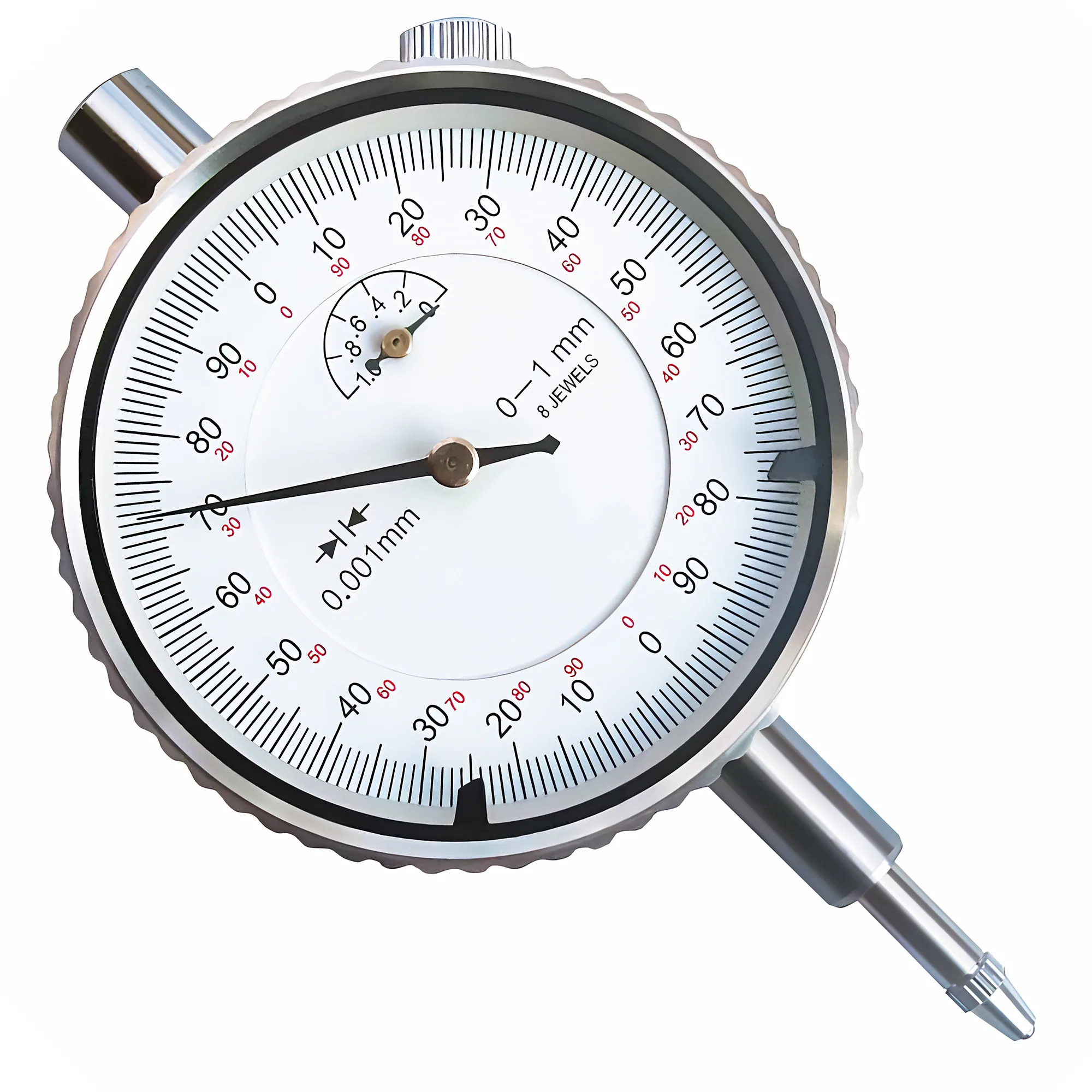
Router bits slip or drop out of ER collets mainly because the nut is under-torqued (REGO-FIX recommends 24 Nm for ER11 and 80 Nm for ER20 at full bore size), the collet clamps near the bottom of its 0.5–1.0 mm collapse range per ISO 15488, or resin and dust coat the shank and taper. Fix those first; replace the spindle only when an indexed runout test shows the error stays with the spindle taper. This guide covers ER11, ER16, ER20 and ER32 on water-cooled spindles, gantry routers and trim routers with ER11 adapters.
Router spindles use the same ISO 15488 collets as machining-center holders, but the operating conditions differ: the nut is tightened on the spindle itself, the bits are often imperial shanks in metric collet sets, and the chips are fine dust and resin rather than metal. For general collet sizing, see the ER collet size chart and selection guide; for the full torque chart and the standard tightening sequence, see the ER collet torque and runout guide.
Quick Router Collet Reference
| Problem / Goal | Primary Action | Expected Impact |
|---|---|---|
| Upcut bit creeps down and cuts deeper during the job | Torque the nut to the rated value for the collet bore (e.g. 56 Nm for a 1/4 in shank in an ER16 standard nut, per REGO-FIX) | Clamping force rises roughly in proportion to torque, so a nut at half its rated torque gives roughly half the rated grip |
| 1/8 in (3.175 mm) bit slips or wobbles in an ER16 | Replace the 4 mm collet (ISO 15488 range 4.0–3.0 mm) with a dedicated 1/8 in collet, torqued to 20 Nm | Moves the grip from 0.825 mm below nominal to nominal size, restoring full-length bore contact |
| Fuzzy edges or one flute doing all the cutting | Measure runout on a ground pin; replace collet if it alone exceeds 0.015 mm (ISO 15488 Class 2, bores ≤10 mm) | At 0.05 mm chip load, cutting 0.025 mm of runout returns the short flute from 0.025 mm to the full 0.05 mm chip |
| Collet stays stuck in the spindle when the nut comes off | Snap the collet into the nut's eccentric ring before threading the nut on | Lets the nut pull the collet out of the taper on loosening; no prying on the taper |
| New collet does not fix slip or runout | Run the 90° index test to separate collet error from spindle taper error | Avoids spending on collets and nuts when the spindle shaft or bearings are the root cause |
Which ER Size Your Router Spindle Uses and What It Can Hold
On a CNC router, the ER collet size sets the largest shank the spindle can hold: per ISO 15488, ER11 tops out at 7 mm, ER16 at 10 mm, ER20 at 13 mm and ER32 at 20 mm. That is why a 1/2 in (12.7 mm) shank surfacing bit cannot go into an ER16 spindle at all and needs ER20 or larger.
Typical router configurations, which vary by maker:
- Small brushed-motor routers (desktop "3018" class): ER11, often as a separate extension rod clamped onto a 5 mm motor shaft with grub screws rather than an integral spindle nose.
- Water-cooled and air-cooled spindles of roughly 0.8–1.5 kW: commonly ER11 or ER16.
- Spindles around 2.2 kW: commonly ER20, the smallest size that takes 1/2 in shanks.
- Industrial routers with tool changers: ER25 or ER32 collet chucks in 30-taper or HSK tool holders, where 1/2 in and 3/4 in shank bits are common.
- Trim (palm) routers: an OEM 1/4 in, 6 mm or 8 mm collet; 1/4 in and 6 mm models are often fitted with an aftermarket ER11 nose or adapter (ER11 tops out at 7 mm, so not 8 mm shanks).
ISO 15488 defines the collet, the holder bore and the nut thread for sizes ER11 through ER40, which is why an ER20 collet from one maker fits an ER20 router spindle from another. ISO 15488 also sets the Form B collapse range: 0.5 mm for ER11 and 1.0 mm for ER16 to ER40. A collet marked 7 mm in ER11 therefore clamps 7.0 down to 6.5 mm, while a 7 mm ER16 or ER20 collet clamps 7.0 down to 6.0 mm. The narrow ER11 window is the reason ER11 users meet imperial-versus-metric fit problems more often than ER20 users.
Why Router Bits Slip or Drop Out of ER Collets
On router spindles, bit slip is usually a clamping-force problem first and a spindle problem last. Work down this list in order — each step costs less than the next:
- Torque deficit. The nut is tightened on the spindle with two flat spanners. Reaching 80 Nm on an ER20 takes far more effort than most operators apply by feel (Section 04 shows the arithmetic), and clamping force rises roughly in proportion to nut torque.
- Wrong collet for the shank. A shank near the bottom of the collapse range is gripped mainly at the front and rear of the bore, not along its full length (Section 03).
- Short insertion. Short-shank router and engraving bits are often clamped across only part of the bore. A commonly cited shop guideline is to fill at least two-thirds of the collet bore length; less than that lets the collet bell-mouth and lose grip.
- Resin, oil or dust film. Wood pitch and MDF dust on the shank or in the collet slots reduce friction between shank and bore, so the same torque transmits less holding force.
- Collet not seated in the nut. A collet pushed into the spindle taper first and then covered by the nut can sit cocked, so the nut loads one side of the collet more than the other.
- Worn collet. Class 2 collets typically last 500–1,000 clamping cycles. A router that changes bits ten times per shift reaches that range in roughly 50 to 100 shifts.
- Damaged spindle taper. A collet that has slipped and spun leaves bright rings or fretting in the spindle taper; from then on even a new collet can slip, and the taper typically needs regrinding or the shaft replacing.
Upcut spiral bits pull themselves out of the collet, because their helix lifts the chip and pushes the tool downward along its axis — so a bit that creeps deeper during a job is a grip-deficit symptom, not a Z-axis fault. Downcut bits push the tool into the collet instead and tend to hide a weak grip until a heavy plunge.
Spun Collet Damage
Once a bit or collet spins under load, check the spindle taper for bright scoring before fitting a new collet. A scored taper reduces contact area, so a new collet can slip again within a few jobs and score the taper further.
The 1/8 in Bit Problem: Collapse Range and Imperial Shanks in Metric Collets
A 1/8 in (3.175 mm) bit in a metric ER16 set with 1 mm steps lands in the 4 mm collet, which covers 4.0 down to 3.0 mm under the standard ISO 15488 range — so the collet is closed 0.825 mm, about 83% of its 1.0 mm range, and typically grips the shank mostly at the bore ends. The 3 mm collet will not accept the shank at all (3.0 to 2.0 mm). Sets in 0.5 mm steps add a 3.5 mm collet, which clamps the shank 0.325 mm below nominal. ISO 15488 also allows a 0.5 mm range for ER16 to ER40 by agreement, and some makers list each half-size collet that way; a 4 mm collet listed as 4.0–3.5 mm does not reach a 1/8 in shank at all, so check the maker's stated clamping range. A dedicated 1/8 in collet clamps the same shank at its nominal size, with the bore in contact along its full length.
The same arithmetic catches other common router shanks. Choose the collet whose nominal is at or just above the shank, as close to it as the set allows:
| Router shank | ER11 (0.5 mm collapse) | ER16 / ER20 (1.0 mm collapse) | ER32 (1.0 mm collapse) |
|---|---|---|---|
| 1/8 in (3.175 mm) | 1/8 in collet; or 3.5 mm (0.325 mm below nominal) | 1/8 in collet; or 3.5 mm (0.325 mm below); 4 mm is 0.825 mm below nominal | 1/8 in collet; or 3.5 mm (0.325 mm below); 4 mm is 0.825 mm below nominal |
| 6 mm | 6 mm collet; 1/4 in collet is 0.35 mm below nominal | 6 mm collet | 6 mm collet |
| 1/4 in (6.35 mm) | 1/4 in collet; or 6.5 mm (0.15 mm below); 7 mm does not reach (7.0–6.5) | 1/4 in collet; or 6.5 mm (0.15 mm below) | 1/4 in collet; or 6.5 mm (0.15 mm below) |
| 8 mm | Not possible (ER11 max 7 mm) | 8 mm collet | 8 mm collet |
| 1/2 in (12.7 mm) | Not possible | ER20 only: 1/2 in or 13 mm collet (0.3 mm below); ER16 max 10 mm | 1/2 in or 13 mm collet (0.3 mm below) |
A 1/4 in bit does not fit a 6 mm collet, and a 6 mm bit in a 1/4 in ER11 collet uses 0.35 mm of a 0.5 mm range — workable, but a 6 mm collet clamps it at nominal. Measure the shank with a micrometer before choosing: bits sold as 1/4 in are sometimes slightly under 6.35 mm, which moves them further down the collet's range.
The second half of the 1/8 in problem is torque. Per REGO-FIX, an ER16 standard nut is rated at only 20 Nm for collet bores of 1.5–3.5 mm, against 56 Nm for 5–10 mm bores, so tightening a 1/8 in collet to the full-size ER16 value risks crushing the small collet. The same table gives 32 Nm for ER20 bores of 1.5–6.5 mm — which includes both 1/8 in and 1/4 in shanks — and 80 Nm only from 7 mm upward.
Small-Shank Rule
Buy dedicated imperial collets for the shank sizes you run every day (usually 1/8 in and 1/4 in), and keep the metric set for occasional sizes. On ER11 spindles this matters most, because the 0.5 mm collapse range leaves little room for a near-miss collet.
Nut Torque on a Router Spindle: Values, Wrench Force and Mini Nuts
REGO-FIX, which originated the ER system, publishes a tightening-torque table broken down by nut type and collet bore that several other makers reproduce, and it is the practical reference when the nut brand on a router spindle is unknown. ISO 15488 specifies collet, holder and nut dimensions but no tightening torque. Values for a standard nut, by collet bore:
Mini nuts use a finer, non-ISO thread and take much lower torque, so identify the nut before applying a standard-nut figure. The thread tells them apart: ER11 standard M14×0.75 vs mini M13×0.75, ER16 M22×1.5 vs M19×1, and ER20 M25×1.5 vs M24×1.
How hard you have to pull follows from the lever arm:
F = T / L
where F is the hand force at the end of the spanner (N), T the nut torque (Nm) and L the distance from the nut centre to your hand (m). Handle length dominates: 80 Nm on an ER20 needs about 533 N (roughly 54 kg of pull) at the end of a 150 mm spanner, but about 320 N with a 250 mm handle. For ER11, 24 Nm at 100 mm is about 240 N; for ER16 at 56 Nm and 150 mm, about 373 N. These are loads few operators apply by feel, which is why under-torqued nuts are a frequent cause of creeping bits.
On a router spindle, react the nut torque through a second spanner on the shaft flats — or the spindle lock — and not through the spindle bearings or the gantry. Many router operators use an ER spanner that fits a torque wrench (or a torque-wrench adapter) for the nut and hold the shaft flats with the spindle spanner; tightening against a free-spinning shaft or a stalled motor does not give a repeatable torque.
Snapping, Loading and Cleaning in a Wood-Dust Shop
Most ER nuts carry an eccentric extraction ring, and the collet has to be clicked into that ring before the nut goes on the spindle — otherwise the nut cannot pull the collet out of the taper when loosened. On a vertical router spindle the sequence below also stops the collet and bit dropping onto the spoilboard during a change:
- Tilt the collet into the nut so its groove catches the eccentric ring, then press the opposite side until it clicks. Hold the nut face-down: a snapped collet stays in place and spins freely and centred.
- Thread the nut onto the spindle by two or three turns, then insert the bit to the planned depth, filling as much of the bore as the shank allows.
- Snug the nut by hand, then torque in one smooth pull while holding the shaft.
- To change bits, loosen the nut past the first point of resistance; the second resistance is the eccentric ring pulling the collet out of the taper.
Wood resin is the router-specific contaminant: pitch on the shank and in the collet slots lowers the friction that holds the bit, so clean the collet bore, slots and the bit shank with a resin solvent and a brass brush when deposits are visible. Wipe the spindle taper with a clean lint-free cloth or a taper wiper at every collet change. Avoid blowing high-pressure air straight into the spindle nose, which can drive fine dust past the front bearing seal; brush and wipe instead. Keep the collet taper and the spindle taper clean and dry, and put only a light film of oil on the nut thread.
What Runout to Expect and How to Tell Collet From Spindle
Router runout matters because each flute's chip thickness shifts by up to the runout amount: for a two-flute bit in the worst case, the long flute cuts approximately the chip load plus the runout and the short flute the chip load minus the runout.
h_long ≈ f_z + TIR and h_short ≈ f_z − TIR
where f_z is the programmed chip load per flute and TIR the flute-to-flute runout. This is the worst case, when the runout high spot lines up with a flute; at other orientations the split is smaller, but the long flute still carries more than its share. Runout dominates whenever it approaches the chip load: at f_z = 0.05 mm, 0.025 mm of runout gives 0.075 mm on one flute and 0.025 mm on the other, and at 0.05 mm of runout the second flute stops cutting entirely, leaving one flute at twice the intended chip load. That shows up as fuzzy edges in plywood, melted chips in plastics and a bit that dulls on one flute. For chip-load fundamentals, see carbide end mill feeds and speeds.
BIG DAISHOWA's "one-tenth rule" estimates that each 0.0001 in (2.5 µm) of runout costs roughly 10% of tool life, so 0.01 mm of runout costs roughly 40% under typical finishing conditions. The rule comes from metal-cutting end mills, but the chip-thickness mechanism above applies to router bits in wood and plastics as well.
The runout budget at the bit is the sum of the spindle taper, the collet and the bit shank. An ISO 15488 Class 2 collet is allowed up to 0.015 mm TIR for bores up to 10 mm at the standard test projection (16 mm for 3–6 mm bores, 25 mm for 6–10 mm), while manufacturer precision grades reach 0.005 mm or better. As a working rule, a router system reading at or below the collet's Class 2 allowance is healthy; readings above roughly twice that allowance point to a specific faulty component worth finding.
The 90° index test separates collet error from spindle error in about ten minutes:
- Clamp a ground pin or a known-straight carbide blank instead of a router bit, and indicate it near the nut and again about 25 mm out, using a 0.001 mm or 0.002 mm resolution indicator (see the micrometer and dial indicator selection guide).
- Mark the high spot relative to the spindle nose. Unclamp, rotate the collet 90° relative to the spindle, re-clamp at the same torque and measure again.
- If the high spot moves with the collet, the collet or nut is the cause; if it stays at the same angular position on the spindle, the spindle taper or shaft is the cause.
- Indicate the empty spindle taper bore directly. A taper reading near or above half the collet's allowance (about 0.008 mm) means the spindle consumes the budget before any collet is fitted.
Trim routers with ER11 adapters stack two clamping interfaces in series, so their runout can reach the sum of both interfaces when the two high spots line up. An adapter whose shank clamps in the router's own 1/4 in or 6 mm collet places the router collet's error and the adapter's error end to end, plus extra overhang; a replacement nose that threads directly onto the router shaft removes one interface. On desktop routers whose ER11 nose is a grub-screwed extension rod on a 5 mm motor shaft, that joint usually dominates the reading, and no collet upgrade can correct it.
Summary
Torque, collet fit and clean tapers solve most router bit slip before any spindle work.
Use the REGO-FIX torque for the collet bore, not the size maximum (20 Nm for a 1/8 in ER16 collet, 56 Nm at 1/4 in and up). Use dedicated imperial collets for 1/8 in and 1/4 in bits instead of clamping near the bottom of a metric collet's 0.5–1.0 mm collapse range per ISO 15488. Snap the collet into the nut first, clean resin from shank and slots, and judge runout against the 0.015 mm Class 2 allowance. Only when the 90° index test shows the error staying with the spindle is the spindle the problem.
Why does my router bit keep slipping in the ER collet?
A frequent cause is an under-torqued nut: REGO-FIX recommends 24 Nm for an ER11 standard nut (3.0–7.0 mm bores) and 80 Nm for an ER20 standard nut with a 1/2 in collet (7.0–13.0 mm bores), far more than a casual hand-snug. Next check collet fit (shank close to the collet's nominal size within its 0.5–1.0 mm range per ISO 15488), insertion depth and resin on the shank.
Can I use a 4 mm ER16 collet for a 1/8 in router bit?
Yes, if the collet has the standard ISO 15488 range of 4.0 to 3.0 mm; a 4 mm collet listed as 4.0–3.5 mm does not reach. Even then the 3.175 mm shank sits 0.825 mm below nominal and is gripped mainly at the bore ends. A dedicated 1/8 in collet, or a 3.5 mm one, fits better; tighten to about 20 Nm, the REGO-FIX value for ER16 bores of 1.5–3.5 mm.
How tight should an ER11 collet nut be on a router spindle?
Per REGO-FIX, an ER11 standard nut takes 24 Nm (about 18 ft-lb) with 3.0–7.0 mm collets, which covers 1/8 in and 1/4 in bits, and 16 Nm for an ER11 mini nut with an M13×0.75 thread. Hold the spindle shaft flats with a second spanner so the torque does not load the bearings.
Is it the collet or the spindle causing runout on my router?
Run a 90° index test: indicate a ground pin about 25 mm out, rotate the collet 90° relative to the spindle and measure again. If the high spot moves with the collet, replace the collet or nut; if it stays fixed on the spindle, the taper or shaft is the cause. Class 2 collets allow 0.015 mm TIR for bores up to 10 mm.
How often should router collets be replaced?
Standard Class 2 ER collets typically last 500–1,000 clamping cycles, so a router changing bits ten times per shift reaches that range in roughly 50 to 100 shifts. Replace earlier if the collet shows bright wear at the slot tips, bits creep at correct torque, or runout above 0.015 mm follows the collet.