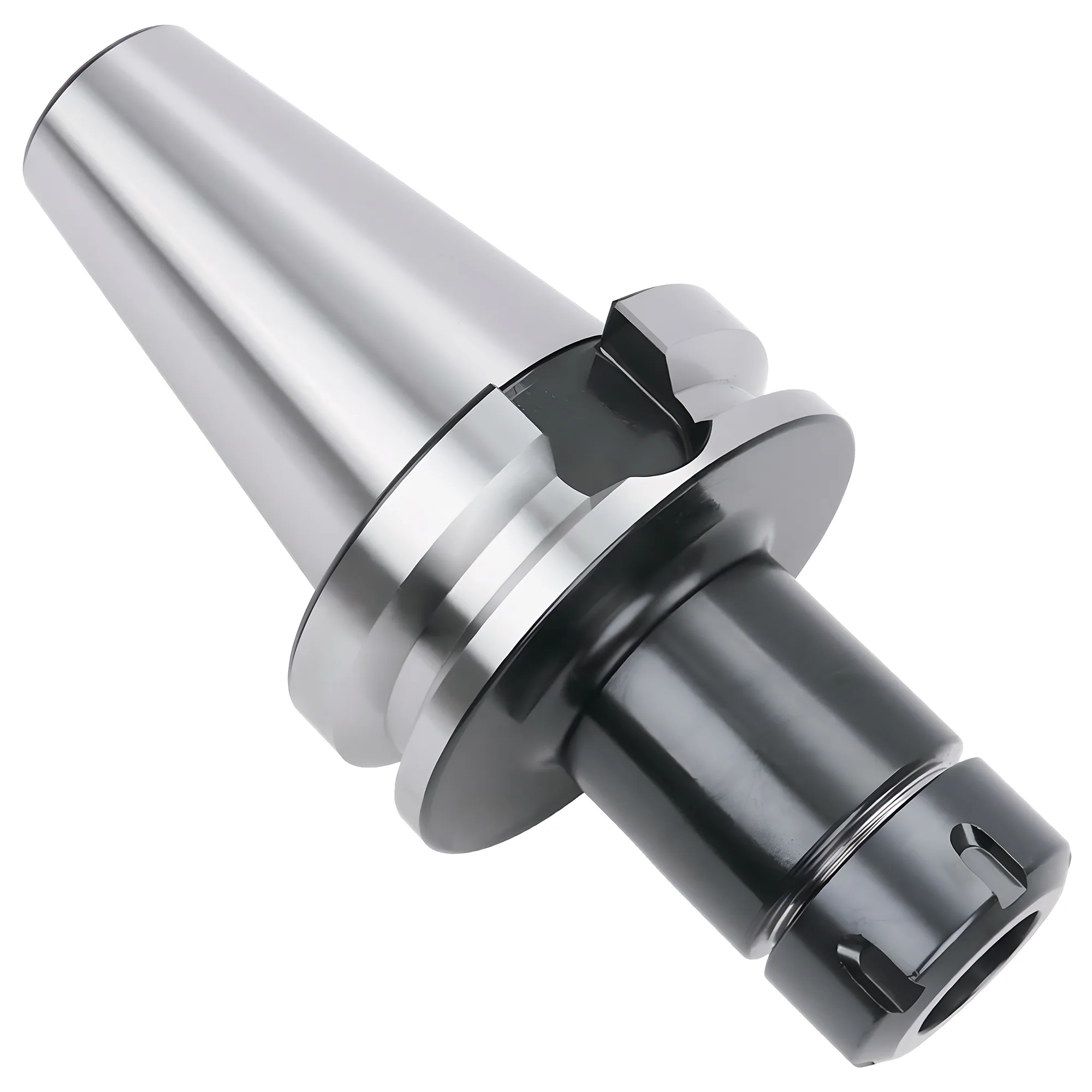
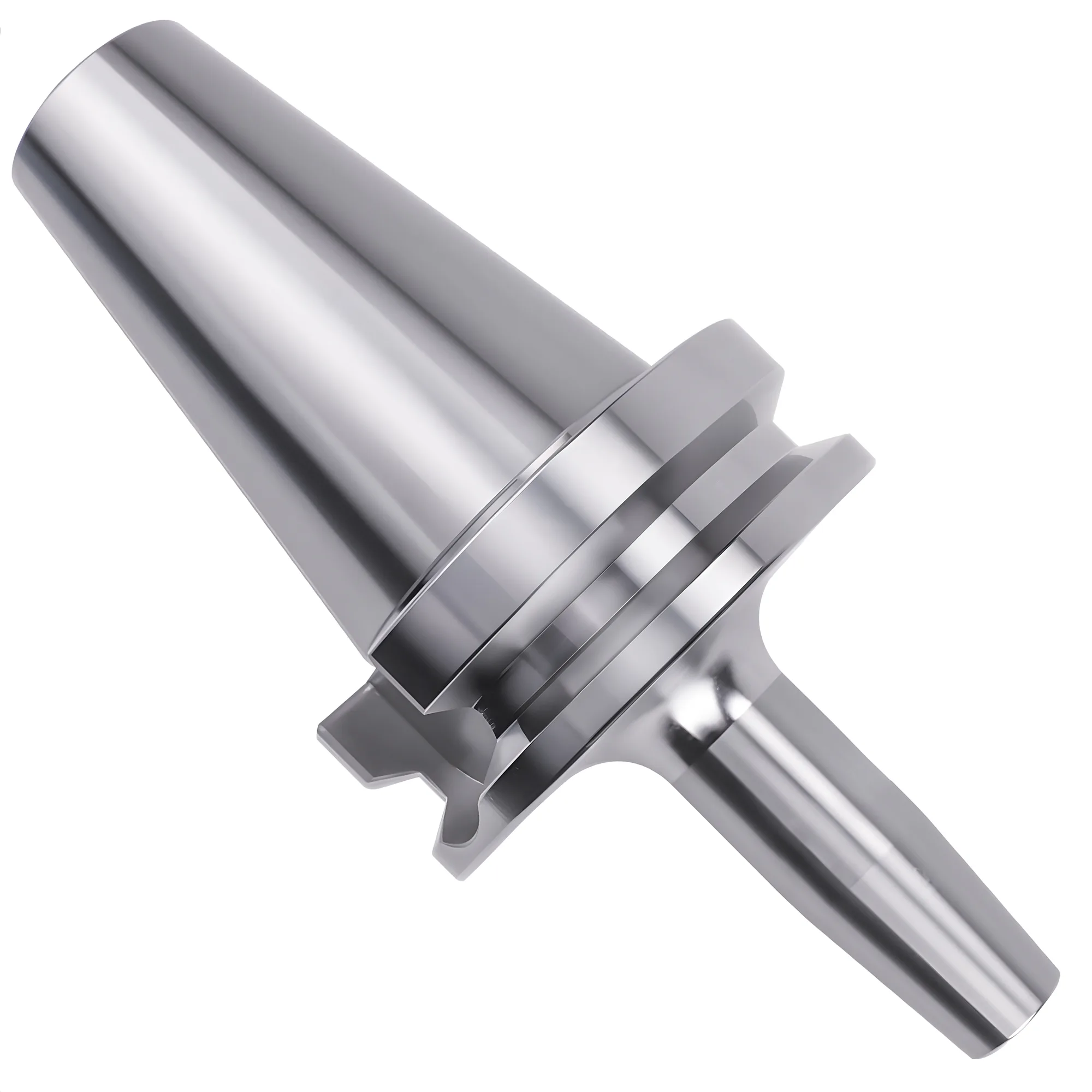
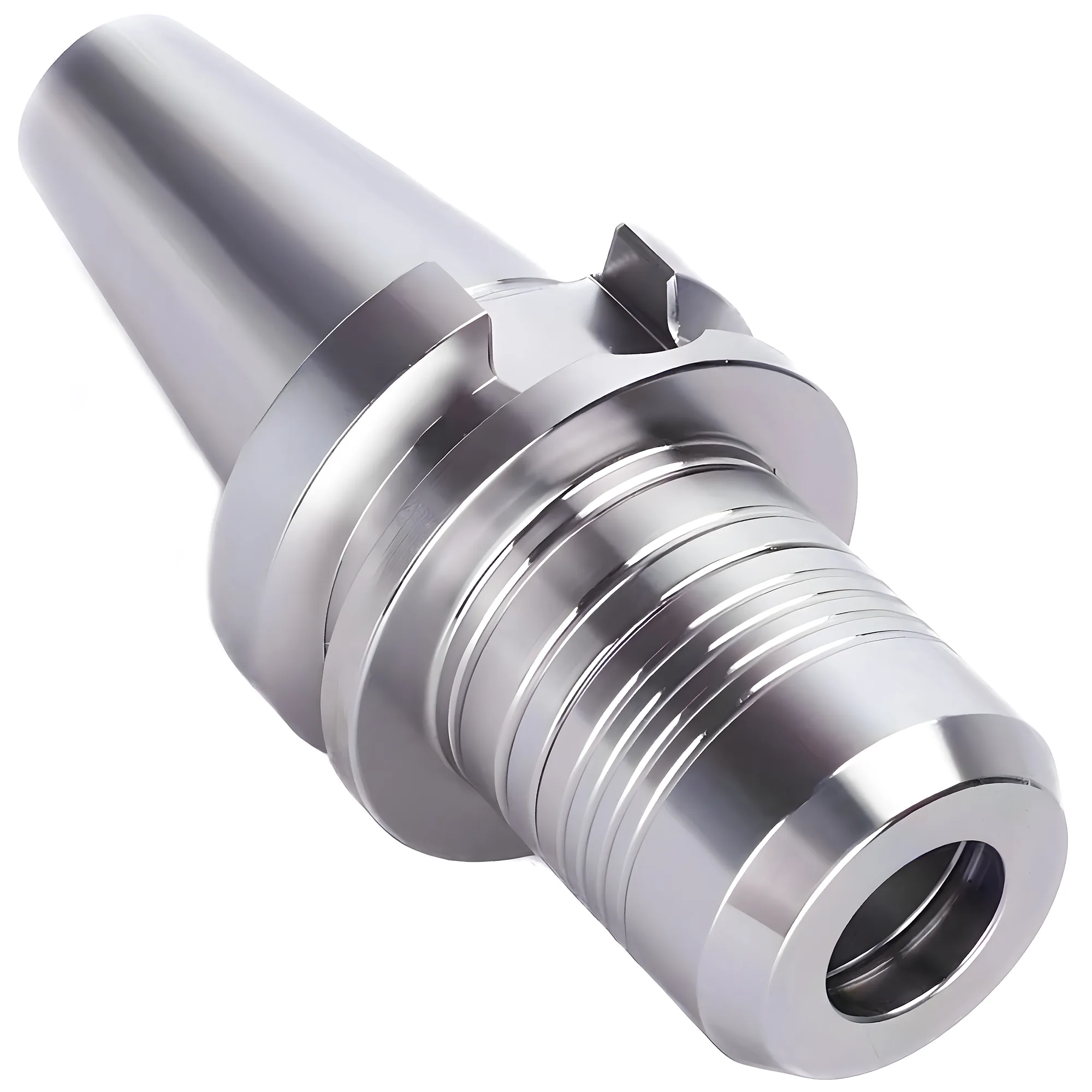
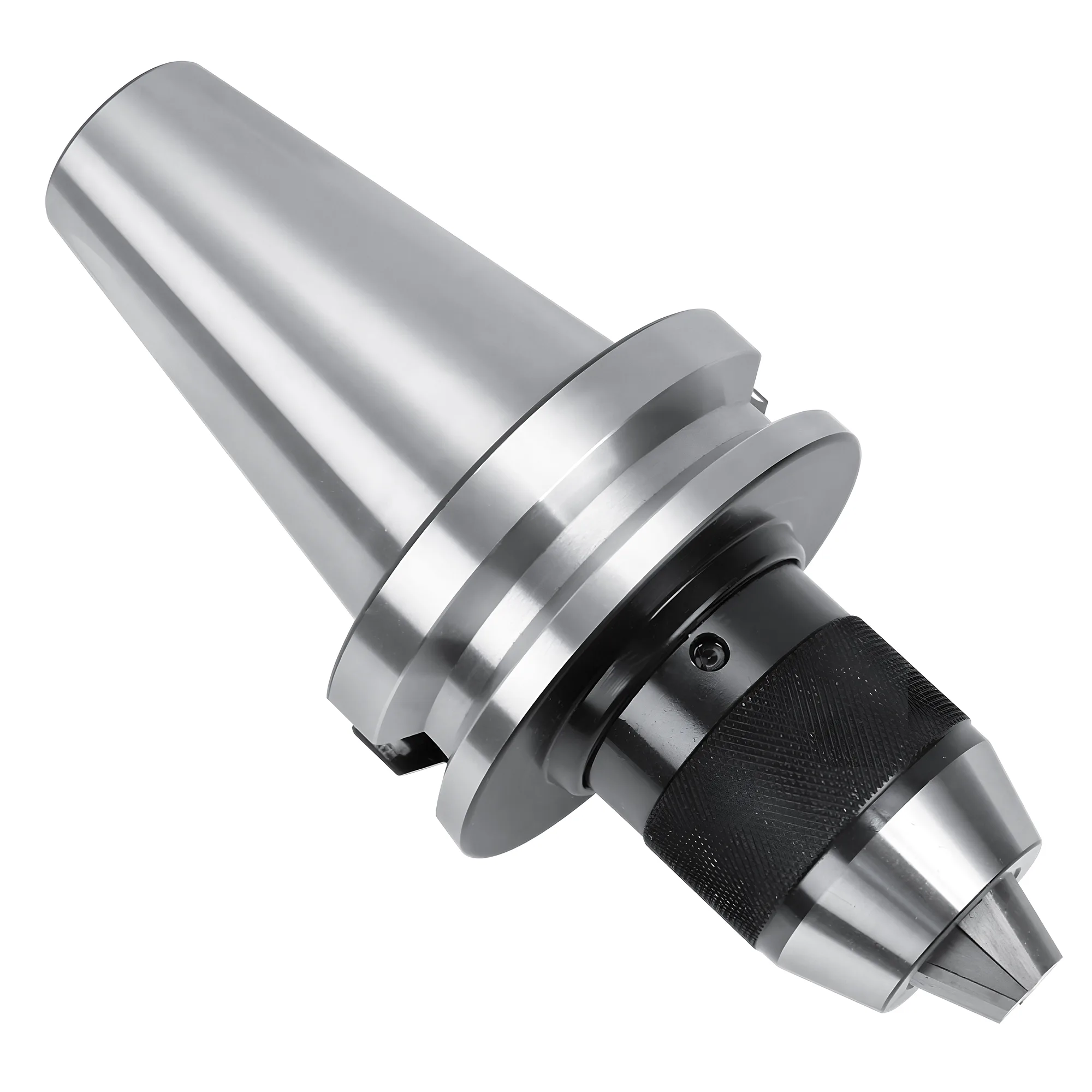
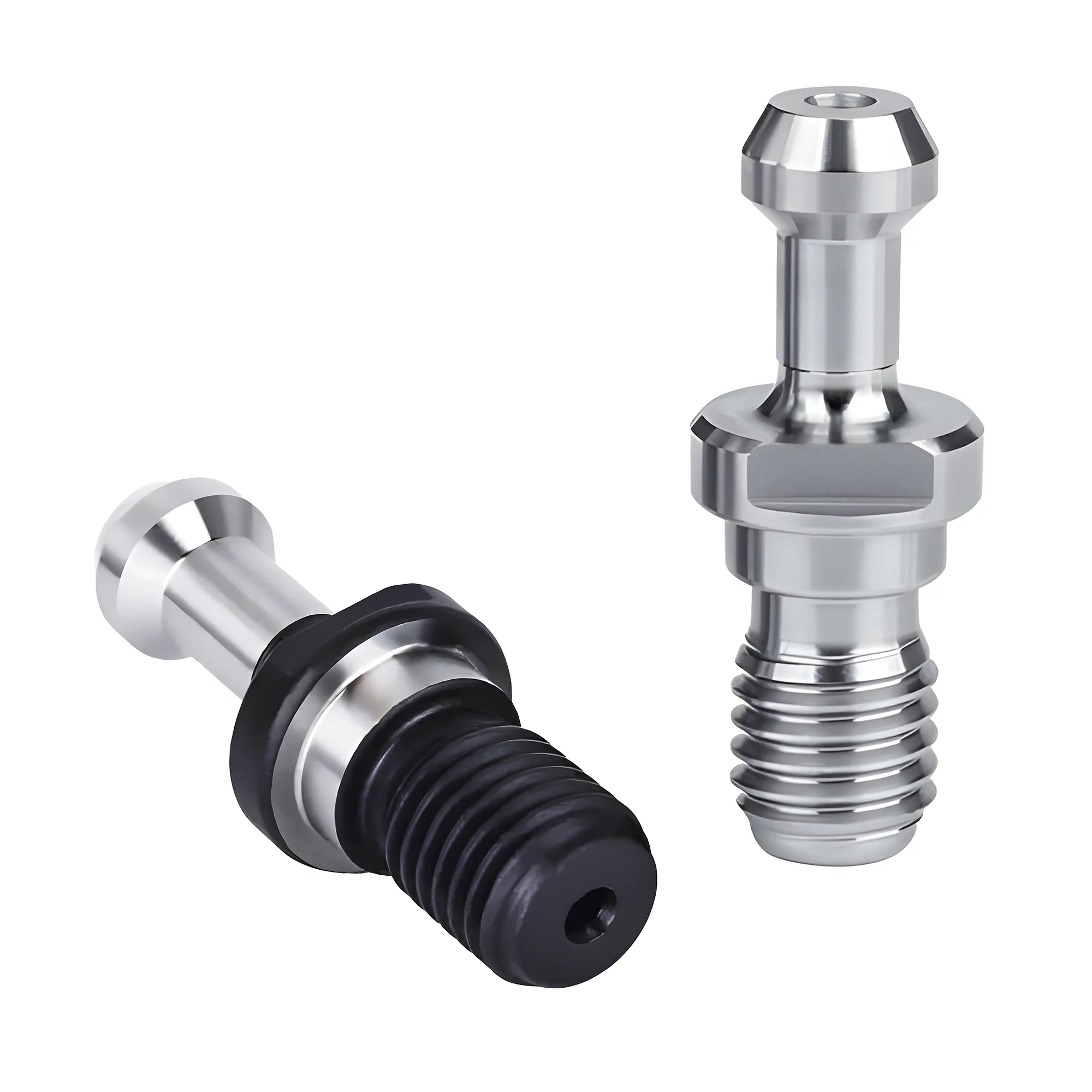
On a BT30 spindle, buy short holders sized to the taper: ER11–ER32 collet chucks (20 mm maximum shank), shrink-fit holders for typically 3–20 mm carbide, side-lock holders to about 25 mm, and integral drill chucks to 16 mm, mostly at 60–100 mm gauge length. Every holder needs the M12 MAS 403 retention knob at the exact head angle — 45°, 60° or 90° — that the machine builder specifies.
BT30 is the taper of compact vertical machining centers and drill-tap centers — machines built around fast tool changes and high spindle speeds rather than heavy metal removal. That changes holder selection in three ways compared with a 40-taper machine: the largest useful holder is smaller, every millimeter of overhang costs proportionally more rigidity, and the tool magazine imposes weight and length limits that a 40-taper shop rarely hits. This guide covers only those BT30-specific choices. For how BT, CAT and HSK compare as taper families, see the BT vs CAT vs HSK comparison.
What Makes a BT30 Spindle Different?
A BT30 taper has a 31.75 mm gauge diameter and a 46 mm flange, roughly 70% of the BT40's 44.45 mm and 63 mm, and it is clamped by an M12 pull stud instead of M16. Those dimensions come from manufacturer reference drawings to JIS B6339, the Japanese standard that defines the BT 7:24 taper and flange geometry. JIS B6339 matters for buying because it is the reason a compliant BT30 holder seats in any BT30 spindle taper regardless of brand — the retention knob is a separate match, covered in Section 04.
The smaller taper is held by a smaller drawbar. Drawbar retention force on a 30-taper spindle is typically around 3–8 kN, against 6–15 kN on a 40-taper, so the holder-spindle joint is the first thing to give under heavy radial load. The exact figure is set by the spindle builder and is worth measuring with a drawbar gauge on older machines.
What the machines give back is speed and change time. A Brother Speedio S300X2, for example, lists a 10,000 min⁻¹ standard spindle with 16,000 and 27,000 min⁻¹ options and a 0.7-second tool-to-tool change; a FANUC ROBODRILL α-D21MiB5 Plus lists 24,000 min⁻¹ and 21 tool pockets. The magazine limits are the BT30-specific constraint most buyers overlook.
Dual contact is the one BT30 upgrade that changes the joint itself. BIG DAISHOWA's BIG-PLUS system seats the holder on the spindle face and the taper at the same time; on BT30 it raises the effective contact diameter from 1.250 in (31.75 mm) to 1.811 in (46 mm), about 45% larger. Some drill-tap centers ship with dual-contact spindles — the ROBODRILL α-D21MiB5 Plus is specified with a BBT30 spindle — while many compact VMCs use a standard BT30 spindle. According to BIG DAISHOWA, a standard BT30 holder still runs in a dual-contact spindle and a dual-contact holder still runs in a standard spindle, but in both cases only the taper makes contact. A standard single-contact BT30 holder therefore fits a BBT30 spindle but gains none of the face-contact stiffness. BIG DAISHOWA is the usual reference for this interchangeability question because it developed and licenses the BIG-PLUS system.
How Big Can Each Holder Type Go on BT30?
The practical size cap on BT30 is about 20 mm for collet and shrink-fit holders and about 25 mm for side-lock holders; above that, spindle torque and taper stiffness — not the holder bore — usually limit the cut. This matches the 30-taper limits used for indexable cutters: 20 mm (3/4 in) in ER32 and about 25 mm (1 in) in side-lock holders.
| Holder type | Typical BT30 clamping range | Typical BT30 gauge lengths | Runout (typical spec) | Best fit on BT30 |
|---|---|---|---|---|
| ER collet chuck (ER11–ER32) | 1–20 mm (ER32 2–20 mm) | 60, 100, 150 mm | ≤0.015–0.020 mm Class 2 collet; ≤0.005 mm UP/AA | Drills, taps, mixed end mills |
| Precision ER (PGER16–PGER32) | 3–20 mm | 60, 90, 120 mm | ~0.003 mm (manufacturer spec) | Small-diameter finishing |
| Shrink-fit | 3–20 mm (h6 carbide) | 80–90, 120 mm | ≤0.003 mm at 3xD | High-RPM finishing, deep pockets |
| Side-lock (Weldon) | 6–25 mm (one size per holder) | 75–90 mm | 0.010–0.030 mm | Roughing, indexable bodies |
| Integral drill chuck (APU-type) | 1–8, 1–13, 3–16 mm | 80–115 mm | 0.05–0.08 mm | HSS and jobber drills |
ER20 and ER25 are the sweet spot on a BT30 drill-tap center: ER20 covers 1–13 mm and ER25 covers 1–16 mm (ISO 15488 sizes), which spans almost every drill and tap shank such a machine runs. ISO 15488 is the standard that defines ER collet geometry and its Class 1 and Class 2 runout limits, so any compliant ER collet fits any compliant ER chuck of the same size. ER32 earns its place for 16–20 mm end mills and indexable bodies; ER11 and ER16 suit the 1–6 mm micro tools that 27,000 min⁻¹ spindles exist to run.
ER40 bodies are catalogued for BT30, but the ER40 nut is about 63 mm across — wider than the 46 mm flange — and the 21–26 mm shanks it holds typically need more torque than a 30-taper spindle delivers. On most BT30 machines, a 21–26 mm tool is the signal to move the job to a 40-taper machine rather than buy a bigger holder.
Side-lock holders take shanks to DIN 1835 form B, the standard that defines the Weldon clamping flat, and that flat is why they are preferred for roughing: the set screw bears on a ground flat and stops pull-out positively instead of relying on friction. Drill chucks are the opposite trade — torque-tolerant but loose: an integral drill chuck holder typically runs 0.05–0.08 mm TIR, roughly 3–5x the runout of a Class 2 ER collet, so it belongs on drills that do not hold position tolerance. The ER collet vs drill chuck comparison covers that drilling decision in detail.
Why Do Short Gauge Lengths Matter More on BT30?
Holder overhang behaves like a cantilever beam. For a cantilever with a load at its tip:
δ = F · L³ / (3 · E · I)
Overhang length L dominates because it is cubed: stretching a holder-and-tool assembly from 60 mm to 100 mm raises tip deflection about 4.6x, and to 150 mm about 15.6x, at the same cutting force. The real ratio is smaller because the taper joint and the tool also flex, but the direction holds, and on BT30 the joint has less margin to absorb it because the drawbar force is lower.
| Gauge length (L1) | Relative deflection (L³, 60 mm = 1.0) | Typical BT30 use |
|---|---|---|
| 60 mm | 1.0 | Default for drills, taps, end mills |
| 80–90 mm | 2.4–3.4 | Shrink-fit and side-lock standard bodies |
| 100 mm | 4.6 | Reaching over vises and fixture clamps |
| 120 mm | 8.0 | Deep pockets with slim shrink-fit noses |
| 150 mm | 15.6 | Clearance-only; light finishing |
On a BT30 spindle, 60 mm should be the default gauge length, and every longer holder should be justified by a specific clearance problem on a specific part. Long holders also eat magazine limits: a Brother S300X2 with the 21-tool magazine lists a 160 mm maximum tool length, so a 150 mm holder leaves almost no room for the tool itself.
Buy Reach in the Tool, Not the Holder
When a feature needs reach, a slim shrink-fit nose (a 4.5° taper is common) or a reduced-neck end mill usually costs less rigidity than stepping up to a 120–150 mm collet chuck, because the larger ER nut diameter forces extra length just to clear the fixture.
Which Retention Knob Angle Does a BT30 Machine Need?
Every BT30 holder takes an M12 retention knob to MAS 403, but the head angle — 45°, 60° or 90° — is set by the machine builder's drawbar, and a knob with the wrong angle can thread in cleanly yet grip incorrectly. MAS 403 is the Japanese standard for BT retention knobs, and it is used for BT30 because it fixes the M12 thread and knob dimensions that the drawbar fingers grip.
The angle varies by builder and sometimes by model. Brother lists MAS-P30T-2 for the S300X2 (the 60° type, per aftermarket cross-references), and aftermarket suppliers sell FANUC ROBODRILL knobs in both 45° and 60° versions for different models. The rule that holds for every builder is the one in the pull stud compatibility guide: take the part number from the machine manual, not from a "BT30" label.
Coolant-through knobs matter more on drill-tap centers than on most machines, because through-spindle coolant is often specified for small-hole drilling on these spindles. A solid knob blocks the coolant path completely, so a mixed crib of solid and /T knobs needs clear labelling. A 3 mm bore is also easy to block with chips or thread locker when the knob is installed, which is worth checking before the holder goes in the magazine.
BT30 ER vs Shrink Fit: Where Does Each Win?
The core BT30 decision is ER collet chucks versus shrink-fit holders, because both typically cover the 3–20 mm range that carries most of the work. ER wins on flexibility and cost per diameter; shrink fit wins on runout, balance and nose clearance at high spindle speed.
Runout is where the money is. By BIG DAISHOWA's "one-tenth rule," each 2.5 µm of runout costs roughly 10% of carbide end mill life in finishing. Moving a small carbide finisher from a Class 2 ER collet (0.015 mm) to a shrink-fit holder (≤0.003 mm) closes a 12 µm runout gap worth roughly 40–50% of tool life under the one-tenth rule (12 ÷ 2.5 × 10% ≈ 48%). The effect is usually most visible on small-diameter tools, where a few microns of runout are a large fraction of the chip load per tooth. That gain is the reason shrink fit exists on 16,000–27,000 min⁻¹ BT30 spindles.
Balance is the second lever. ISO 1940-1 defines balance quality grades such as G2.5, and it applies to tool holders because the centrifugal force from a given residual unbalance grows with the square of speed. Shrink-fit holders are commonly balanced to G2.5 at 25,000 min⁻¹ by their makers, while slotted ER nuts and side-lock holders with a single set screw are harder to keep in balance at the top of a BT30 speed range.
✦ BT30 ER Collet Chuck Wins When
- The magazine has only 14–21 pockets and one chuck must cover several diameters
- Drills, taps and end mills share the same holders
- Tools are changed by hand often and no heater is on site
- Spindle speed is at or below about 12,000–15,000 min⁻¹
- Tool length must be adjustable for mixed-length drills
✦ BT30 Shrink Fit Wins When
- Small carbide end mills finish at 16,000–27,000 min⁻¹
- Runout below 0.005 mm is needed for tool life or surface finish
- A slim nose must reach into pockets or past clamps
- The same diameters run repeatedly in production
- The shop already owns or can justify an induction heater
The hidden cost of shrink fit is the heater: induction units typically cost $5,000–15,000, and a dedicated machine that covers the full 3–32 mm shank range is typically rated 10–14 kW. On a single compact VMC that cost often exceeds the price of the holders it would heat. A precision ER chuck in the PGER class (about 0.003 mm TIR and roughly twice the clamping force of a standard ER chuck, per manufacturer specification) closes most of the runout gap without a heater; the PGER vs standard ER guide covers where that upgrade pays.
Common Mistake
Buying 150 mm ER32 chucks "for flexibility" on a BT30 drill-tap center. A long, heavy ER32 assembly adds deflection (about 15.6x the L³ deflection of a 60 mm holder), uses up the magazine's length budget, and its longer overhang magnifies any runout at the tool tip compared with a shorter ER20 or ER25 holding the same small tool.
Cost per Holder and What to Buy First
Price spread across BT30 holders is wide, so it is better to compare cost per working position than catalog price alone. The figures below are typical market listings, not quotes, and vary by brand, grade and region.
| Holder type | Import-grade listing | Premium-brand listing | Hidden extra cost |
|---|---|---|---|
| ER collet chuck | ~$15–60 | ~$100–400 | Collets $8–25 each; torque wrench |
| Precision ER (PGER class) | ~$50–100 | ~$150–400 | Matching precision collets |
| Shrink-fit | ~$70–150 | ~$200–500 | Induction heater $5,000–15,000 |
| Side-lock | ~$20–60 | ~$30–150 | One holder per diameter |
| Integral drill chuck | ~$35–60 | ~$100–250 | — |
| Retention knob (M12) | ~$3–15 | ~$15–40 | One per holder plus spares |
For most BT30 drill-tap and compact VMC shops, the first purchase is a set of short (60 mm) ER20 or ER25 collet chucks, because one chuck with a collet set covers the typical 1–16 mm range of drills, taps and end mills. The buying order that follows from that:
- ER20/ER25 at 60 mm gauge length, enough to fill the recurring drill and tap positions, with Class 1 or UP collets in the common sizes
- One or two ER32 chucks for typical 16–20 mm end mills, face-milling bodies and indexable cutters
- An integral drill chuck holder (APU13-type) for jobber drills where 0.05–0.08 mm runout is acceptable
- Side-lock holders only for the specific roughing tools that creep in a collet
- Shrink-fit or PGER-class chucks for the finishing positions where runout limits tool life — added once production volume proves the need
Retention knobs belong at step zero, not at the end: every holder in the crib needs one in the builder's angle, plus a few spares. For converting an operation mix into holder counts and budget tiers, a dedicated starter-package plan is the next step; this order only sets priority.
Quick BT30 Holder Selection Table
On a BT30 machine, the holder choice is usually decided by tool diameter first and spindle speed second: collets and drill chucks below 16 mm, ER32 or side-lock from 16 to 25 mm, and shrink fit wherever small carbide tools run above about 15,000 min⁻¹.
| Scenario | Holder | BT30 Size / Range | Gauge Length | Why |
|---|---|---|---|---|
| Drilling and tapping M3–M12 on a drill-tap center | ER20 or ER25 collet chuck | 1–13 / 1–16 mm | 60 mm | One chuck covers most drill and tap shanks with ≤0.020 mm Class 2 runout |
| Small carbide end mills at 16,000–27,000 min⁻¹ | Shrink-fit | 3–12 mm | 80–90 mm | ≤0.003 mm runout and G2.5 balance extend small-tool life |
| Finishing without an induction heater | PGER-class precision ER | 3–20 mm | 60–90 mm | ~0.003 mm TIR from standard ER collets |
| 16–20 mm end mills and indexable bodies | ER32 or side-lock | 16–20 mm | 60–80 mm | ER32 caps at 20 mm; side-lock stops pull-out in roughing |
| 20–25 mm roughing tools | Side-lock | Up to 25 mm | 90 mm | Positive drive on a Weldon flat at the BT30 size limit |
| Jobber drills with loose position tolerance | Integral drill chuck | 1–13 mm | 80–110 mm | Self-tightening jaws tolerate torque; 0.05–0.08 mm runout acceptable |
| Deep pocket on a compact VMC | Slim shrink-fit | 4–12 mm | 120 mm | Narrow nose clears walls with less mass than a long ER chuck |
On BT30, size the holder to the spindle, keep it short, and match the knob to the builder.
Start with 60 mm ER20/ER25 chucks for drills, taps and general milling, add ER32 or side-lock holders for typical 16–25 mm tools, and add shrink fit or PGER-class chucks only where small-tool runout at high speed justifies them. Cap shanks at about 20 mm in collets and 25 mm in side-lock holders, treat every extra millimeter of gauge length as a cubic stiffness cost, and order M12 MAS 403 retention knobs by the machine builder's part number and head angle.
What is the largest end mill a BT30 tool holder can hold?
A BT30 spindle typically handles shanks up to 20 mm (3/4 in) in ER32 collet or shrink-fit holders and about 25 mm (1 in) in side-lock holders. Larger holders exist, but at 21–26 mm the 30-taper spindle's torque and roughly 3–8 kN drawbar force usually limit the cut before the holder does.
Which ER collet size is best for a BT30 drill-tap center?
ER20 and ER25 are the usual choices on BT30 drill-tap centers. Per ISO 15488 sizes, ER20 covers 1–13 mm and ER25 covers 1–16 mm, spanning nearly every drill and tap shank these machines run. Add one or two ER32 chucks for 16–20 mm end mills, and keep gauge length near 60 mm for rigidity.
What retention knob angle does a BT30 machine use?
BT30 retention knobs use an M12 thread to MAS 403, with a 45°, 60° or 90° head angle set by the machine builder. Brother lists MAS-P30T-2 (60° type) for the S300X2, while FANUC ROBODRILL models use 45° or 60° knobs depending on the model. Always order by the builder's manual part number.
Is shrink fit worth it on a BT30 machine?
Shrink fit is worth it on BT30 when small carbide end mills run at 16,000–27,000 min⁻¹ and tool life is limited by runout. It holds ≤0.003 mm TIR versus 0.015–0.020 mm for Class 2 ER collets per ISO 15488, but needs a $5,000–15,000 induction heater. Without heater volume, a PGER-class ER chuck is the cheaper upgrade.
Can BT30 holders run in a BBT30 (dual-contact) spindle?
Yes, a standard BT30 holder fits a BBT30 dual-contact spindle, but it contacts only the taper, not the spindle face. Dual contact raises the BT30 contact diameter from 31.75 mm to 46 mm, about 45% larger, and that stiffness gain applies only when both the holder and the spindle are dual-contact types.
Sources
- JIS B6339 / MAS 403 BT tool holder reference drawings (Harlingen Tools catalog)
- BIG DAISHOWA — BIG-PLUS Dual Contact Spindle System
- BIG DAISHOWA — The One Tenth = 10% Rule and the effects of runout
- Brother SPEEDIO S300X2 specifications
- FANUC ROBODRILL α-D21MiB5 Plus specifications
- ISO 15488:2003 — Collets with 8° setting angle for tool shanks
- ISO 1940-1:2003 — Balance quality requirements for rotors in a constant (rigid) state
- HAIMER — Tool holders to JIS B 6339 (MAS 403) BT30/BT40/BT50