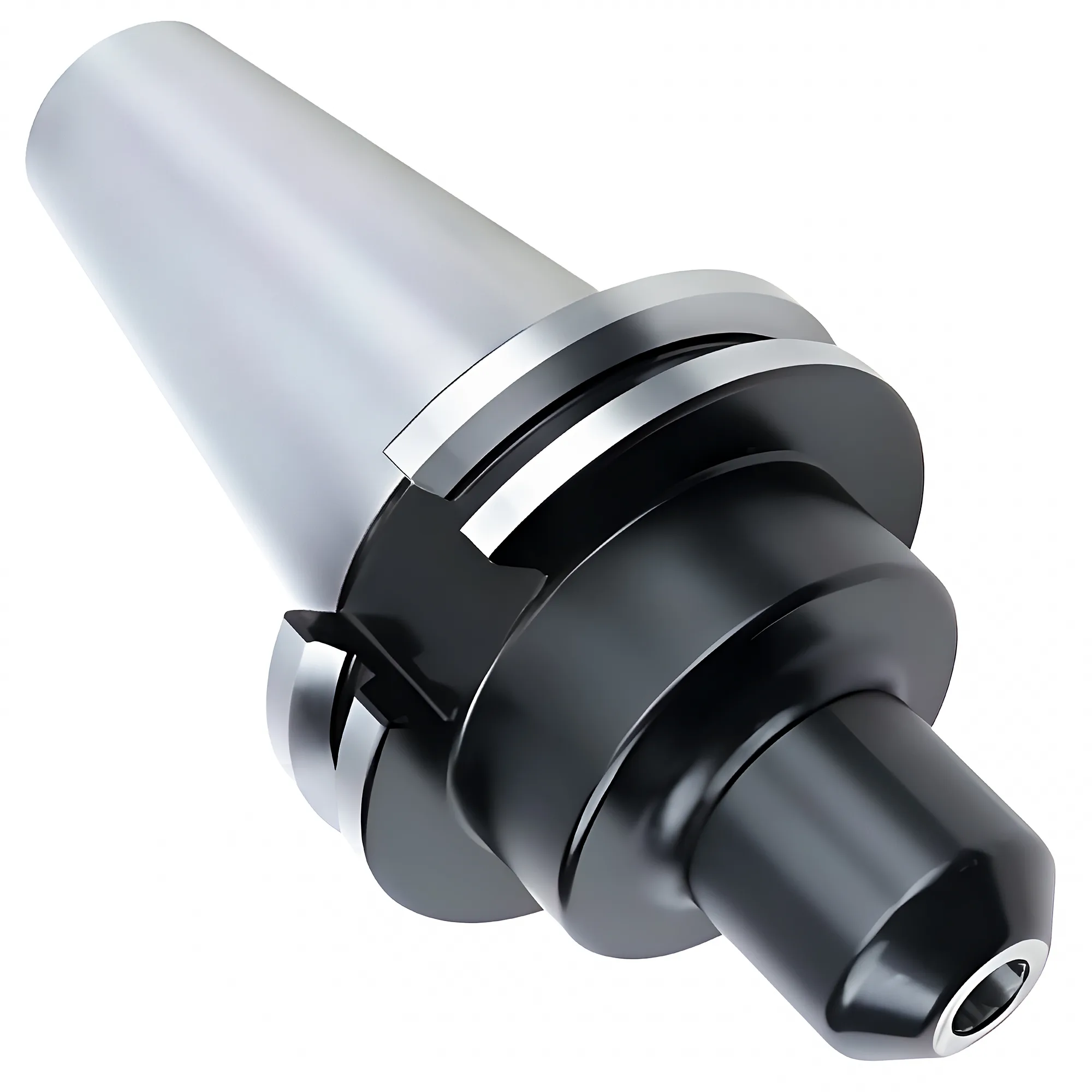
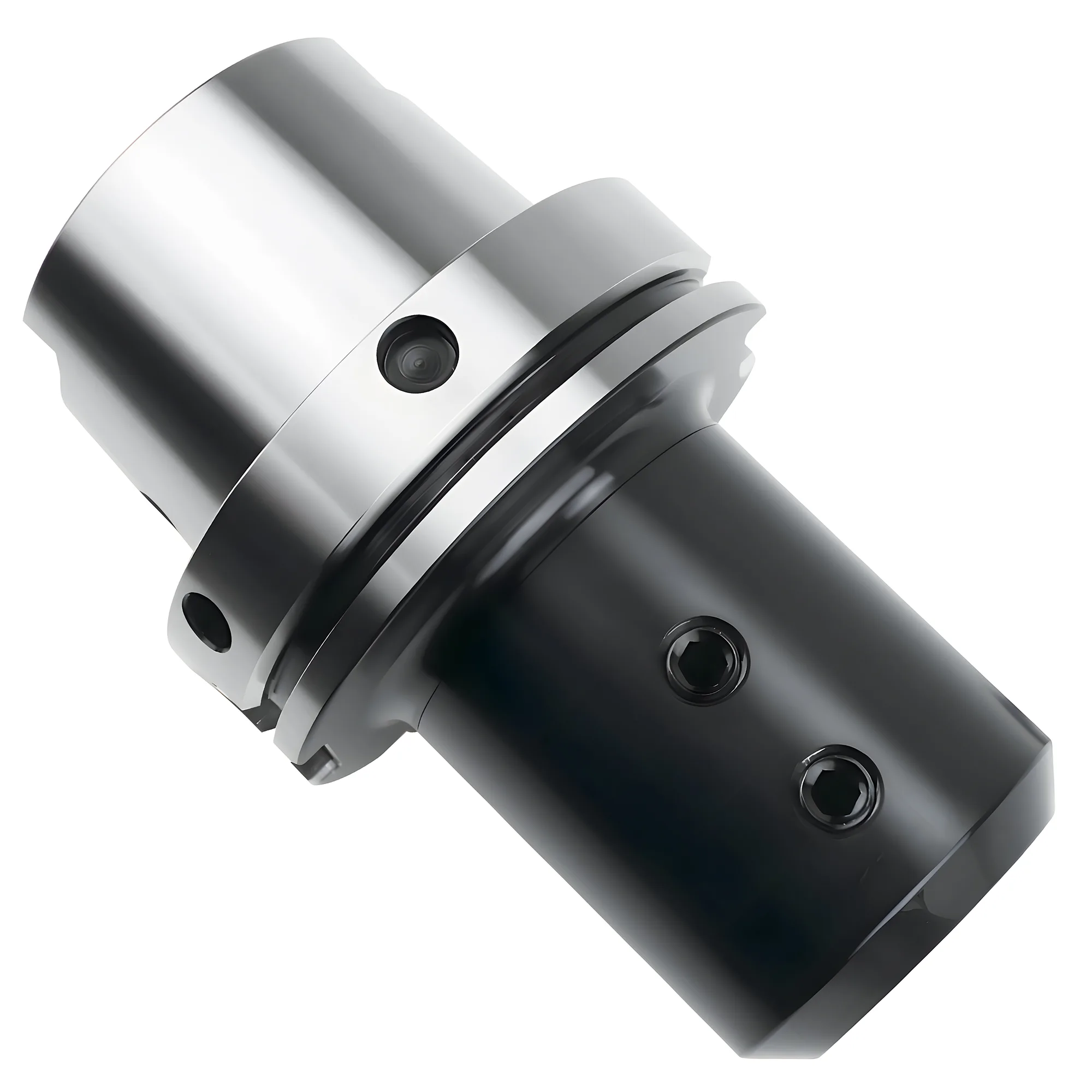
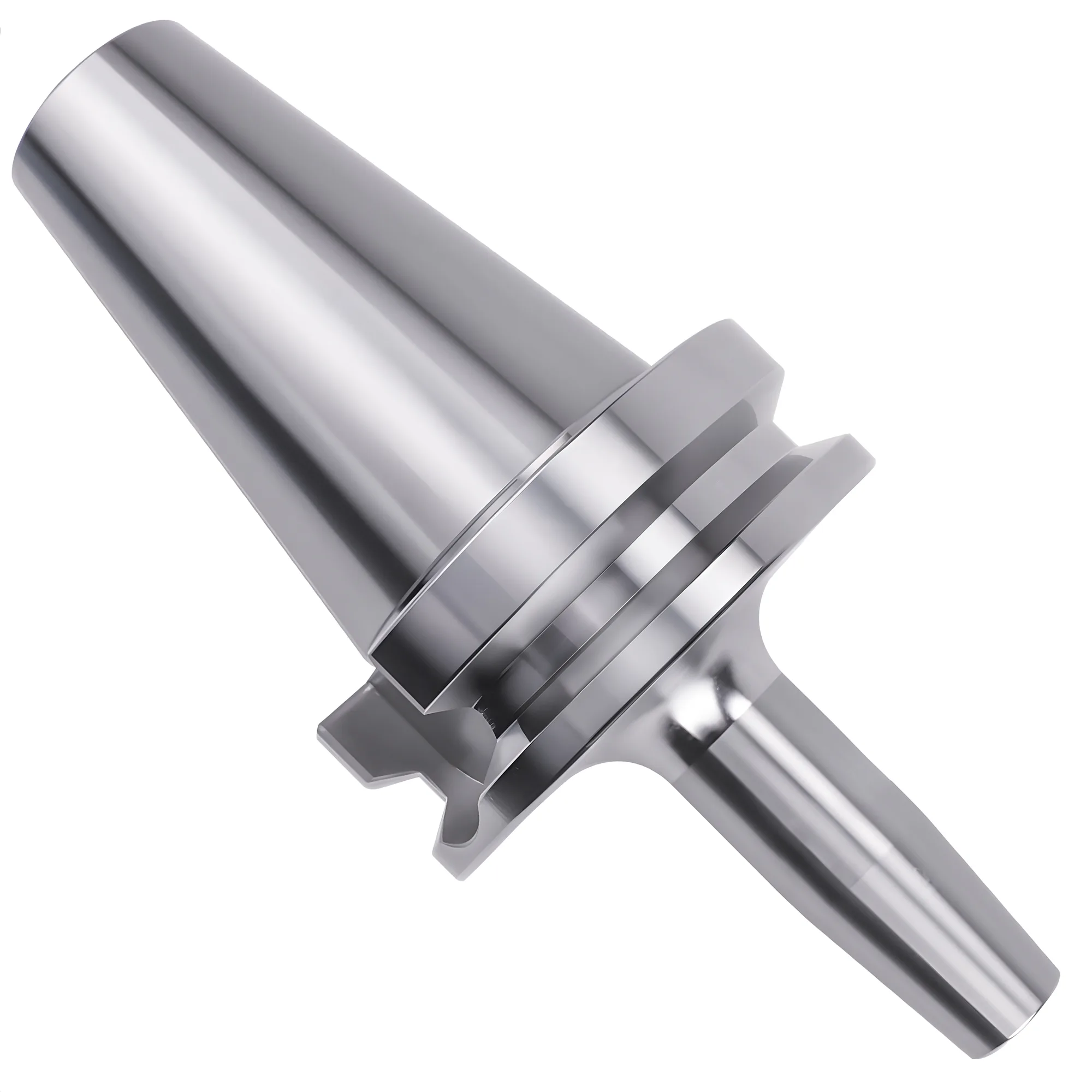
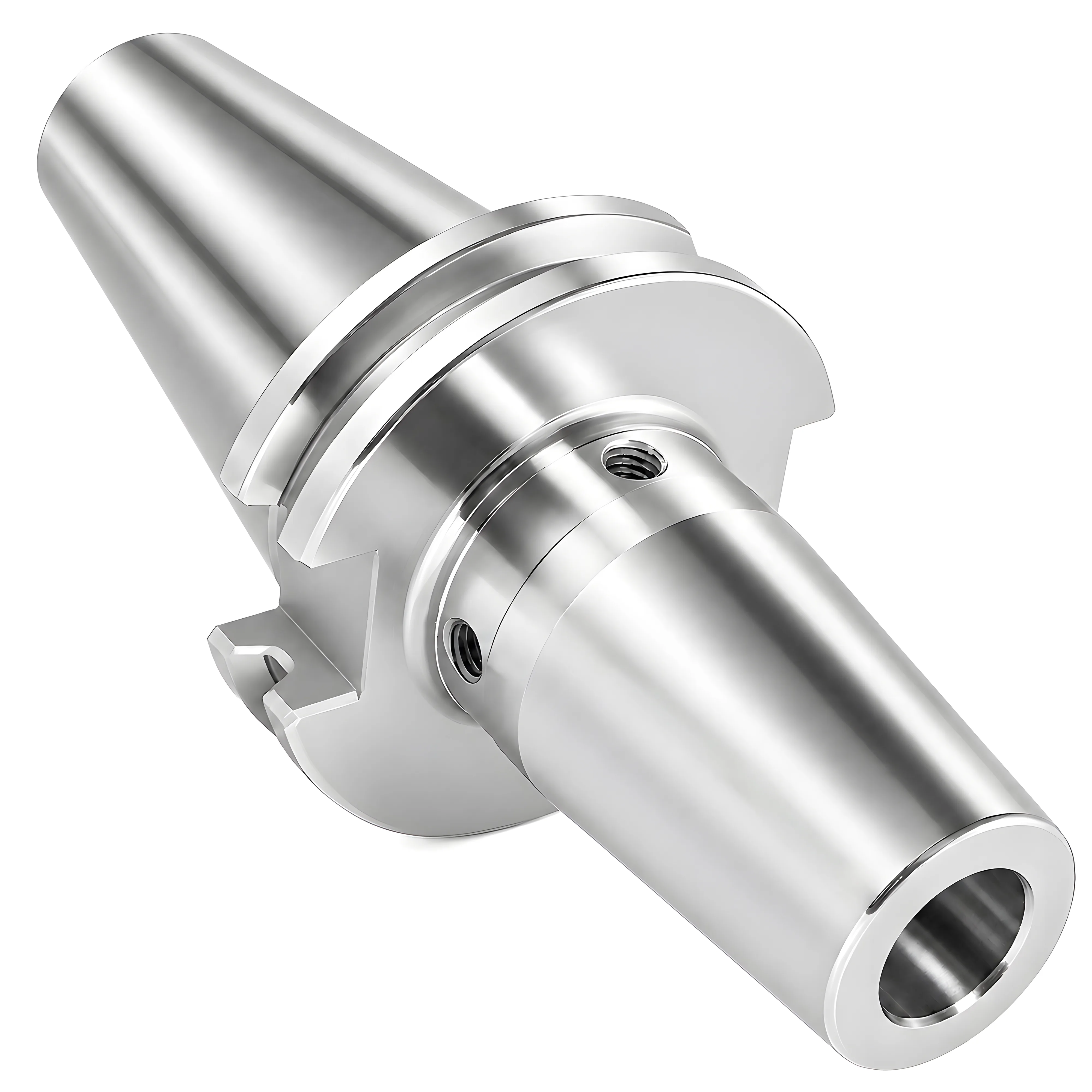
Choose side-lock (Weldon-flat) holders for roughing under 12,000 RPM where pull-out resistance matters more than runout (typical TIR 0.010-0.030 mm, $30-150 per holder). Use ER collet chucks per ISO 15488 / DIN 6499 for general-purpose milling on mixed shank diameters (Class 2 TIR ≤0.020 mm at d₁ 10-26 mm, $100-400). Step up to shrink-fit holders for high-speed finishing above 15,000 RPM where ≤0.003 mm TIR and G2.5 balance drive surface quality and tool life — capital cost adds a $5,000-15,000 induction heater on top of $200-500 per holder.
For a complete overview of tool holding systems including taper interfaces and workholding, see the tool holding complete guide.
The Three Dominant End Mill Holder Types
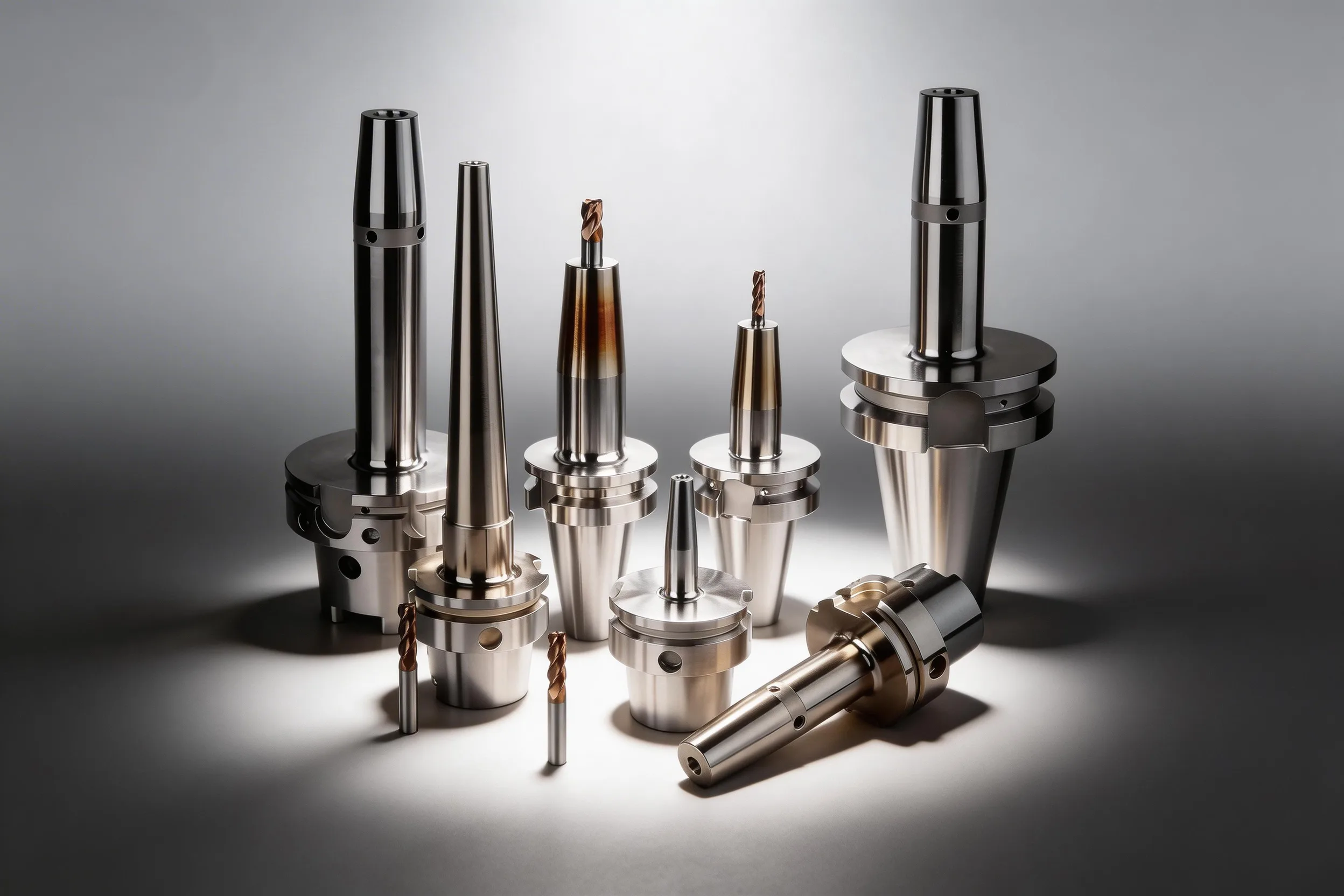
Cylindrical-shank end mills (typically per DIN 1835 form B/E or DIN 6535 form HA/HB/HE) are clamped by three mainstream holder families. Each family trades a different lever — side-lock buys pull-out resistance, ER collets buy diameter flexibility, shrink-fit buys runout and balance — so the right choice depends on which trade-off dominates the operation.
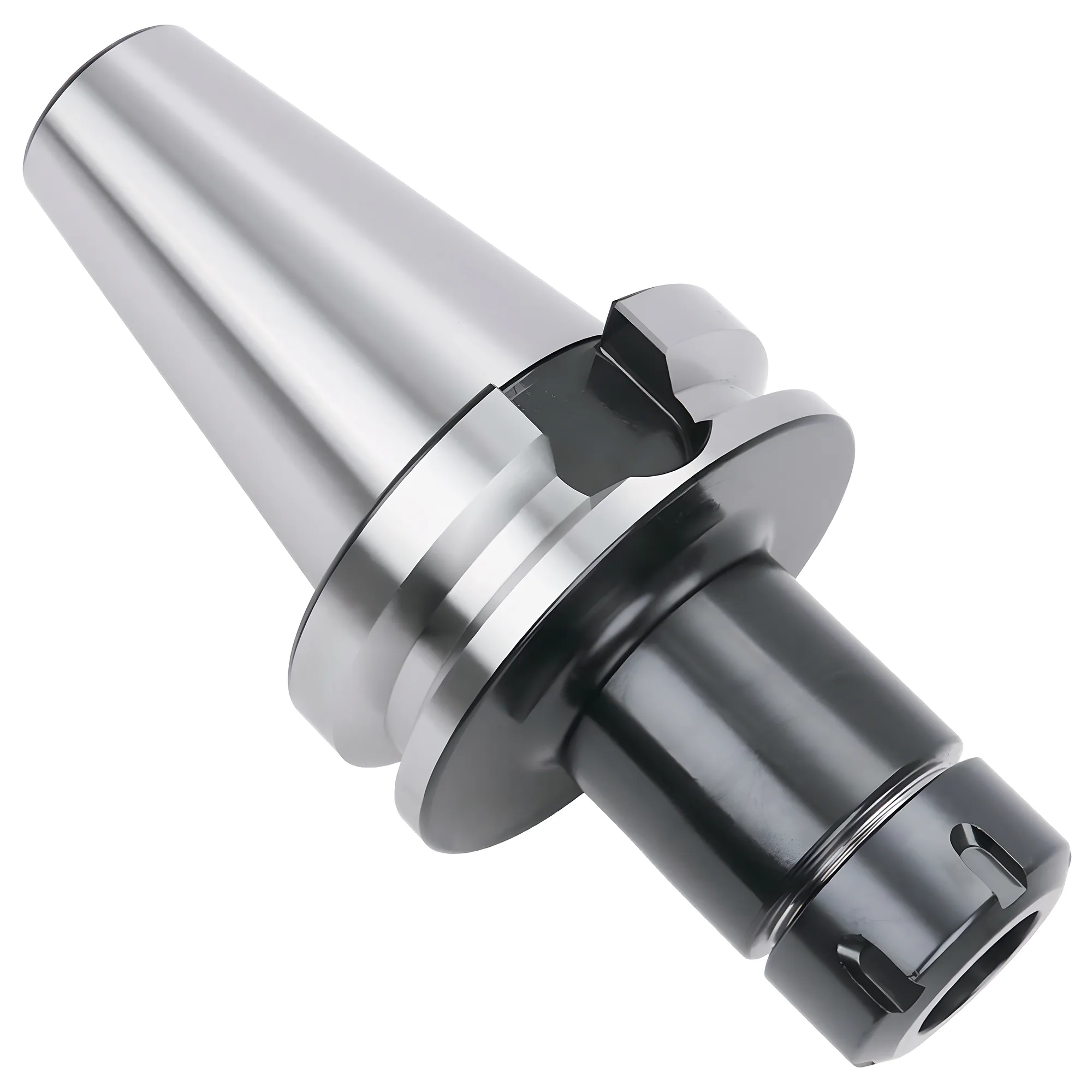
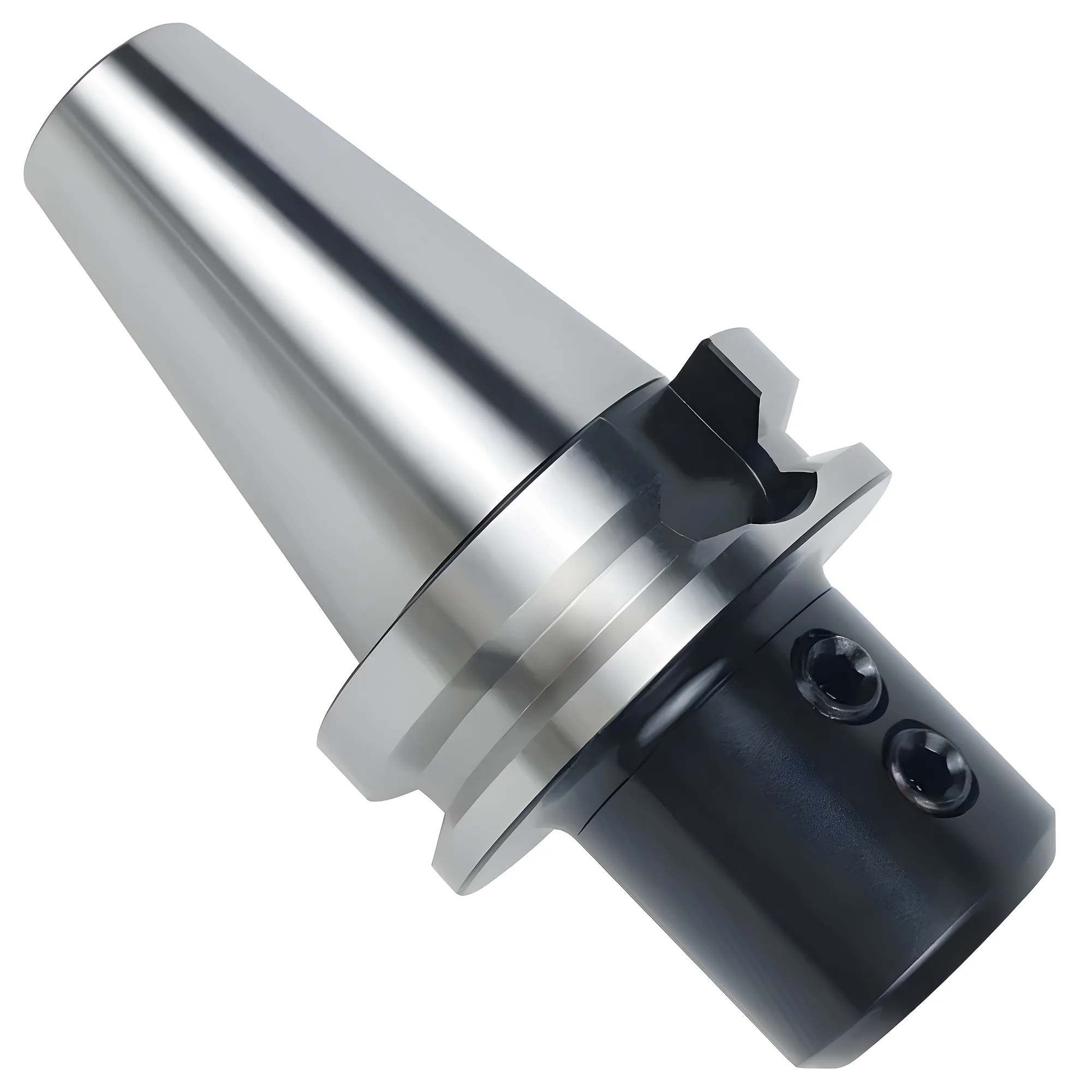
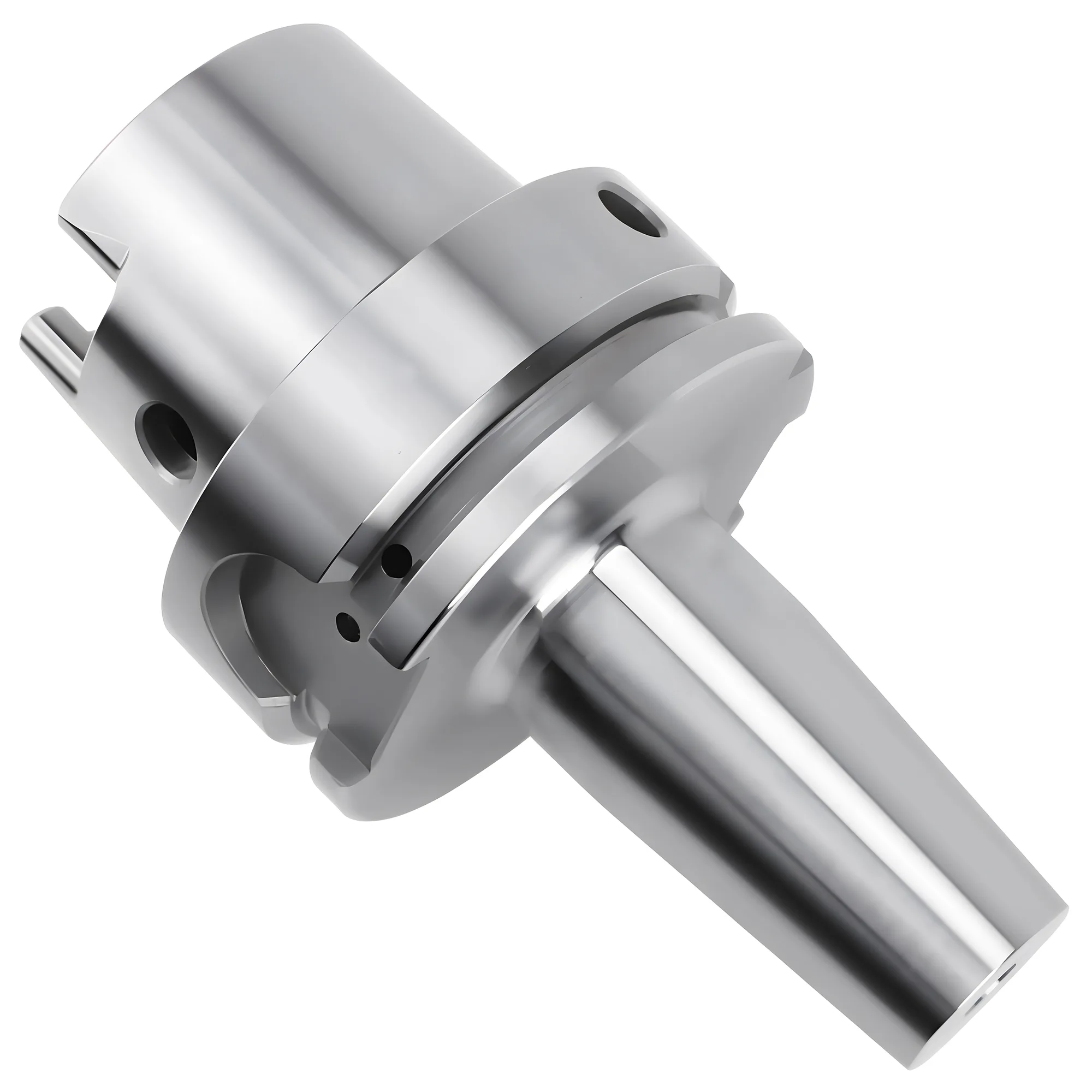
Side-lock (Weldon-flat) holders clamp the shank with a single set screw that bears against a ground flat on the tool. The geometry of the Weldon flat is defined by DIN 1835 form B (for HSS) and DIN 6535 form HB (for solid carbide), so side-lock holders only accept shanks with that flat present. The single-point clamp delivers very high axial pull-out resistance, but it pushes the tool off the holder centerline by a small offset that limits runout to roughly 0.010-0.030 mm TIR.
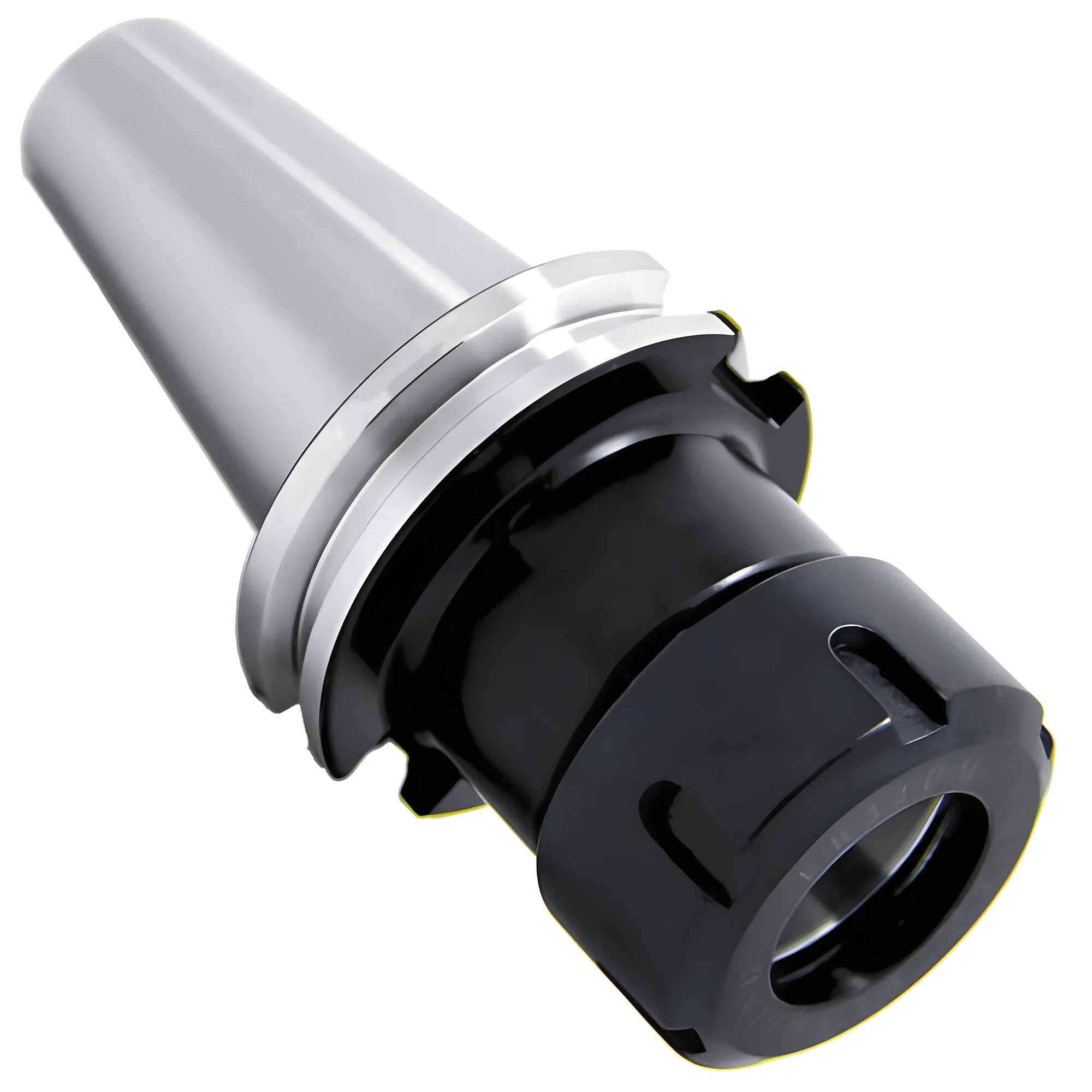
ER collet chucks per DIN 6499 / ISO 15488:2003 squeeze a slotted, tapered collet around a plain cylindrical shank using an external nut. Each ER chuck takes one collet series; across the ISO 15488 sizes (ER11–ER40) collets cover 1–26 mm shanks, and the manufacturer ER8 and ER50 extensions push that below 1 mm and beyond 30 mm. Class 2 (normal) runout is held to ≤0.015 mm TIR for d₁ ≤ 10 mm and ≤0.020 mm TIR for d₁ 10-26 mm per ISO 15488:2003 Table 4; manufacturer UP/AA grades reach approximately 0.005 mm in the right system.
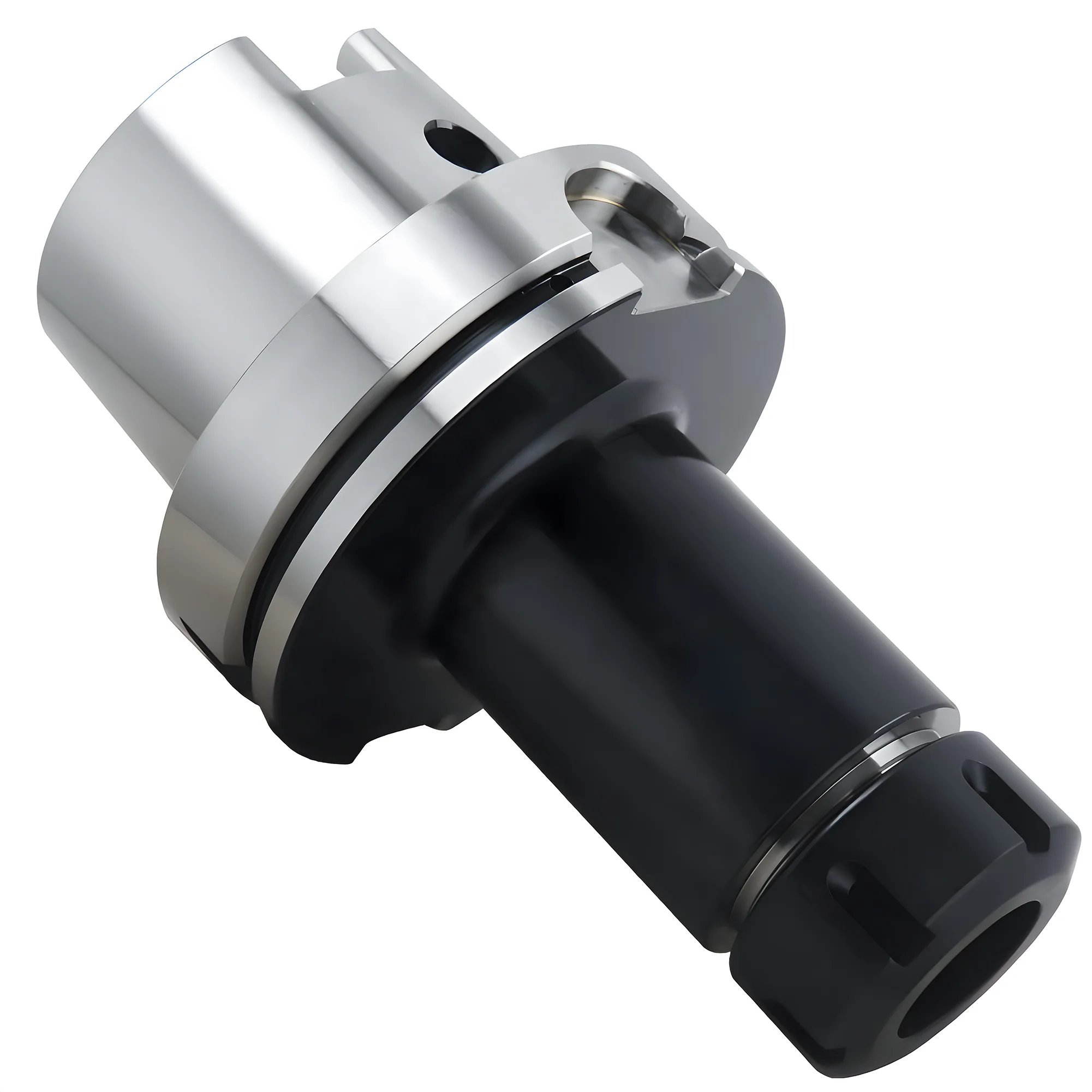
Shrink-fit holders clamp by thermal interference. An induction heater expands the holder bore by a few hundredths of a millimeter, the h6-tolerance shank slips in, and as the holder cools (typically 30-120 seconds with forced air) the bore contracts to grip the shank with continuous metal-to-metal contact. The symmetric, monolithic geometry typically delivers ≤0.003 mm TIR at 3xD and supports a G2.5 balance grade (as defined in ISO 1940-1:2003) at 25,000 RPM — a manufacturer rating, not an ISO requirement — in production setups.
How Runout, Cost, and RPM Compare
The three holder families separate cleanly on six dimensions that matter for end-mill work. Runout improves by roughly an order of magnitude as you move from side-lock (~0.020 mm) to ER (~0.010 mm) to shrink-fit (~0.003 mm), while first-tool capital cost moves the opposite way — side-lock needs no auxiliary equipment, ER needs a torque wrench, and shrink-fit needs an induction heater that often costs more than the entire side-lock holder fleet it replaces.
| Factor | Side-Lock (Weldon) | ER Collet Chuck | Shrink-Fit |
|---|---|---|---|
| Typical runout TIR (ER: ISO 15488 test length; others: at 3xD) | 0.010-0.030 mm | 0.005-0.020 mm (Class 2 / UP) | ≤0.003 mm |
| Cost per holder | $30-150 | $100-400 + $8-25 per collet | $200-500 |
| First-tool capex | None | Torque wrench (~$200) | Induction heater $5,000-15,000 |
| Practical RPM ceiling | ~12,000 RPM | 20,000-25,000 RPM (G2.5) | 25,000-40,000+ RPM (G2.5/G1.0) |
| Tool change time | ~30-60 seconds | 15-30 seconds | ~2-3 minutes (heat + cool) |
| Diameter flexibility | Per-holder fixed | One chuck + collet set covers 1 mm bands | Per-holder fixed (h6 shank) |
| Shank requirement | Ground Weldon flat (DIN 1835/6535) | Plain cylindrical, h6 preferred | Plain cylindrical, h6 required |
| Pull-out resistance | Highest (set screw on flat) | Moderate (friction grip) | High (interference fit) |
Runout impact is quantifiable. Per BIG DAISHOWA's "one-tenth rule," each 2.5 µm of runout typically reduces tool life by approximately 10% on carbide end mills in steel finishing. A side-lock holder at 0.020 mm versus a shrink-fit at 0.003 mm therefore implies roughly 60-70% tool life difference under matched conditions — meaningful when expensive solid-carbide end mills dominate consumable cost.
Cost is rarely a single-holder calculation. A 30-holder side-lock fleet at $80 each costs $2,400 with no auxiliary equipment. A 30-holder ER fleet at $100-400 per chuck runs $3,000-12,000 plus $8-25 per collet; keeping one chuck per machine and swapping collets cuts that sharply but means re-measuring tool length on every change. A 30-holder shrink-fit set typically runs $6,000-15,000 plus the heater, so the break-even depends on whether tool-life and surface-finish gains pay back the capex within the production volume.
Why Side-Lock Still Has a Place
On rigid roughing setups in steel where chip load is high, axial pull-out under heavy radial cutting forces is a real failure mode. The Weldon-flat set screw bears directly on the flat, providing positive axial restraint that friction-only grips cannot match. For heavy roughing under 12,000 RPM, side-lock often outlasts an ER collet on the same tool because the collet can micro-creep on the shank while the side screw typically cannot.
When Pull-Out Resistance Dominates: Side-Lock
Side-lock holders are the simplest, cheapest, and most pull-out-resistant of the three. For roughing operations where radial engagement exceeds 50% and depth of cut exceeds 1.5xD, side-lock holders are typically preferred over friction-grip alternatives because the set screw on a Weldon flat provides positive mechanical restraint against axial pull-out.
The trade-off is geometric. The set screw bears on one side of the shank only, so the tool axis typically sits 5–15 µm off the holder axis. That offset is repeatable — once a tool is loaded the runout is stable — but it is not corrected by changing the tool. Surface finish suffers proportionally, and high-RPM balance is poor because the screw and counterbore create asymmetric mass.
Side-lock applications where the trade is acceptable:
- Heavy roughing in steel and stainless where radial forces would unseat a friction grip
- Indexable end mills with large diameters (typically ≥16 mm) where shank pull-out under chip load is the dominant failure mode
- Drilling with large straight-shank drills (when an ER40 or arbor drill chuck is unavailable)
- Older shop floors running BT40/CAT40 spindles below 10,000 RPM where balance grade is non-critical
Side-lock should be avoided where surface finish below Ra 1.6 µm matters, where the spindle runs above 12,000 RPM in production, or where the tool shank lacks a Weldon flat.
Asymmetric Balance at High RPM
Standard side-lock holders are typically rated G6.3 or worse without rebalancing. Above 12,000 RPM the asymmetric set-screw geometry generates centrifugal vibration that adds to runout and accelerates spindle bearing wear. If the operation truly demands a side-lock at high speed, specify a balanced (G2.5) variant with a counterbore opposite the set screw.
When Diameter Flexibility Dominates: ER Collet Chuck
ER collet chucks are the workhorse of general-purpose CNC milling because one chuck plus a collet set covers a wide range of shank diameters at moderate cost. For shops running mixed end-mill shank sizes (typically 3 mm through 20 mm in the same workday), ER32 chucks per DIN 6499 are the lowest cost-per-tool-change option because a single $200-400 chuck plus an 18-collet set covers the full 2-20 mm range without rebuying holders.
ER trade-offs sit in the middle of the runout/cost/balance spectrum:
- Runout is dictated by ISO 15488 Class 2 (≤0.015-0.020 mm) for normal grade; UP/AA grade collets pull this to ~0.005 mm but require h6 shanks and a clean, undamaged collet seat.
- Balance typically reaches G2.5 with premium chuck nuts and balanced collets, supporting 20,000-25,000 RPM in production. The ER nut and slotted collet remain a small unbalance source that shrink-fit eliminates.
- Diameter coverage is the headline strength. A single ER32 chuck spans 2-20 mm in 1 mm bands; an ER40 chuck spans 3-26 mm. This is why job shops standardize on ER even when finish operations could justify shrink-fit.
ER applications:
- General-purpose milling with mixed tool diameters across a single setup
- Job shops where same-day variety dominates over per-tool optimization
- Light-to-medium roughing and finishing at typical spindle speeds of 8,000-20,000 RPM
- Hole-making with straight-shank drills and reamers (avoids the runout penalty of an arbor-mounted drill chuck)
ER should be reconsidered when the operation runs above 25,000 RPM (balance becomes the limit), when surface finish below Ra 0.8 µm is required (collet asymmetry shows up), or when a single tool diameter dominates production volume (a dedicated shrink-fit holder amortizes faster). For sizing guidance across ER11-ER40 see the ER collet selection guide.
Class 2 vs UP Grade ER Collets
A standard Class 2 collet at ≤0.020 mm TIR is fine for roughing and most finishing under Ra 1.6. An UP/AA grade at ~0.005 mm only delivers its rated runout when the spindle, the chuck taper, the collet, and the h6-tolerance shank are all within spec. Buying UP grade collets to use on a worn chuck or out-of-tolerance shank typically returns the same runout as a fresh Class 2 collet.
When Runout and Balance Dominate: Shrink-Fit
Shrink-fit is the highest-performance end-mill clamping technology in mainstream production use. For high-speed finishing above 15,000 RPM in aluminum, hardened steel, or graphite — and for HSK-E/F spindles operating above 25,000 RPM — shrink-fit holders are typically preferred because the symmetric monolithic geometry holds ≤0.003 mm TIR and supports G2.5 (or finer) balance class that ER nuts cannot match.
Shrink-fit trade-offs:
- Capex floor. A useful shrink-fit fleet requires an induction heater ($5,000-15,000 depending on power and supported sizes) plus enough holders to cover production tools. A typical entry investment for a finishing-focused shop is $10,000-25,000 before the first tool runs.
- Per-tool inflexibility. Each holder accepts exactly one shank diameter at h6. There is no collet to swap. A 12 mm holder will not clamp a 12.5 mm shank.
- Coating heat exposure. Bore heating temperatures typically reach 200-300°C at the bore. Some end-mill coatings (notably DLC and certain low-temperature post-treatments) can degrade with repeated heat exposure; standard TiAlN, AlTiN, and AlCrN coatings tolerate the cycle without issue.
- Tool change time. A full heat-insert-cool cycle takes about 2-3 minutes versus 15-30 seconds for ER. This is acceptable in production where tools change once per shift; it is impractical in job-shop work with many setups per day.
Shrink-fit applications where the trade-offs pay back:
- High-speed milling above 15,000 RPM, especially HSK-A63/HSK-E50 spindles in aluminum and hardened steel
- Finishing operations where the runout-driven 25-50% tool-life gain over standard ER pays back the capex within 6-18 months on expensive carbide tools
- Long-stickout work where the slim nose profile of shrink-fit reaches into pockets that ER nuts cannot fit
- 5-axis finishing where the symmetric tool path benefits from balanced rotating mass
For high-speed finishing where damping rather than balance is the dominant need, hydraulic chucks are an alternative — see the collet chuck vs hydraulic chuck comparison.
Single-Diameter Lock-In
Shrink-fit holders accept exactly one shank diameter. Order holders only after confirming the spindle taper, tool diameter, and L/D projection length. A 12 mm shrink-fit holder ordered for a 11.95 mm shank will not clamp because the interference fit relies on h6 dimensional control on both sides of the bore.
Side-by-Side Decision View
✦ Side-Lock (Weldon) Best For
- Heavy roughing where pull-out resistance dominates
- Spindles below 12,000 RPM where balance grade is non-critical
- Tools with ground Weldon flats (DIN 1835/6535) already in inventory
- Lowest first-tool cost — no auxiliary equipment needed
✦ ER Collet Chuck Best For
- General-purpose milling with mixed shank diameters
- Job shops running 5-50 different tool sizes per workday
- 8,000-25,000 RPM with G2.5 premium variants
- Best cost-per-tool-change when one chuck covers a 1 mm collet band
Quick Selection Table
| Scenario | Recommended Holder | Typical Runout | RPM Target | Why |
|---|---|---|---|---|
| Heavy roughing, BT40 spindle, ≤10,000 RPM, steel/stainless | Side-lock (DIN 1835/6535) | 0.010-0.030 mm | ≤12,000 RPM | Set screw on Weldon flat resists axial pull-out under heavy chip load |
| Job shop, mixed shank diameters 3-20 mm, ≤20,000 RPM | ER32 collet chuck (DIN 6499) | 0.005-0.020 mm | 20,000-25,000 RPM | One chuck plus 18-collet set covers full 2-20 mm range; lowest cost-per-tool-change |
| Production line, single tool diameter, 12,000-20,000 RPM | ER chuck (UP grade) or shrink-fit | 0.005-0.010 mm | 20,000 RPM | UP-grade ER reaches ~0.005 mm if shank is h6; shrink-fit typically ≤0.003 mm |
| High-speed finishing, hardened steel or aluminum, >15,000 RPM | Shrink-fit (BT/CAT/HSK-A) | ≤0.003 mm | 25,000 RPM | Symmetric monolithic geometry holds G2.5 balance and ≤0.003 mm TIR |
| HSK-E/F micro-finishing, 25,000-40,000+ RPM | Shrink-fit on HSK-E/F | ≤0.003 mm | 30,000-40,000+ RPM | No drive slots (DIN 69893) → fully symmetric → G1.0 balance achievable at high speed |
| Surface finish target Ra ≤0.8 µm in 4140 steel | Shrink-fit or hydraulic | ≤0.003 mm | 15,000-20,000 RPM | Runout floor and damping (hydraulic) drive scallop pattern below the Ra target |
| Tight budget, no induction heater available | ER collet chuck (Class 2) | ≤0.015-0.020 mm | 20,000 RPM | Avoids $5K-15K capex; UP grade can be added later for finishing stations |
| Heavy 5-axis finishing in titanium, deep pockets | Shrink-fit (slim-nose) | ≤0.003 mm | 12,000-18,000 RPM | Slim profile reaches into pockets; balanced mass benefits multi-axis kinematics |
Match runout, balance, and pull-out resistance to the operation, not to a single performance number.
Side-lock holders are typically preferred for heavy roughing under 12,000 RPM where the Weldon-flat set screw delivers positive pull-out resistance at the lowest first-tool cost. ER collet chucks per DIN 6499 / ISO 15488 are the default for general-purpose milling on mixed shank diameters because one chuck plus a collet set covers a wide range at moderate cost (Class 2 TIR ≤0.020 mm at 10-26 mm shanks). Shrink-fit holders are typically preferred for high-speed finishing above 15,000 RPM and for HSK-E/F spindles above 25,000 RPM where ≤0.003 mm runout and G2.5/G1.0 balance drive surface quality and tool life — provided the production volume justifies the $5,000-15,000 induction-heater capex. Most productive shops mix all three, deploying each where its trade-off pays back.
Can I use a side-lock holder on an end mill without a Weldon flat?
No — the set screw needs the ground flat to bear against. Clamping a plain cylindrical shank in a side-lock holder concentrates set-screw force on a single line of contact, which can mark the shank, allow rotational slip under cutting load, and accelerate runout drift. Use an ER collet chuck for plain shanks instead.
How much tool life do I gain by switching from ER to shrink-fit?
Under BIG DAISHOWA's one-tenth rule (≈10% per 2.5 µm), a standard ER at 0.015 mm TIR gives up roughly 40-50% of the finishing tool life a 0.003 mm shrink-fit achieves; the ~12 µm gap is about five 'tenths'. Real-shop gains from switching are typically quoted as 25-50%, varying with material, flute count, and radial engagement.
Does shrink-fit damage end-mill coatings?
Standard PVD coatings (TiAlN, AlTiN, AlCrN) tolerate the 200-300°C bore heating cycle without measurable degradation across hundreds of cycles. DLC and some low-temperature post-treatments can degrade with repeated thermal exposure — confirm with the coating supplier before standardizing on shrink-fit for those tools. Heat is applied to the holder bore, not to the tool flutes, so cutting-edge integrity is generally preserved.
Shrink-fit (press-fit) holder vs collet chuck — when does ER win?
ER beats shrink-fit whenever diameter flexibility, fast tool changes, or capex avoidance dominate the decision. Job shops running 30+ tool sizes per shift rarely justify a per-diameter shrink-fit fleet plus the heater capex. ER is also typically preferred below 15,000 RPM where Class 2 (≤0.020 mm) or UP-grade (~0.005 mm) runout already meets surface-finish targets.
What runout should I actually expect from a Class 2 ER collet on a real machine?
Approximately 0.015-0.025 mm TIR at the tool tip with a 12-18 mm shank is realistic on a well-maintained spindle, slightly above the ISO 15488:2003 Table 4 limits because spindle, chuck, and shank tolerances stack. Class 2 limits (≤0.015 mm for d₁ ≤ 10 mm; ≤0.020 mm for d₁ 10-26 mm) are tested in isolation on a calibrated mandrel, not on a production spindle.
Sources
- ISO 15488:2003 — Collets with 8 degrees setting angle for tool shanks (Type ER)
- DIN 6499 — Collet chucks ISO 15488
- DIN 1835 — Shank dimensions for milling cutters with cylindrical shank
- DIN 6535 — Shank forms for solid carbide milling cutters with cylindrical shank
- ISO 1940-1:2003 — Mechanical balance of rotors
- BIG DAISHOWA — The One Tenth = 10% Rule and Effects of Runout