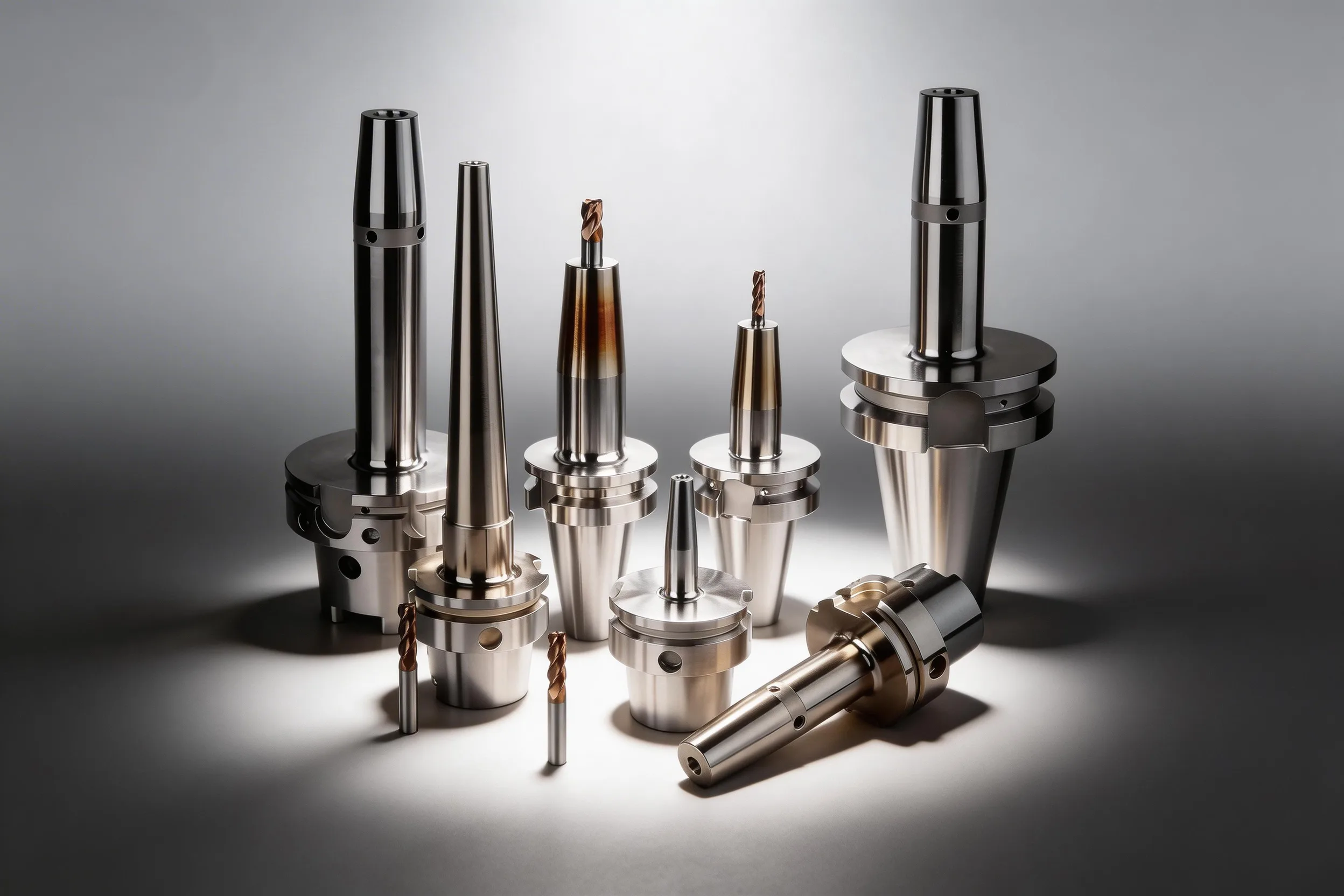
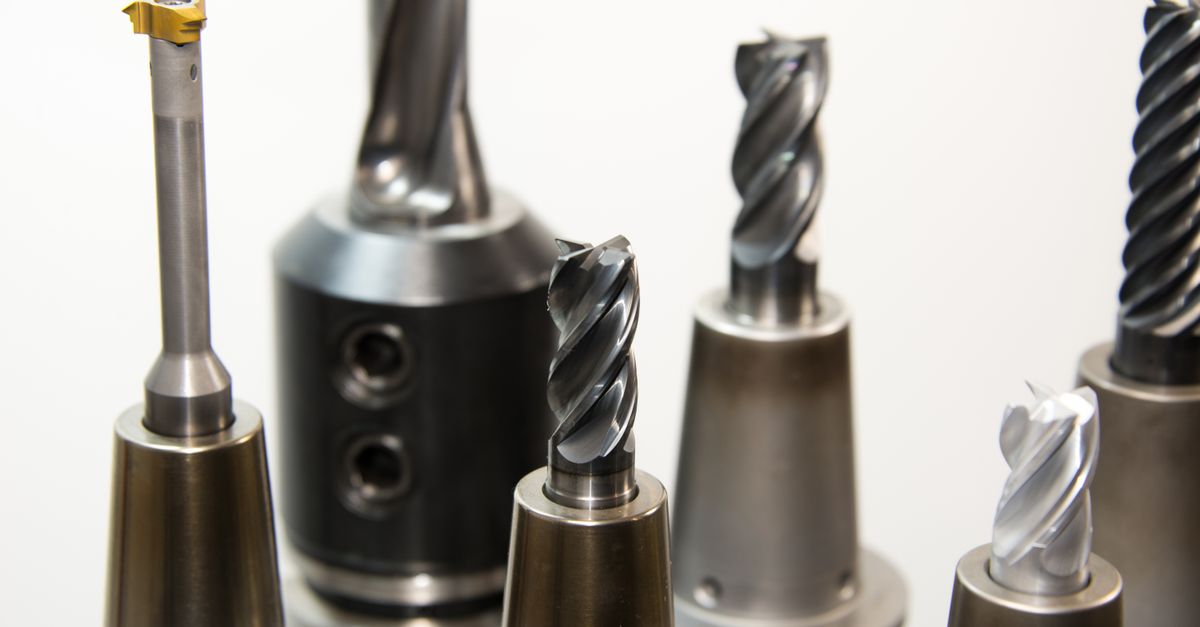
A BT40 pull stud, a CAT40 pull stud, and a Mazak BT40 pull stud look almost identical externally but are not interchangeable: BT (JIS MAS 403) uses M16 metric thread with a 60° head face angle, CAT (ANSI/ASME B5.50) uses 5/8"-11 inch thread with a 90° head face angle, and Mazak BT spindles typically require a longer overall length and proprietary retention-groove geometry even on a nominally BT40 holder. To spec correctly, identify the spindle vendor and model first, then match the OEM-specified pull stud — never trust a "BT40 pull stud" label alone.
A pull stud — also called a retention knob — is the small threaded fastener that screws into the back of a tool holder so the spindle drawbar can grip and clamp the holder into the taper. Despite costing only a few dollars, the wrong pull stud is one of the most common causes of tool ejection, drawbar damage, and unplanned spindle rebuilds in production CNC shops. The reason is straightforward: BT, CAT, and Mazak holders share the same 7:24 V-flange taper geometry and look interchangeable externally, but their pull studs are governed by different national standards (MAS 403 in Japan, ANSI/ASME B5.50 in North America, manufacturer-proprietary specs at Mazak) with different thread, head, and groove dimensions. For the broader taper-system comparison covering BT, CAT, and HSK rigidity and speed envelopes, see the BT vs CAT vs HSK comparison.
Why Pull Stud Mismatch Happens
Pull stud mismatch happens because the V-flange tool holder body and the pull stud follow different standards — buying a "BT40 holder" does not automatically tell you which pull stud the holder needs. The holder side of the interface is governed by JIS B6339 (geometry of the BT taper) or ANSI/ASME B5.50 (geometry of the CAT taper), while the pull stud side is governed by MAS 403, ANSI/ASME B5.50 supplement, or proprietary OEM dimensions.
A typical buyer error: a shop running a Mazak Integrex orders "BT40 pull studs" online, the parts arrive labeled as MAS 403 / 45° type, the threads engage the holder, and the operator assumes the job is done. On first tool change the drawbar fingers slip past the retention groove because the Mazak drawbar geometry expects a longer stud body and a slightly different groove profile. The tool ejects mid-cut, the spindle takes collateral damage, and the shop spends multiples of the original pull stud cost on diagnosis and repair.
Three factors compound the mismatch problem in real shops:
- External similarity: a BT40 stud and a Mazak BT40 stud differ by only 2-4 mm in overall length and by sub-millimeter changes in groove geometry — invisible without calipers
- Mixed-OEM tool cribs: shops with a Haas (CAT40) and a Mori Seiki (BT40) and a Mazak (Mazak BT40) often store all V-flange holders together because they look the same
- Catalog ambiguity: distributor product titles like "BT40 Pull Stud, 45° Type" rarely surface that "Mazak-spec" is a separate SKU with different dimensions
Why "BT40 Pull Stud" Labels Are Not Enough
Catalog labels typically state taper size and head angle but not the OEM compatibility. Always cross-reference the spindle manufacturer's pull-stud part number from the machine manual before buying — a label match on size and angle alone is not sufficient to guarantee drawbar compatibility.
BT Pull Stud (MAS 403, Japan)
BT pull studs follow JIS MAS 403 with metric threads sized to the taper — M12 for BT30, M16 for BT40, and M24 for BT50 — and a characteristic 60° conical head face under the standard MAS 403 Type I geometry. BT pull studs are typically supplied with either 45° or 60° head face angles depending on which OEM-specific MAS 403 type is required by the spindle drawbar.
MAS 403 is the dominant pull-stud standard across Asia, with most Japanese, Korean, and Taiwanese machine tool builders shipping spindles dimensioned to one of its sub-types. BT pull studs install with the metric thread sized to the holder body — a BT40 holder has an M16 internal thread regardless of which MAS 403 sub-type the stud follows.
CAT Pull Stud (ANSI/ASME B5.50, North America)
CAT pull studs follow ANSI/ASME B5.50 with imperial threads — 5/8"-11 UNC for CAT40 and 1"-8 UNC for CAT50 — and use a 90° head face angle that is incompatible with the 45°/60° BT geometry even when nominal taper sizes match. ANSI/ASME B5.50 is the dominant V-flange specification in North American machine shops and covers both the CAT taper geometry and the matching pull stud dimensions.
Even when a CAT40 holder and a BT40 holder appear identical in flange diameter, the pull stud threads are physically incompatible — M16 metric on BT versus 5/8"-11 UNC on CAT — preventing accidental cross-installation. The thread pitch differential acts as a built-in safety check at the holder; the more dangerous mismatch case is two studs that share thread but differ in groove geometry, which is what happens with Mazak (Section 04).
Why Mazak Pull Studs Are a Common Ordering Error
Mazak BT spindles typically use a Mazak-specific pull stud variant that shares the M16 BT40 thread but uses a different overall length and retention-groove geometry from generic MAS 403 studs — installing a generic BT40 stud in a Mazak machine is a frequent root cause of tool-pullout incidents. Mazak publishes its pull-stud part numbers in machine documentation rather than relying on the JIS sub-type number, so buyers searching "BT40 pull stud" online routinely receive non-Mazak-spec parts that thread in cleanly but fail to seat correctly under the drawbar.
The mechanism: the Mazak drawbar fingers grip the retention groove at a specific axial position determined by the stud's overall length. A generic MAS 403 stud may sit several millimeters short of the Mazak drawbar's grip zone, so the fingers latch onto the wrong portion of the stud body — initial clamping force feels normal, but the load envelope under cutting force is reduced and the tool can release.
Mazak BT40 Spindles Need Mazak-Spec Studs
A "BT40 pull stud" labeled as MAS 403 / 45° type from a generic distributor is NOT automatically compatible with a Mazak BT40 spindle. Always source pull studs against the Mazak machine's published part number. Symptoms of a Mazak mismatch include intermittent tool-change failures, drawbar fingers visibly worn on one side, and tool ejection during interrupted cuts.
The Mazak case generalizes: most spindle OEMs publish a specific pull-stud part number in the machine manual, and that part number is the authoritative spec — not the JIS or ANSI sub-type. Treat every spindle as having an OEM-specific pull stud until the manual confirms otherwise.
DIN 69872 / ISO 7388 (German and EU)
DIN 69872 (German) and ISO 7388 (international) define pull-stud dimensions for European-built BT/SK40 V-flange holders, with metric threads matching MAS 403 but slightly different retention-groove dimensions that affect drawbar compatibility. These standards are most commonly encountered on European machine tools — DMG Mori European-built lines, Hermle, Heller, and Spinner — using SK40 (Steilkegel 40, the European V-flange equivalent of BT40) tool holders.
DIN 69872 and ISO 7388 are largely harmonized, but the retention-groove tolerances and Form A vs Form B distinction mean a generic "BT40 stud" may still not match a German-built SK40 spindle drawbar precisely. Cross-checking the OEM part number before ordering remains the rule for European spindles, just as it does for Mazak.
JIS B6339 (Japanese Alternative Designation)
JIS B6339 defines BT taper geometry, while MAS 403 defines the matching pull stud — Japanese machine documentation typically references both standards together, and a BT spindle is only fully specified when both the taper standard (B6339) and the pull-stud sub-type (MAS 403) are matched. B6339 covers the holder side; MAS 403 covers the stud side. Some Japanese OEMs reference proprietary sub-variants of MAS 403 (Type I 45°, Type II 60°, plus internal variants) without renaming the standard, so the same "JIS B6339 BT40" spindle from two different builders can require two different MAS 403 studs.
For a side-by-side breakdown of how JIS B6339, ANSI/ASME B5.50, and DIN 69893 relate at the taper-system level, see the tool holding complete guide.
Identification Table — Thread, Head, Groove, OEM
The single most efficient way to confirm a pull stud's specification is to measure thread, head face angle, and overall length, then cross-reference against the spindle OEM. Use the table below as a first-pass sort.
| Standard | Region | BT40/CAT40 Thread | Head Face Angle | Typical OEMs | Compatibility Note |
|---|---|---|---|---|---|
| MAS 403 (Type I) | Japan / Asia | M16 metric | 45° | Mori Seiki, Brother, Hyundai-Wia | Generic Asian BT40 default |
| MAS 403 (Type II) | Japan / Asia | M16 metric | 60° | Okuma, some Mori Seiki lines | 60° drawbar variant |
| Mazak BT40 (proprietary) | Global (Mazak only) | M16 metric | 45° or 60° per spindle | Mazak (BT40 spindles) | Different overall length and groove — order by Mazak P/N only |
| ANSI/ASME B5.50 | North America | 5/8"-11 UNC inch | 90° | Haas, Hurco, Fadal, Cincinnati | Inch thread blocks BT cross-installation |
| DIN 69872 / ISO 7388 | Germany / EU | M16 metric | Form A or Form B per spindle | DMG, Hermle, Heller, Spinner | Metric thread but EU-specific groove dimensions |
Each row above represents a stud type that physically threads into a nominal BT40 or CAT40 holder body — but only one row matches the spindle drawbar in any given machine. Treat the OEM column as the decisive lookup, not the size column.
How to Spec the Right Pull Stud
The order of operations matters: starting from the holder is the wrong direction, because multiple stud types share the same holder thread. Start from the spindle.
✦ Correct Workflow
- Identify the machine: spindle vendor and model
- Open the machine manual and find the pull-stud part number
- Order pull studs by OEM part number, not by "BT40" generic label
- If buying generic, confirm thread, head angle, AND overall length match the OEM spec
- Inspect the first delivered stud against the OEM dimensional drawing before installing across the tool crib
✦ Common Wrong Workflow
- Search "BT40 pull stud" online and order by lowest price
- Assume "BT40" is universal across Mazak, Mori Seiki, and DMG
- Mix studs from multiple suppliers without confirming overall length matches
- Trust the catalog label without reading the dimensional drawing
- Install across the tool crib without first-piece inspection
First-Piece Inspection for Pull Studs
When a new pull-stud SKU arrives, measure overall length and groove diameter with calipers and compare against the OEM drawing before installing the full lot. A 2 mm length deviation invisible to the eye is enough to put the stud outside the drawbar grip zone on Mazak and DMG spindles.
Quick Pull Stud Selection by Machine OEM
| Scenario (Spindle / Machine) | Required Pull Stud | Thread | Head Angle | Why |
|---|---|---|---|---|
| Mori Seiki / DMG (Japanese-built) BT40 spindle | MAS 403 BT40 (Type I or Type II per manual) | M16 metric | 45° or 60° per spindle sub-type | JIS standard pull stud matches the JIS B6339 taper geometry of the spindle |
| Okuma BT40 spindle | MAS 403 BT40 Type II (60°) | M16 metric | 60° | Okuma drawbars are typically dimensioned for the 60° MAS 403 sub-type |
| Mazak Integrex / Variaxis BT40 spindle | Mazak-spec BT40 (proprietary P/N from Mazak manual) | M16 metric | 45° or 60° per spindle | Generic MAS 403 studs share thread but typically have shorter overall length than Mazak drawbars expect |
| Haas VF-series CAT40 spindle | ANSI/ASME B5.50 CAT40 | 5/8"-11 UNC inch | 90° | Inch thread is the only thread that engages the CAT40 holder; 90° head matches the Haas drawbar geometry |
| DMG European-built SK40 spindle | DIN 69872 / ISO 7388 SK40 (Form A or B per manual) | M16 metric | Form A or B per spindle | European drawbars are dimensioned to DIN/ISO retention-groove geometry, which can differ from MAS 403 |
| BT50 heavy steel mill (Asian spindle) | MAS 403 BT50 | M24 metric | 45° or 60° per spindle | BT50 thread upsizes to M24 to handle the larger draw force; head angle still varies by sub-type |
| CAT50 horizontal boring mill (US-built) | ANSI/ASME B5.50 CAT50 | 1"-8 UNC inch | 90° | CAT50 inch thread upsizes to 1"-8 UNC; same 90° head profile as CAT40 |
Common Mistake
Ordering "BT40 pull studs" in bulk for a mixed-OEM tool crib without confirming each spindle's OEM-specific part number. A single generic SKU is usually NOT compatible across Mori Seiki, Mazak, and DMG spindles even when all three are nominally BT40 — typically at least one of the three needs a non-generic stud.
A pull stud costs a few dollars; a damaged drawbar or ejected tool costs thousands. The economics of always ordering by OEM part number are obvious once you have replaced a drawbar.
Match the pull stud to the spindle, not to the holder.
Identify the spindle OEM and model, look up the OEM-specified pull stud part number in the machine manual, and order by that number — not by generic labels like "BT40 pull stud" — because BT (MAS 403), CAT (ANSI/ASME B5.50), Mazak proprietary, and DIN 69872 / ISO 7388 studs share enough external similarity to mis-fit invisibly while differing in thread, head angle, length, or retention groove.
For shrink-fit, milling chuck, and hydraulic-holder selection within the same taper family, see the tool holding solutions guide.
Can I use a BT40 pull stud in a Mazak machine?
Not safely. Mazak BT40 spindles typically require a Mazak-specific pull stud with proprietary overall length and retention-groove dimensions, even though the M16 metric thread matches generic MAS 403 BT40 studs. The mismatch typically shifts the drawbar grip 2-4 mm off the intended retention surface, which can cause intermittent tool ejection during interrupted cuts. Always order by Mazak's published part number.
What happens if I install a CAT pull stud in a BT holder?
The pull stud will not thread in. CAT40 uses 5/8"-11 UNC inch threads while BT40 uses M16 metric threads — the pitches and diameters do not engage. This thread incompatibility acts as a built-in safety check between the two systems. The more dangerous mismatch is between BT/MAS 403 sub-types or between BT and Mazak BT, where threads match but groove geometry differs.
What are the head face angles for BT, CAT, and Mazak pull studs?
BT (MAS 403) studs typically use a 45° head face angle (Type I) or 60° (Type II) depending on the spindle sub-type. CAT (ANSI/ASME B5.50) studs use a 90° flat-bottom head profile. Mazak BT studs use either 45° or 60° per the specific spindle, but with proprietary length and groove dimensions distinct from generic MAS 403. Always verify the head angle against the OEM drawing before installing.
How do I identify the correct pull stud for an unknown machine?
Open the machine manual and find the pull-stud part number under the spindle or tool-change specification — that part number is the authoritative spec. If no manual is available, measure the existing studs in the tool crib for thread (M16 metric versus 5/8"-11 inch), head face angle (45°, 60°, or 90°), and overall length, then cross-reference against the spindle OEM's published dimensions. Do not rely on "BT40" or "CAT40" catalog labels alone.
Do DIN 69872 and ISO 7388 pull studs work in Japanese BT40 machines?
Not reliably. DIN 69872 (German) and ISO 7388 (international) studs share the M16 metric thread with MAS 403 BT40 studs, but typically use different retention-groove dimensions and Form A/Form B head profiles dimensioned for European drawbar designs. Cross-installation may thread in cleanly while sitting outside the Japanese drawbar's grip zone, which can cause intermittent retention issues under load.