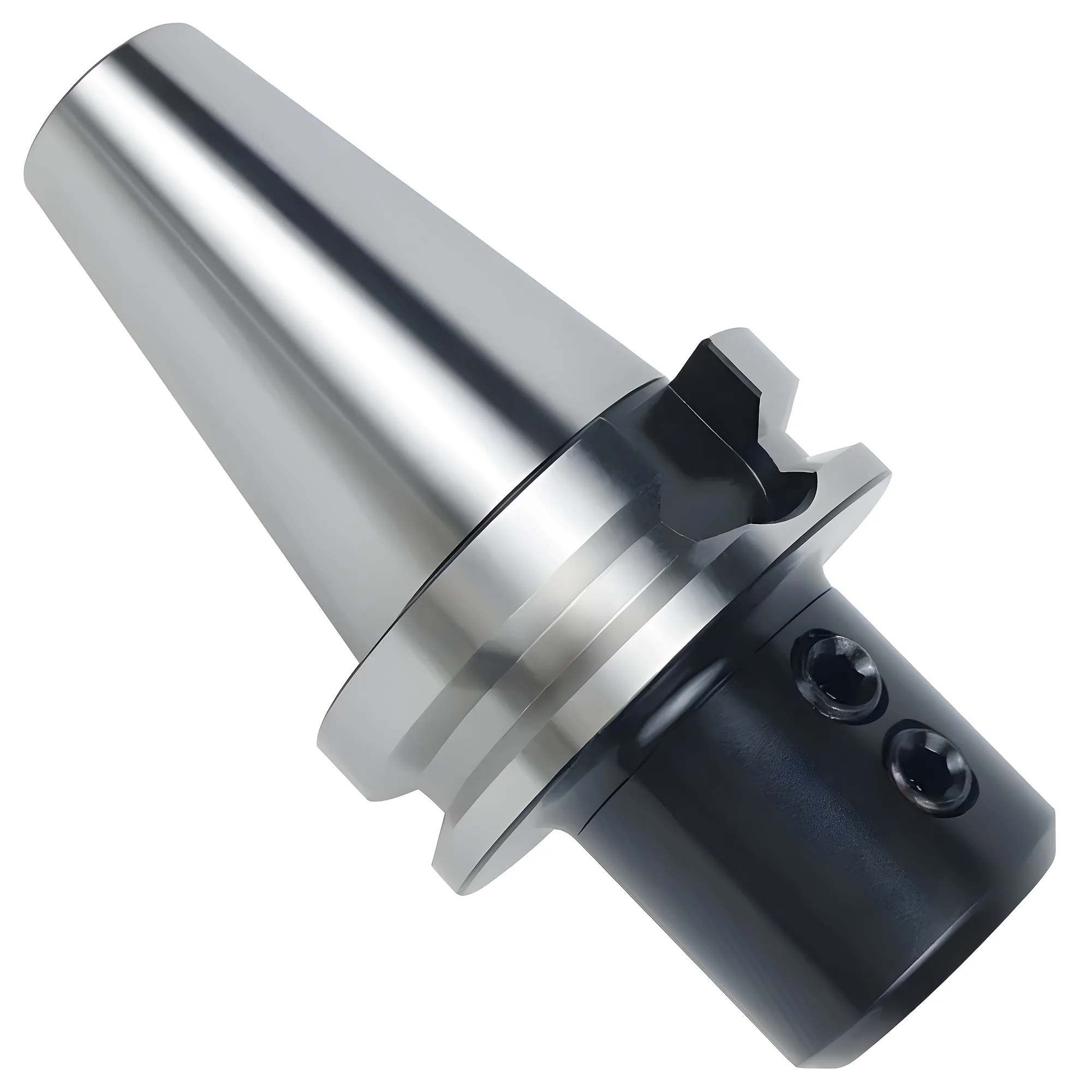
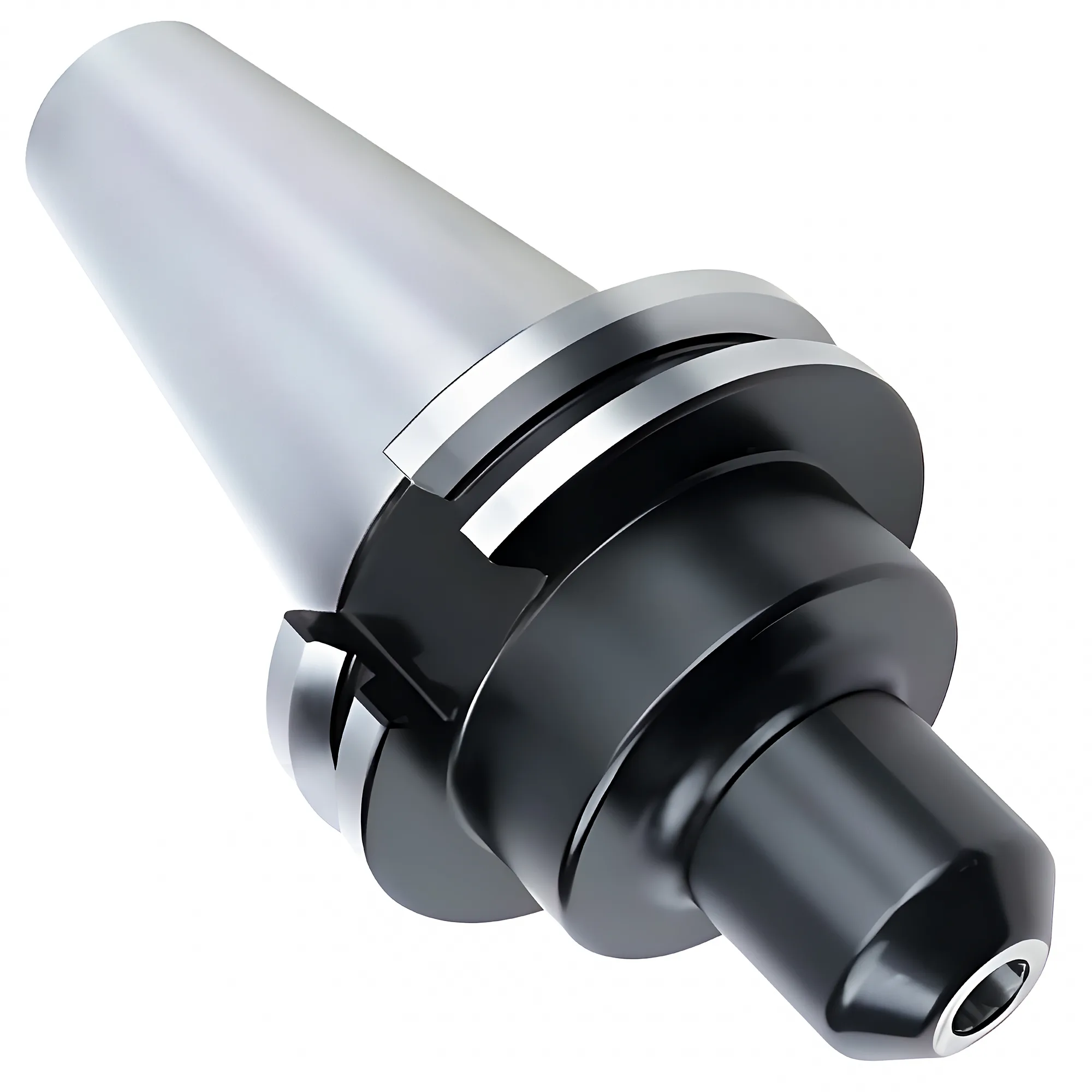
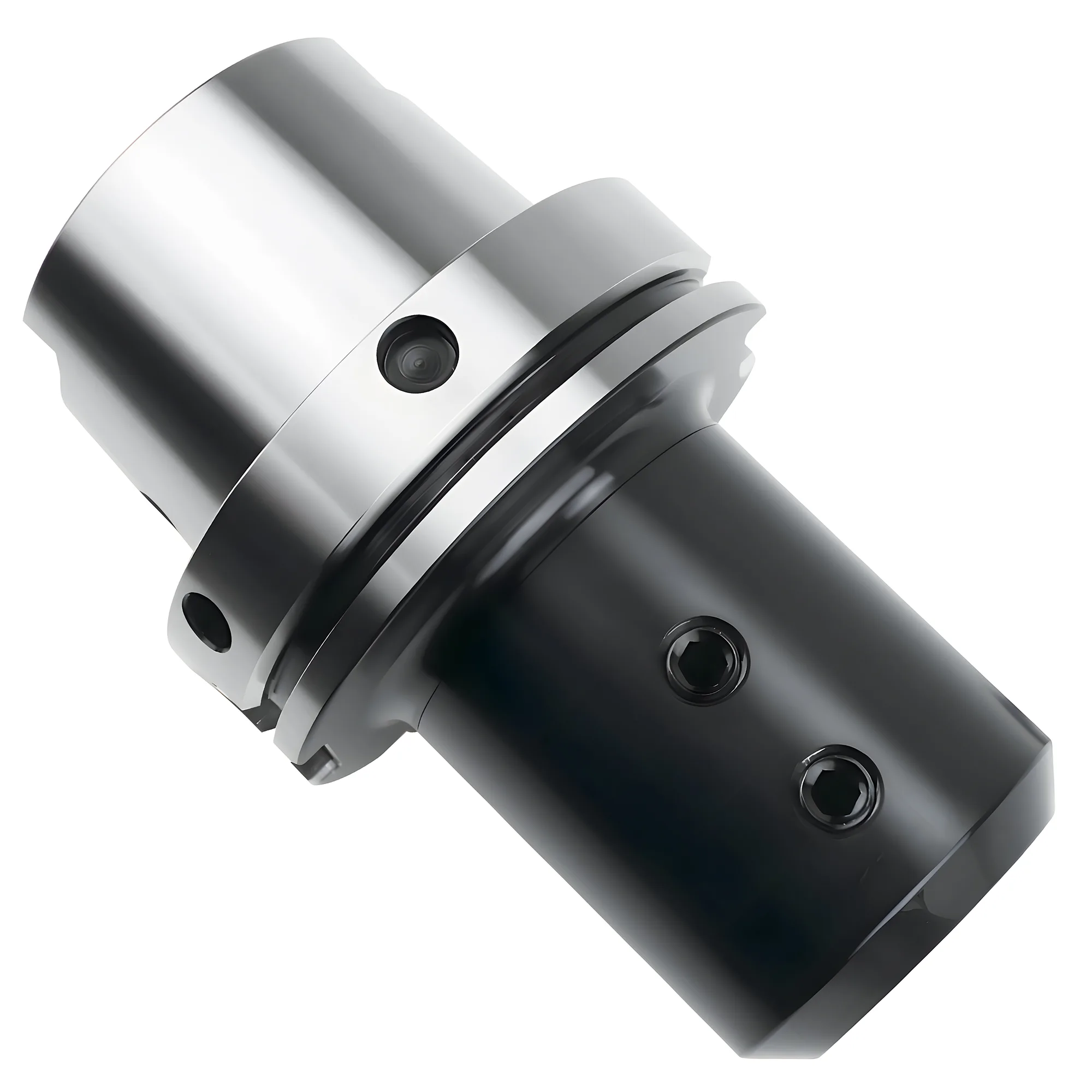
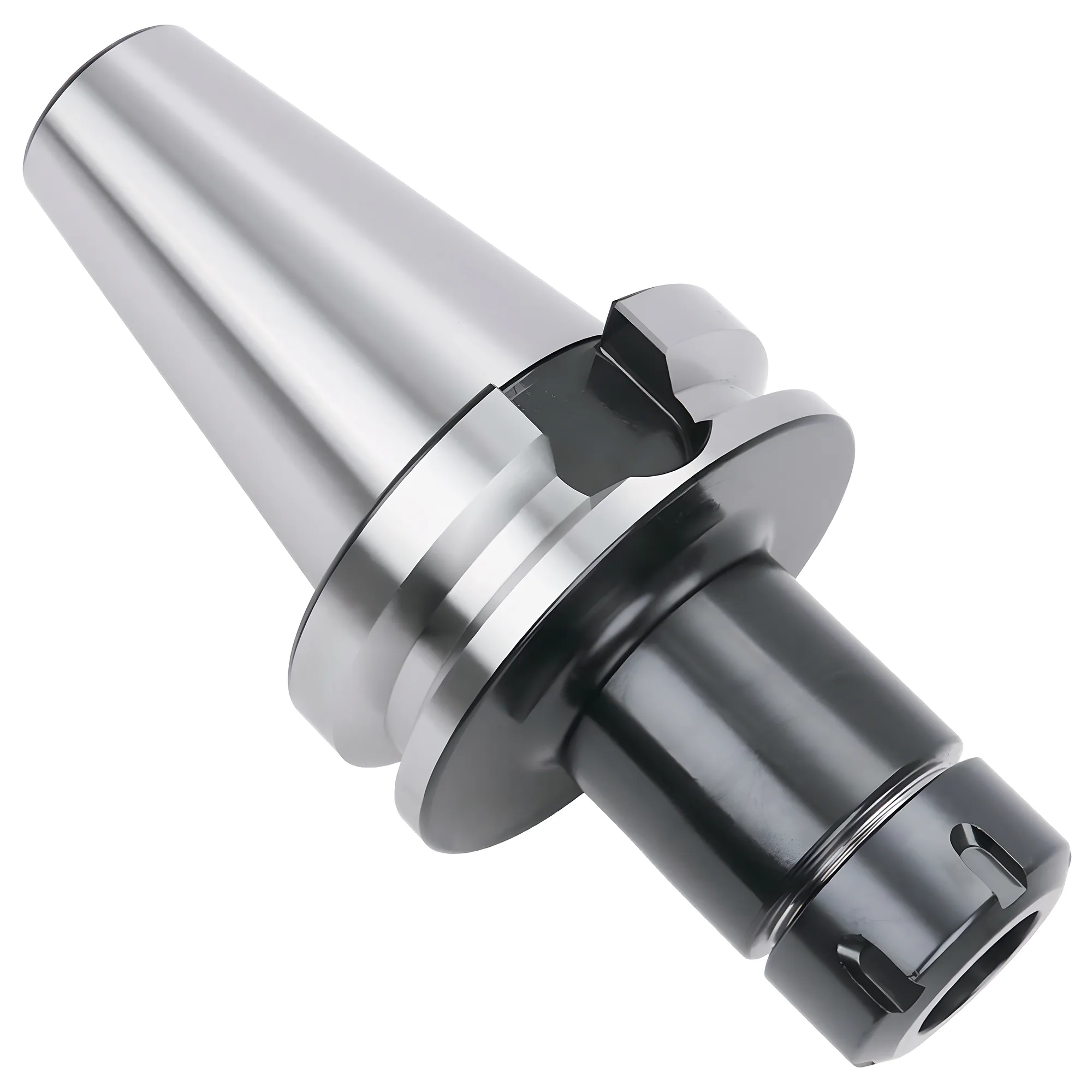
Pick the holder by what survives your floor, not just by runout. Side-lock (Weldon) holders are the most abuse-tolerant — a steel body with a replaceable set screw shrugs off crashes and drops at a typical 0.010–0.030 mm TIR for $30–150. ER collet chucks per ISO 15488 / DIN 6499 are the durable all-rounder: a crash usually kills a $8–25 collet, not the chuck (Class 2 ≤0.020 mm at 10–26 mm shanks, $100–400). Hydraulic chucks trade impact survival for runout — a hard crash can dent the thin sealing sleeve and end the holder (≤0.003 mm TIR, $300–600). Shrink-fit gives the best runout and abuse a $200–500 monolithic body well, but needs a fragile $5,000–15,000 induction heater to function at all.
This guide adds the durability axis that the precision-and-cost comparisons leave out. For the head-to-head runout/RPM comparison of the three end-mill holders, see side lock vs ER vs shrink-fit; for choosing by tolerance band, see tool holder selection by material and tolerance; and for the clamping/damping trade-off, see collet chuck vs hydraulic chuck.
Why Durability Is a Selection Axis, Not an Afterthought
Most holder guides rank options on runout, balance, and cost. Those matter — but in a high-turnover, multi-shift, or apprentice-heavy shop, a different question dominates the standardization decision: which holder survives a crash, a drop on the concrete, and a careless tool change? The shop-floor consensus is blunt — the standard holder is whatever most operators can't destroy, because a $400 chuck that needs replacing after one fender-bender costs more per year than a $120 holder that takes the same hit and keeps running.
Durability is a measurable property, not a feeling. A holder's abuse-resistance is set by three things: the failure mode under impact (which part breaks), the cost and lead time to restore it, and how forgiving its clamping is of dirt, burrs, and out-of-tolerance shanks. Side-lock holders fail gracefully — a damaged set screw is a $5 replaceable consumable — while hydraulic chucks fail catastrophically because a dented sealing sleeve cannot be field-repaired. A shop optimizing only for the ≤0.003 mm runout number can end up replacing holders faster than it replaces tools.
Treat the figures below as industry-logic guidance grounded in manufacturer data and published standards, not a performance guarantee. Real durability also depends on spindle taper, handling discipline, and crash energy, which no spec sheet captures.
The Failure Modes That Actually Take Holders Out of Service
Holders rarely wear out from cutting; they get retired by handling. The dominant out-of-service causes are crash damage to the clamping interface, dropped-holder taper or nose dents, thread galling on clamping screws and nuts, and — for hydraulic — sleeve perforation or seal failure. Each holder family fails differently, and the recoverability of that failure is what separates a durable choice from a fragile one.
| Failure Mode | Side-Lock (Weldon) | ER Collet Chuck | Hydraulic Chuck | Shrink-Fit |
|---|---|---|---|---|
| Crash on the clamped tool | Set screw deforms; body usually intact | Collet crushes/cracks; chuck taper usually intact | Sleeve can dent → loss of seal; often scrap | Bore can bell-mouth at extreme load; often re-grindable |
| Dropped on hard floor | Most tolerant — solid steel body | Tolerant; nut/threads can nick | Least tolerant — thin sleeve nose dents | Tolerant; slim nose can chip |
| Repeated dirty/burr loading | Set screw + flat tolerate grit well | Collet seat and slots trap chips → runout drift | Smooth bore scratches → seal leak path | h6 bore scuffs → grip loss |
| Field-recoverable? | Yes — swap the $5 set screw | Yes — swap the $8–25 collet | No — return to maker or scrap | Partially — re-grind bore if not cracked |
| Typical restore cost | $1–10 (screw) | $8–25 (collet) | $150–600 (replace holder) | $80–200 (regrind) or scrap |
The cheapest holder to keep running is not always the cheapest to buy. A side-lock body absorbs a crash by sacrificing a set screw; an ER chuck sacrifices a collet; a hydraulic chuck often sacrifices the whole holder. For shops without disciplined handling, the consumable-sacrifice holders (side-lock and ER) carry the lowest true cost of ownership because the expensive part survives the inevitable crash.
Quantifying the Durability–Runout Trade
Abuse-resistance and runout pull in opposite directions, and the trade is roughly monotonic: the holders that grip most precisely use the most delicate mechanism, so as runout improves from side-lock (~0.020 mm) to ER (≤0.015–0.020 mm Class 2 (normal grade), ≤0.005 mm UP grade) to hydraulic/shrink-fit (≤0.003 mm), the clamping interface gets thinner-walled, tighter-toleranced, and less forgiving of impact and dirt. A machinist standardizing a floor has to decide where on that line the shop's handling discipline actually sits.
| Factor | Side-Lock (Weldon) | ER Collet Chuck | Hydraulic Chuck | Shrink-Fit |
|---|---|---|---|---|
| Typical runout (TIR) | 0.010–0.030 mm | ≤0.015 mm (d₁≤10 mm) / ≤0.020 mm (10–26 mm) Class 2 (normal grade); ≤0.005 mm UP grade | ≤0.003 mm | ≤0.003 mm |
| Impact / crash tolerance | Highest | High | Lowest | Moderate (body high, bore sensitive) |
| Dirt / burr forgiveness | Highest | Moderate | Low | Low (h6 bore) |
| Sacrificial part on a crash | Set screw ($1–10) | Collet ($8–25) | Usually whole holder ($300–600) | Bore regrind ($80–200) or scrap |
| Cost per holder | $30–150 | $100–400 + $8–25/collet | $300–600 | $200–500 |
| Auxiliary equipment to fail | None | Torque wrench (~$200) | None (but no consumables) | Induction heater ($5,000–15,000) |
| Field-recoverable after damage | Yes | Yes | No | Partially |
The runout penalty of choosing for durability is bounded and quantifiable. By BIG DAISHOWA's "one-tenth rule," each 2.5 µm of runout reduces tool life by approximately 10% under typical carbide-steel finishing conditions. Moving from a hydraulic chuck at 0.003 mm to a side-lock at 0.020 mm gives up roughly 17 µm of runout — on the order of a 60–70% tool-life swing on finishing passes. That penalty only matters where runout drives the result: in roughing under 12,000 RPM, where side-lock lives, surface finish and tool-life sensitivity to runout are low, so the durability choice costs almost nothing. The trade is real on finishing and nearly free on roughing.
Match the holder to the operator, not just the operation
A shrink-fit fleet delivers ≤0.003 mm runout, but it is non-functional the moment the induction heater is down — and heaters are the most failure-prone, most-shared, single-point piece of equipment in a finishing cell. For lights-out or single-skilled-operator shifts, an ER or hydraulic chuck that needs no auxiliary equipment to mount a tool is often more dependable in practice than a more precise holder gated behind shared, fragile equipment.
When Abuse-Resistance Dominates: Side-Lock and ER
Side-lock and ER collet chucks are the two genuinely abuse-tolerant families, and they cover the bulk of roughing and general-purpose work. For shops where crashes and rough handling are routine — training environments, high-mix job shops, and multi-shift production with variable operator skill — side-lock and ER are typically preferred because their failure mode is a cheap, in-stock consumable rather than a scrapped holder.
Side-lock (Weldon-flat) holders clamp a ground flat (per DIN 1835 form B / DIN 6535 form HB) with a single set screw. The mechanism is almost impossible to damage permanently: the screw is the weak link by design, and it threads out in seconds. DIN 1835 and DIN 6535 define the Weldon-flat geometry that side-lock holders clamp against, which is why side-lock only accepts shanks ground with that flat — but it is also why the clamp delivers positive, slip-proof axial restraint that survives heavy chip loads. The cost of that toughness is runout (typically 0.010–0.030 mm) and poor high-RPM balance.
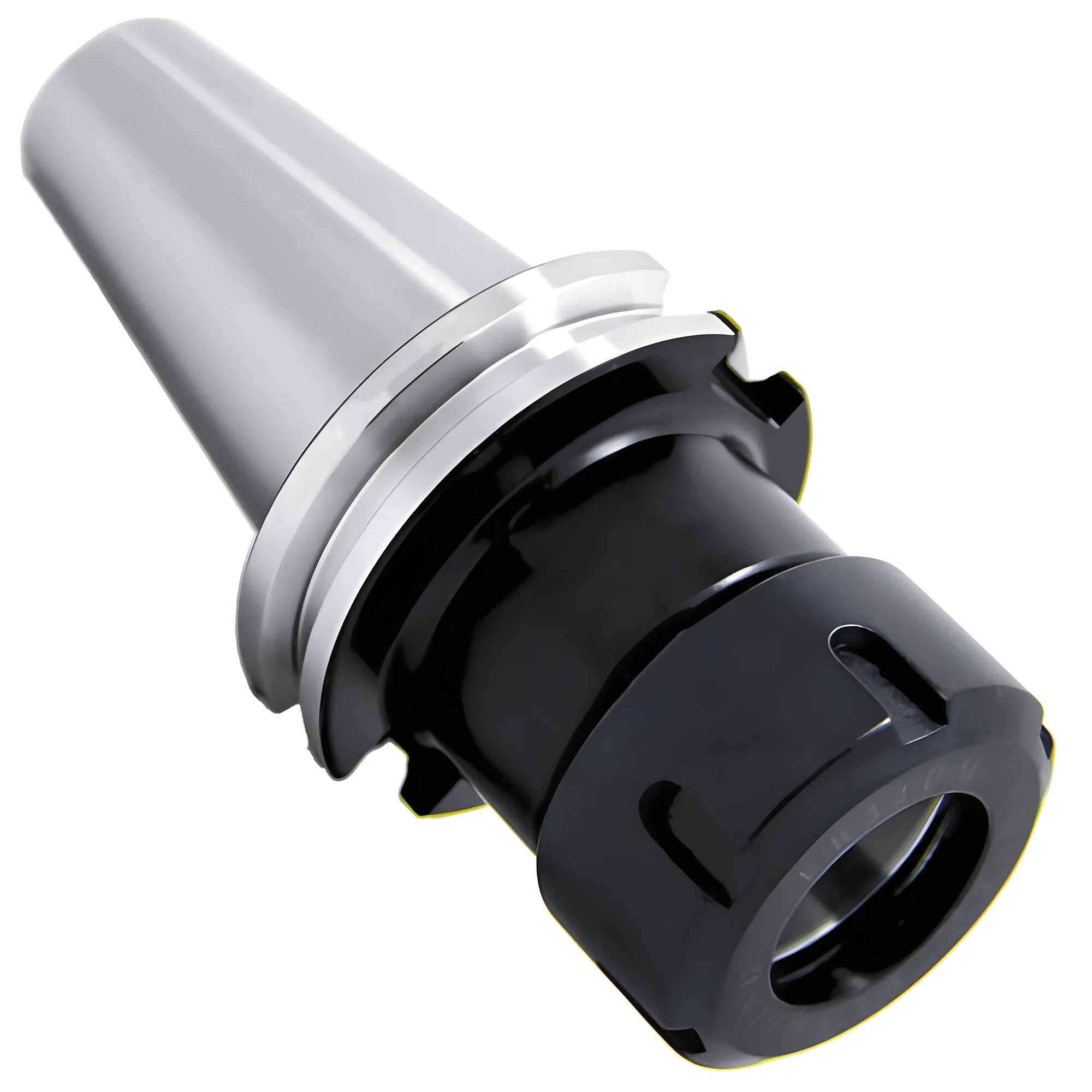
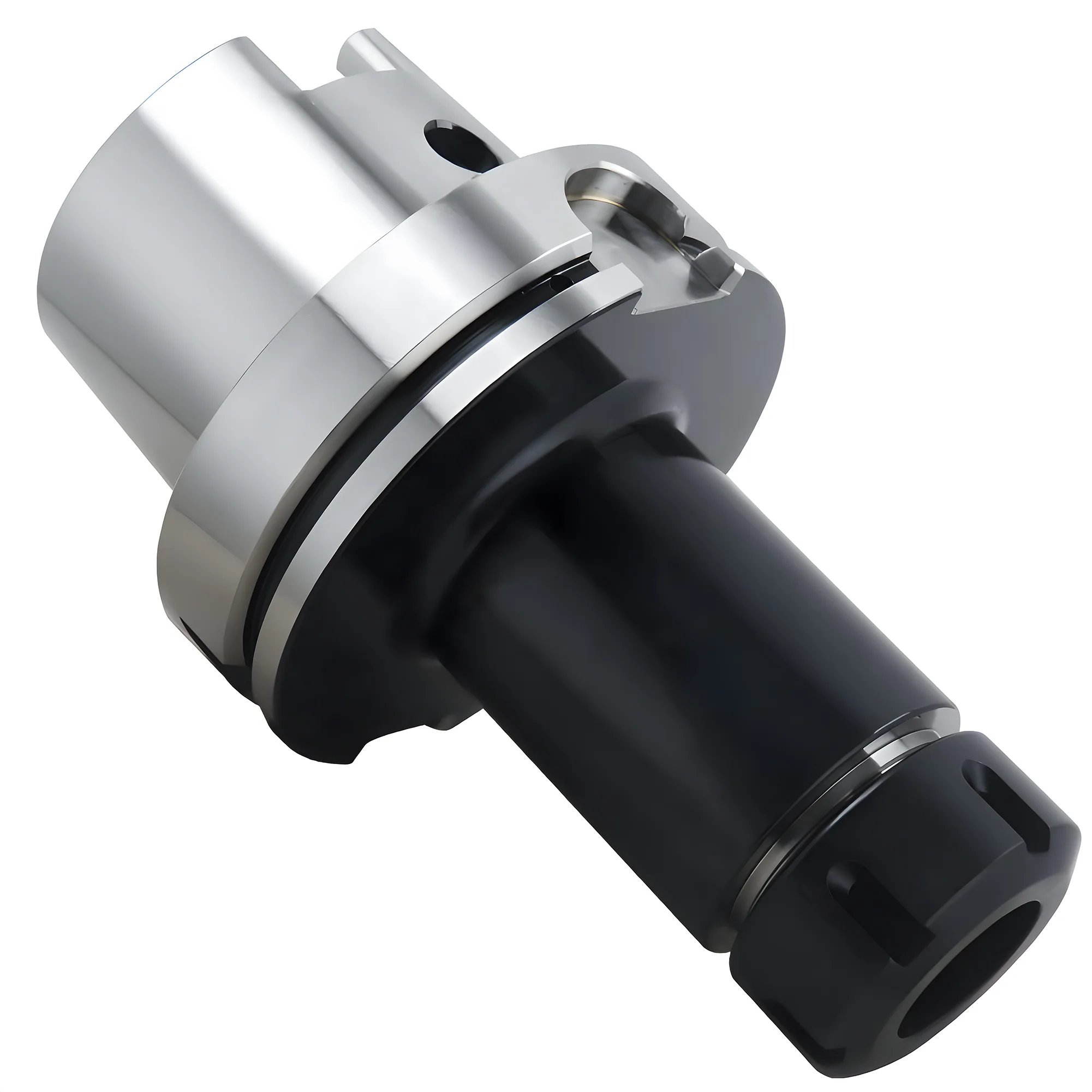
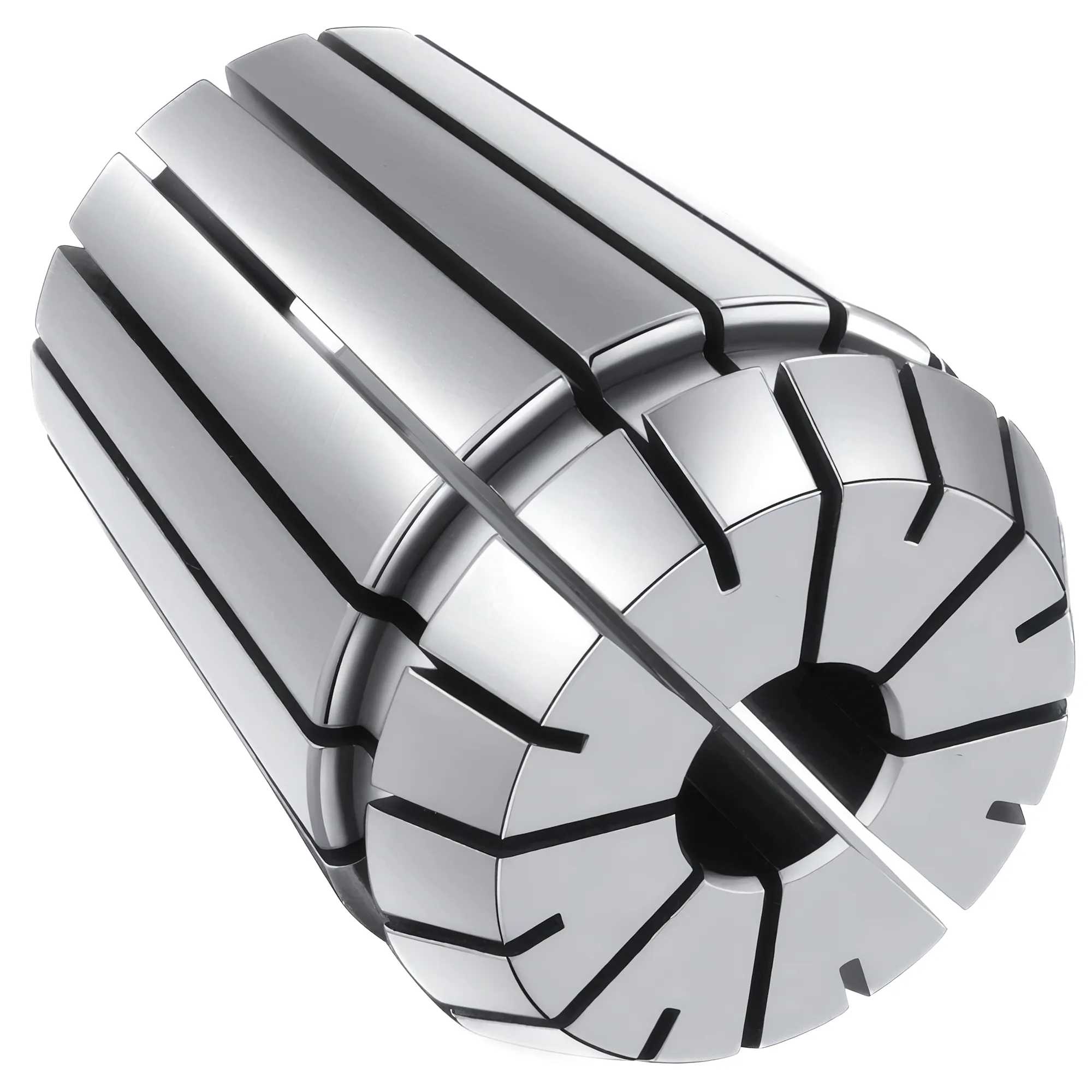
ER collet chucks per ISO 15488 / DIN 6499 are the durable workhorse. ISO 15488 grades ER collet runout into classes (Class 2 (normal grade) ≤0.015 mm for d₁ ≤ 10 mm, ≤0.020 mm for 10–26 mm), and the collet itself is the sacrificial part — a crash crushes a $8–25 collet while the chuck taper and body usually survive. DIN 6499 defines the ER collet/chuck geometry that lets one chuck plus a collet set span its size's whole band — 2–20 mm on ER32, 3–26 mm on ER40 per ISO 15488 — so a damaged collet is swapped from stock without retiring the holder. The trade-offs: collet seats and slots trap chips, so runout drifts if the seat is loaded dirty, and the standard 500–1,000 clamping-cycle collet life means worn collets need periodic replacement regardless of crashes.
Side-lock and ER should be reconsidered when surface finish below Ra 0.8 µm or spindle speeds above 20,000 RPM make their runout floor the binding constraint — at that point the operation, not handling, sets the choice.
When Runout Wins Despite the Durability Cost: Hydraulic and Shrink-Fit
Hydraulic and shrink-fit holders deliver ≤0.003 mm TIR, and on finishing work that runout is worth real money in tool life and surface quality. The durability cost is concentrated and specific: hydraulic chucks put their entire reliability on one thin sealing sleeve, and shrink-fit puts the whole system's availability on a fragile, shared induction heater. Choosing these means choosing to manage that fragility, not ignore it.
Hydraulic chucks expand a thin-wall sleeve with pressurized oil to grip the shank uniformly, reaching ≤0.003 mm TIR with inherent vibration damping. The sleeve is the durability liability: a hard crash or a dropped nose can dent or perforate the sealing sleeve, which ends the holder because the oil chamber cannot hold pressure and is not field-repairable. They also have no consumables — there is no collet to crush — so a clean hydraulic chuck lasts 10,000+ tool changes, but a crashed one is usually scrap. Hydraulic earns its place on finishing stations where the runout-driven tool-life gain pays back the higher replacement risk, and where handling is disciplined.
Shrink-fit holders grip by thermal interference into a monolithic body, delivering ≤0.003 mm TIR and the best balance class. The body itself is durable — there is no collet, screw, or sleeve to break — but the system has a different fragility. Shrink-fit holders are non-functional without an induction heater, so the system's real durability risk is heater downtime and the h6 bore scuffing on dirty loads, not the holder body. A bell-mouthed bore from an extreme crash can sometimes be reground ($80–200); a cracked one is scrap. Shrink-fit fits long-run finishing where one heater serves many holders and handling is controlled.
The hidden single point of failure
A 30-holder shrink-fit fleet looks robust until the one induction heater fails — at which point every shrink-fit tool change in the shop stops. Hydraulic chucks have no shared equipment but concentrate fragility in the sealing sleeve of each individual holder. Before standardizing on either, confirm you have heater redundancy (shrink-fit) or accept per-crash holder replacement (hydraulic) — the durability risk does not disappear, it just moves.
Side-by-Side Durability View
Each holder family earns its place on a different durability lever — side-lock on body toughness, ER on cheap sacrificial collets, hydraulic on no-consumable finishing precision, and shrink-fit on a monolithic body backed by shared heater equipment.
✦ Side-Lock (Weldon) Best For
- Crash-prone and training environments where the body must survive
- Heavy roughing under 12,000 RPM where pull-out resistance dominates
- Lowest restore cost — a $5 set screw absorbs the hit
- Shops with no induction heater and minimal handling discipline
✦ ER Collet Chuck Best For
- High-mix job shops needing one chuck across a wide shank band (ER32: 2–20 mm)
- Floors where a crash should cost a $8–25 collet, not a holder
- General milling at 8,000–20,000 RPM with G2.5 premium variants
- Tolerant of mixed-skill operators and routine tool changes
Quick Selection Table
The durability-first rule is simple: standardize on side-lock and ER for abuse-heavy floors where a crash should cost a consumable, and reserve hydraulic and shrink-fit for disciplined finishing cells where the ≤0.003 mm runout actually drives the result.
| Scenario | Recommended Holder | Typical Runout | Crash/Abuse Cost | Why |
|---|---|---|---|---|
| Training shop / apprentice cell, frequent crashes | Side-lock (DIN 1835/6535) | 0.010–0.030 mm | ~$5 set screw | Sacrificial screw absorbs impact; solid body survives drops |
| High-mix job shop, mixed operator skill, 3–20 mm shanks | ER collet chuck (ISO 15488 / DIN 6499) | ≤0.015–0.020 mm | $8–25 collet | Crash kills a cheap collet, not the chuck; one chuck covers the range |
| Heavy roughing under 12,000 RPM, steel/stainless | Side-lock (Weldon) | 0.010–0.030 mm | ~$5 set screw | Runout is non-binding at roughing; positive pull-out restraint |
| Finishing 4140 steel, disciplined handling, ≤15,000 RPM | Hydraulic chuck | ≤0.003 mm | $300–600 if sleeve dented | Runout + damping pay back on carbide tool life where handling is controlled |
| High-speed finishing >15,000 RPM, long production runs | Shrink-fit (with heater redundancy) | ≤0.003 mm | $80–200 regrind or scrap | Monolithic body + best balance; manage heater as the single point of failure |
| Lights-out / single-operator shift, no shared equipment | ER or hydraulic chuck | ≤0.003–0.020 mm | collet or sleeve | No induction heater to fail mid-shift; tool changes need no auxiliary gear |
| Tight budget, no induction heater available | ER collet chuck (Class 2) | ≤0.015–0.020 mm | $8–25 collet | Avoids heater capex and its downtime risk; durable and field-recoverable |
| Dirty environment, frequent burr/chip loading | Side-lock (Weldon) | 0.010–0.030 mm | ~$5 set screw | Flat + screw tolerate grit; smooth-bore holders scratch and leak |
Standardize on the holder your floor can't destroy, then buy runout only where it pays.
Durability is a first-order selection axis, not an afterthought: rank holders by how their clamping interface fails and how cheaply you restore it. Side-lock (Weldon) holders are the most abuse-tolerant because a crash sacrifices a $1–10 set screw while the steel body survives — ideal for training, dirty environments, and roughing under 12,000 RPM where their typical 0.010–0.030 mm runout is non-binding. ER collet chucks per ISO 15488 / DIN 6499 are the durable all-rounder: a crash crushes an $8–25 collet, not the $100–400 chuck, and one ER40 chuck spans 3–26 mm. Hydraulic and shrink-fit reach ≤0.003 mm TIR and earn finishing stations on tool-life grounds, but they concentrate fragility — hydraulic in a non-repairable sealing sleeve, shrink-fit in a shared, failure-prone induction heater. Most productive shops run side-lock and ER on the rough, abuse-heavy floor and reserve the precision holders for disciplined finishing cells where the runout actually drives the result.
What is the most durable tool holder type?
Side-lock (Weldon-flat) holders are the most abuse-tolerant because a solid steel body absorbs crashes and drops while the only sacrificial part is a $1–10 set screw. The trade-off is a typical runout of 0.010–0.030 mm TIR and poor balance above 12,000 RPM, so they suit roughing rather than precision finishing.
How much runout do I give up by choosing for durability instead of precision?
Choosing a side-lock holder (typically 0.010–0.030 mm TIR) over a hydraulic or shrink-fit chuck (≤0.003 mm) gives up roughly 17 µm of runout. By BIG DAISHOWA's one-tenth rule (~10% tool life per 2.5 µm), that is on the order of a 60–70% tool-life swing on finishing — but nearly free on roughing under 12,000 RPM where runout is non-binding.
Why do hydraulic chucks fail after a crash when ER chucks survive?
A hydraulic chuck grips with a thin sealing sleeve and oil chamber; a hard crash can dent or perforate that sleeve, ending the $300–600 holder because the chamber can't hold pressure and isn't field-repairable. An ER chuck sacrifices an $8–25 collet on a crash while the chuck taper and body usually survive.
Which holder is best for a training shop or high-turnover floor?
Side-lock for roughing and ER collet chucks for general work are best where crashes are routine, because each fails into a cheap, in-stock consumable — a $5 set screw or a $8–25 collet — rather than a scrapped holder. Avoid shrink-fit on such floors unless you have induction-heater redundancy.
Is shrink-fit fragile if its body is monolithic?
The shrink-fit body is durable, but the system is fragile because it is non-functional without an induction heater ($5,000–15,000) that is typically shared and failure-prone. The other weak point is the h6 bore, which scuffs and loses grip on dirty loads; an extreme crash can bell-mouth it, sometimes regrindable for $80–200, sometimes scrap.
Sources
- ISO 15488:2003 — Collets with 8 degrees setting angle for tool shanks (Type ER)
- DIN 6499 — Collet chucks ISO 15488
- DIN 1835 — Shank dimensions for milling cutters with cylindrical shank
- DIN 6535 — Shank forms for solid carbide milling cutters with cylindrical shank
- BIG DAISHOWA — The One Tenth = 10% Rule and Effects of Runout