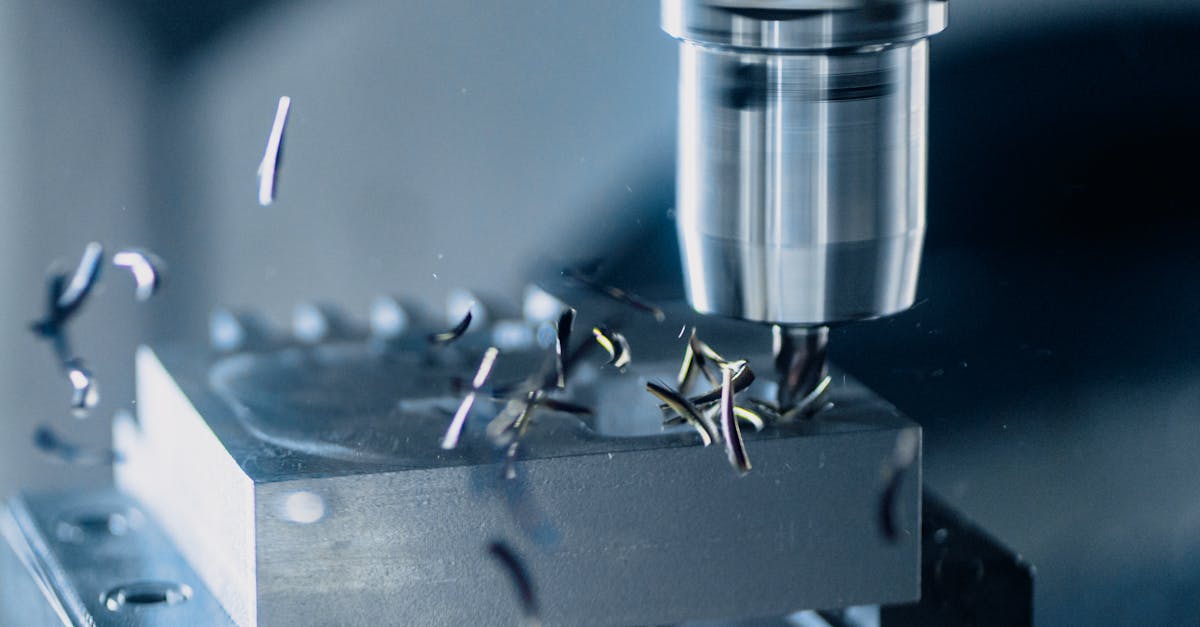
Choose a tool holder from the job, not the catalog: target holder runout (TIR) at roughly 10–20% of the part's tolerance band, then correct for material hardness (rigidity), spindle RPM (balance), and reach (geometry). Soft material at a loose tolerance runs well on an economic ER collet chuck (DIN 6499, Class 2 ≤0.020 mm TIR); high-speed finishing and tight tolerances call for a high-precision collet or power milling chuck (~3 µm class); hard milling, hardened steel, and high-force superalloys favor a shrink-fit holder (≤0.003 mm TIR). Material alone under-determines the choice — tolerance and geometry close it.
This is a job-first companion to the type-by-type comparisons. For the full landscape of holder families and where each fits, see the complete tool-holding guide. For how the three dominant end mill holders differ head-to-head, see side lock vs ER vs shrink-fit; for the collet-vs-hydraulic clamping trade-off, see collet chuck vs hydraulic chuck; and for the heat-and-fit procedure itself, see shrink-fit holder setup.
Why Material Alone Doesn't Pick the Holder
Most holder guides describe what each holder is — they map a holder type to its specs. A machinist needs the reverse: for this job, which holder? Tool holder selection is driven by three quantities, not one: required runout (from tolerance and finish), rigidity and clamping (from material hardness and depth of cut), and balance (from spindle RPM). A fourth, overriding axis is geometry — reach, overhang, 5-axis clearance, deep pockets — together with shank type.
The same material can land on different holders depending on the operation. Aluminum roughed at ±0.1 mm and 8,000 RPM and aluminum finished at ±0.005 mm and 24,000 RPM call for different holders even though the workpiece is identical. The first tolerates an economic ER collet; the second needs a balanced, low-runout chuck. That is why a material-only rule of thumb fails in practice — it ignores the two variables (tolerance and RPM) that actually move the decision.
Treat everything below as industry-logic guidance grounded in manufacturer data and published standards, not a branded product ladder and not a performance guarantee. Real-machine results stack spindle, holder, and shank tolerances on top of the isolated-mandrel figures the standards quote.
The Runout Budget Rule
The centerpiece quantity is runout, and it has a well-documented price. BIG DAISHOWA's "One Tenth = 10% Rule" states that each 0.0001 inch (about 2.5 µm) of runout reduces tool life by approximately 10% under typical conditions. Expressed as a proportional relationship:
ΔTool life ≈ −10% per 0.0001″ (2.5 µm) of TIR
Runout is the dominant lever here because the penalty is roughly linear and compounds fast: at 0.010 mm (four tenths) the tool-life loss is on the order of 40%, and BIG KAISER's published carbide-drill testing found that pulling runout from 0.0006″ down to 0.00008″ increased tool life by roughly 3x. Above about 0.0005″ (12 µm) of runout, carbide tool life is severely compromised in most setups.
The practical rule to carry into the matrix is simple. Target holder TIR at roughly 10–20% of the part's tolerance band — the band's total width, so a ±0.05 mm callout is a 0.10 mm band; for finishing or hard milling target under 5 µm, and for critical work target under 2.5 µm. Then apply three corrections: harder material wants more rigidity, higher RPM wants finer balance, and longer reach favors a slim shrink-fit. A ±0.05 mm general-machining tolerance (0.10 mm band) leaves a ~10–20 µm runout budget that a Class 2 ER collet (≤0.015–0.020 mm) covers; a ±0.005 mm precision tolerance shrinks that budget to ~1–2 µm, which in practice requires a high-precision collet or shrink-fit.
The Material × Tolerance Decision Matrix
The matrix below reads the two variables material-only rules ignore. Tolerance runs across the columns, material down the rows; each cell is the default starting holder, validated against the runout and clamping data in §02 and §04. Boundary cells flip on geometry and RPM — see §05.
Tolerance columns: Loose (>±0.05 mm) · Standard (±0.01–0.05 mm) · Precision (±0.005–0.01 mm) · Tight (<±0.005 mm).
| Material \ Tolerance | Loose (>±0.05) | Standard (±0.01–0.05) | Precision (±0.005–0.01) | Tight (<±0.005) |
|---|---|---|---|---|
| Aluminum & mild steel | ER collet (economic) | ER collet | High-precision collet | High-precision collet / shrink-fit |
| Stainless & titanium | ER collet | ER / high-precision collet | High-precision collet | Shrink-fit |
| Hardened ≥45 HRC | High-precision collet | High-precision collet / shrink-fit | Shrink-fit | Shrink-fit |
| Ni/Co superalloy (Inconel, Waspaloy) | High-precision collet | High-precision collet / shrink-fit | Shrink-fit | Shrink-fit |
| Fiber composite (CFRP/GFRP) ¹ | High-precision collet | High-precision collet | High-precision collet | High-precision collet |
¹ Fiber composites are abrasive but low cutting-force, machined at high RPM with diamond/PCD tooling. Their holder driver is runout and balance — the same logic as high-speed aluminum finishing — not clamping force, so the default is a well-balanced high-precision collet rather than shrink-fit. The final pick still turns on the operation, not the material (see below).
The load-bearing pattern is: soft material plus loose tolerance → economic ER collet; tighter tolerance, harder material, or high-speed finishing → high-precision or power collet; high cutting-force plus heat (hard milling, hardened steel, Ni/Co superalloys) or deep cavities → shrink-fit. Two cautions keep the matrix honest:
- Do not lump fiber composites with superalloys. Both get called "aerospace exotics," yet they have opposite holder drivers: superalloys need rigidity, clamping, and heat tolerance (→ shrink-fit), while abrasive composites need runout and balance at high RPM (→ high-precision collet).
- For composites, the operation decides — not the material. Default to a high-precision collet for high-speed milling, routing, and trimming (balance-driven). Switch to shrink-fit only when axial pull-out is the risk — deep-hole drilling, small-diameter PCD, or heavy plunging at moderate RPM — because radial clamping force is not the same as axial pull-out resistance, and a shrink-fit's interference grip resists tool walk-out better than a segmented collet (CNCCookbook). Note the ceiling: a shrink-fit's pre-balanced range tops out around 25,000 RPM, so above that a balanced collet is typically the only option regardless.
Abrasive ≠ high cutting force
Holder choice depends on why a material is hard to machine, not just that it is. Fiber composites (CFRP/GFRP) are abrasive but generate low cutting forces — they are cut at high spindle speed (roughly 10,000+ RPM) with diamond/PCD tooling, so the holder's job is runout and balance because runout amplifies abrasive tool wear. A high-precision collet chuck is usually the right pick. Shrink-fit's high clamping force and heat tolerance are wasted on composites, and its single-shank-diameter, induction-heater constraints add cost for no benefit. Reserve shrink-fit for high-force, high-heat materials — hardened steel and Ni/Co superalloys such as Inconel and Waspaloy.
What Each Holder Class Can Actually Hold
Three holder classes cover most of the matrix. The specs below are the cite-able capability of
each, drawn from the canonical values in data/facts.yml and Sandvik's chuck-selection guidance.
- ER collet chuck (DIN 6499 / ISO 15488). Sandvik describes it as the economic all-round chuck for drilling and light milling, with accuracy and clamping that are "not as good" as hydraulic or shrink-fit. The ER collet chuck is the right default for soft materials at loose-to-standard tolerances because its Class 2 runout (≤0.020 mm) already meets surface-finish targets below about 15,000 RPM. Standard Class 2 holds ≤0.015 mm (d₁ ≤ 10 mm) or ≤0.020 mm (d₁ 10–26 mm) per ISO 15488:2003 Table 4; precision UP/AA grades reach ≤0.005 mm. DIN 6499 defines the ER collet geometry that makes one chuck cover a continuous clamping range, which is why job shops running dozens of tool diameters per shift standardize on it. ISO 15488 is the runout-class standard used to grade ER collets, so a "Class 2" or "UP" callout maps directly to a TIR figure you can budget against.
- High-precision collet / power milling / hydraulic chuck. This middle class holds the ≤0.003 mm runout band with high balance (G2.5) for high-RPM finishing. A high-precision or power milling chuck is preferred for precision tolerances and high-speed finishing because it pairs ~3 µm runout with the balance needed above 15,000 RPM — without the per-diameter heater commitment a shrink-fit fleet requires.
- Shrink-fit holder. Sandvik rates its run-out precision as "very good." The shrink-fit holder holds ≤0.003 mm TIR at 3xD with 25,000–40,000 N of clamping, which is why it is the default for solid carbide, hard milling, and high-force superalloys. Its slim nose also clears deep cavities and 5-axis tool paths. Ti-6Al-4V and Inconel both favor shrink-fit at tight tolerances because their high cutting forces and heat demand the interference grip and rigidity an ER collet can't match. Waspaloy, as a high-strength Ni/Co superalloy, follows the same shrink-fit logic as Inconel because its dominant challenge is cutting force and heat, not abrasion. It is also a legitimate pick for deep-hole or small-PCD composite drilling, where axial pull-out resistance matters. Constraints: it needs an induction heater, holds one shank diameter per holder, and grips round carbide shanks only.
When Geometry Overrides Material and Tolerance
Geometry is the override axis — it can outrank the matrix entirely. A slim shrink-fit holder gets chosen for reach regardless of material, because its conical nose reaches into deep pockets and clears multi-axis tool paths where a bulky ER nut would collide. Sandvik recommends slim, conical holders for 5-axis work and long overhang for exactly this reason.
The override also runs the other way. Non-round or multi-diameter shanks rule out shrink-fit, because it grips only a single round carbide shank diameter per holder — so a Weldon-flat or stepped shank falls back to ER or side-lock even when the tolerance column pointed to shrink-fit. Read §05 as the override, not an exception list: whenever reach or shank type conflicts with the matrix cell, geometry wins.
The Hard-Milling Correction
Hardness amplifies the runout penalty, which is why the hard rows shift right toward shrink-fit. For hardened steel at 45–50 HRC and above, keep runout under 0.0004 inch (about 10 µm), a target met by shrink-fit, power milling chucks, or high-precision collet chucks (MSC, "3 Tips for Successful Hard Milling"). Extending the one-tenth rule into hardened material, each extra ~5 µm of TIR costs on the order of 20% of tool life in hardened steel, a steeper penalty than in soft material, because the harder workpiece leaves less margin before edge chipping dominates the wear mode. That amplification is the mechanism behind the matrix: a tolerance band that an ER collet could hold in aluminum pushes to a high-precision collet or shrink-fit once the same band has to be held in 50 HRC tool steel.
Putting It Together: From Job to Holder
Run the decision in four reads:
- Read the tolerance band → set a TIR target (≈10–20% of the band; under 5 µm finishing; under 2.5 µm critical).
- Read the material and hardness → add rigidity (harder → power milling chuck or shrink-fit).
- Read the spindle RPM → add balance (higher RPM → G2.5 or finer balance class).
- Check geometry and shank → let reach or shank type override (slim shrink-fit for reach; back off to ER/side-lock if the shank isn't a single round diameter).
Two worked examples show the reads interacting:
- Ti-6Al-4V bracket, ±0.008 mm, 18,000 RPM, deep pocket. Tolerance (0.016 mm band) leaves a ~1.5–3 µm runout budget, the titanium and cutting forces want rigidity, and the deep pocket needs reach. All three reads point to a slim shrink-fit holder — tolerance demands a holder in the ≤3 µm class, hardness demands the interference grip, and geometry demands the slim nose.
- 6061 aluminum cover, ±0.1 mm, 8,000 RPM, open face. The loose band (0.2 mm) leaves a ~20–40 µm runout budget, the soft material needs no extra rigidity, and the moderate RPM needs no special balance. An economic ER collet chuck is the correct, lowest-cost pick — anything tighter is wasted spend.
Use the Quick Selection Table to shortcut common jobs straight to a starting holder, then confirm against the four reads above.
| Scenario | Tolerance Band | Typical RPM | Starting Holder | Why |
|---|---|---|---|---|
| General aluminum / mild steel milling | >±0.05 mm | <10,000 | ER collet (Class 2, ≤0.020 mm) | Runout budget is wide; economic chuck meets finish |
| Stainless / titanium semi-finishing | ±0.01–0.05 mm | 8,000–15,000 | ER / high-precision collet | Moderate budget; UP-grade ER (≤0.005 mm) holds finish |
| High-speed precision finishing | ±0.005–0.01 mm | 15,000–24,000 | High-precision / power milling chuck | ~3 µm runout + G2.5 balance for RPM |
| Hardened steel ≥45 HRC | <±0.005 mm | varies | Shrink-fit (≤0.003 mm) | <10 µm runout rule; interference grip resists chipping |
| Inconel / Waspaloy superalloy | ±0.005–0.01 mm | low–moderate | Shrink-fit (≤0.003 mm) | High cutting force + heat need rigidity, not just low TIR |
| CFRP / GFRP high-speed routing | any | 10,000+ | High-precision balanced collet | Abrasive, low-force; runout + balance, not clamping |
| Deep pocket / 5-axis (any material) | precision–tight | varies | Slim shrink-fit | Geometry override: reach and clearance outrank material |
Match the holder to the job, not the job to the holder.
Start from the part's tolerance band to set a runout budget (≈10–20% of the band), then correct for material hardness (rigidity), spindle RPM (balance), and reach (geometry). Soft and loose runs on an economic ER collet (≤0.020 mm); precision and high-speed wants a ~3 µm high-precision or power milling chuck; hard, high-force, or deep-cavity work wants a shrink-fit (≤0.003 mm). Material alone under-determines the holder — tolerance and geometry close the decision.
How do I pick a tool holder from the part tolerance?
Target holder runout (TIR) at roughly 10–20% of the part's tolerance band, counting the band's total width. A ±0.05 mm callout (0.10 mm band) leaves a ~10–20 µm budget that a Class 2 ER collet (≤0.020 mm) covers; a ±0.005 mm callout shrinks the budget to ~1–2 µm, which needs a high-precision collet or shrink-fit (≤0.003 mm).
Does workpiece material decide the tool holder?
No — material alone under-determines the choice. Three quantities drive it: required runout (from tolerance), rigidity (from hardness and depth of cut), and balance (from RPM), plus a geometry override. The same aluminum part at ±0.1 mm and ±0.005 mm calls for different holders.
What runout do I need for hard milling above 45 HRC?
Keep runout under about 0.0004 inch (10 µm) for hardened steel at 45–50 HRC and above, per MSC's hard-milling guidance, because each extra ~5 µm of TIR costs on the order of 20% of tool life in hardened material. For finishing passes, target under 5 µm. Shrink-fit, power milling chucks, and high-precision collet chucks all reach these levels.
When does geometry override the material and tolerance choice?
Geometry overrides when reach or shank type conflicts with the matrix. Slim shrink-fit holders win for deep pockets and 5-axis clearance regardless of material, while non-round or multi-diameter shanks rule out shrink-fit — which grips one round shank diameter per holder — and fall back to ER or side-lock.
What's the runout difference between an ER collet and a shrink-fit holder?
A standard Class 2 ER collet holds ≤0.015–0.020 mm TIR; a shrink-fit holds ≤0.003 mm at 3xD. By BIG DAISHOWA's one-tenth rule (≈10% per 2.5 µm), closing that ~12–17 µm gap is worth on the order of a 50–70% tool-life swing on carbide finishing.
Sources
- Sandvik Coromant — Chuck Selection
- BIG KAISER — Six Factors Selecting Hydraulic or Shrink-Fit Holders
- BIG DAISHOWA — The One Tenth = 10% Rule and the Effects of Runout
- MSC — 3 Tips for Successful Hard Milling
- HAL — Investigation of CFRP Machining with Diamond Abrasive Tools
- NIH PMC — CFRP Dry Routing: Temperature, Forces, Tool Wear
- Exactaform — CFRP PCD & Diamond Tooling
- CNCCookbook — Ultimate Guide to Selecting Milling Toolholders