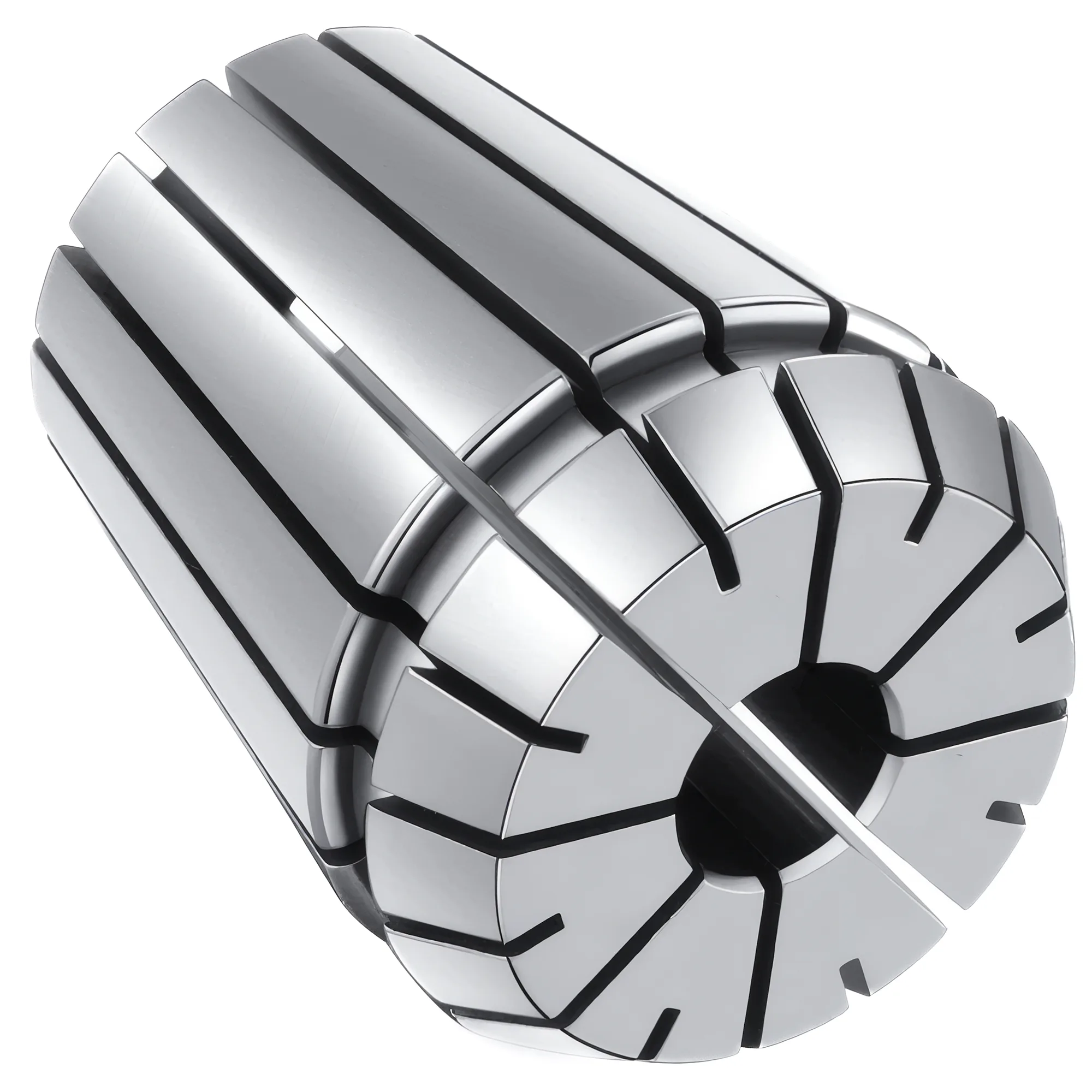
Clean ER collets with a solvent and a nylon or brass brush rather than abrasive pads, store them oiled or in VCI-protected drawers below roughly 50% relative humidity, and retire any collet that has a cracked slot, a bellmouthed bore, a scored taper, or runout above the ISO 15488 Class 2 limit of 0.015–0.020 mm. A collet is a consumable that typically lasts 500–1,000 clamping cycles; this guide covers cleaning, storage, crash triage and a go/no-go check for a fleet of hundreds of collets.
Quick Collet Care Reference
| Problem / Goal | Primary Action | Expected Impact |
|---|---|---|
| Packed chips or dried coolant in the slots | Soak in degreaser, scrub slots with a nylon or brass brush, blow dry at under 30 psi | Restores the full 1 mm collapse range (ER16–ER40) and removes the high spots that tilt the collet |
| Light surface rust on a stored collet | Penetrating oil plus a brass brush; no abrasive pads on the taper or bore | Removes staining without cutting the ground taper, whose AT3 angle tolerance allows only roughly 1–2.5 µm of deviation across its length depending on collet size (ISO 15488 Annex A) |
| Collets rusting in a drawer or wooden rack | Move to plastic pocket trays with VCI or a light oil film; keep the cabinet below ~50% RH | Takes the storage environment out of the steel's typical ~60% RH rapid-corrosion zone |
| Collet involved in a crash or tool slip | Quarantine, then run the 4-point crash triage before reuse | Removes cracked or bellmouthed collets before they cut; this damage typically pushes runout past the 0.015–0.020 mm Class 2 limit |
| Hundreds of collets of unknown history | Sort, visual check, gauge-pin fit, then reference-holder runout check | Visual + pin screening takes roughly 30–60 s per collet; runout is measured only on survivors |
For the clamping side of the same system — rated nut torque and the runout-based replacement signals — see the ER collet torque chart and runout guide. For nut wear (spanner notches, thread galling, contact-cone scoring), see the collet nut selection and maintenance guide. This article treats the collet itself as a consumable: how to keep it clean, how to keep it from rusting, how to judge crash damage, and how to cull a large inventory.
Why Collet Care Shows Up as Runout
An ER collet locates on two ground cones — the 8° setting-angle taper that seats in the holder and the 30° front cone that the nut pushes on — and grips the shank through a slotted bore. Every particle, rust bump or burr on those three surfaces becomes a tilt or an offset at the tool tip, so collet cleanliness is a runout specification, not a housekeeping preference.
ISO 15488 requires the collet bore and taper to be hardened to 44–48 HRC (44 +4/0 HRC) from a steel with tensile strength of at least 700 N/mm². Spring steel is the usual choice for ER collets because the slotted body has to flex 1 mm (ER16–ER40) and return to size after every release, yet at 44–48 HRC it is softer than the 56–60 HRC holder bore — so in any contamination event the collet surface is the one that gets marked.
A first-order estimate shows how little contamination it takes. A high spot of height h on the taper, acting over a contact length L, tilts the collet by roughly h / L, and that tilt is amplified by the projection P to the indicator:
TIR ≈ 2 × h × P / L
Projection length dominates this error because it scales linearly: a 0.005 mm chip or rust bump on a taper with roughly 30 mm of contact, read at the 40 mm ISO 15488 test projection, gives about 2 × 0.005 × 40 / 30 ≈ 0.013 mm TIR — most of the 0.020 mm Class 2 budget for a 10–18 mm collet before the collet itself contributes anything. The same bump read at 80 mm of tool stick-out roughly doubles to ~0.027 mm. The model ignores taper compliance, so treat it as an order-of-magnitude check, not a prediction.
ISO 15488 is the reference standard for judging collet condition because its Table 4 fixes both the runout limit and the test projection for each bore range, so readings taken on different collets, holders and days are directly comparable.
The tool-life cost of that runout is well documented: under the BIG DAISHOWA one-tenth rule, each 0.0001 inch (2.5 µm) of runout reduces tool life by approximately 10%, so 0.01 mm costs roughly 40%, varying with tool diameter, material and cutting parameters.
How to Clean ER Collets: Slots, Bore, Taper and Nut Thread
Cleaning works best in two tiers: a 30-second wipe at every tool change and a full clean whenever a collet comes back to the crib or shows residue.
At every tool change (roughly 20–30 seconds):
- Wipe the 8° taper and the 30° front cone with a clean, lint-free cloth.
- Wipe the holder taper bore with a cone-shaped taper wiper or cloth — a clean collet in a dirty bore gains nothing.
- Check the bore for a ring of chips or aluminum smear before inserting the shank.
Full clean (crib return, coolant residue, or after aluminum work):
- Soak. Immerse in a degreaser or mineral-spirits bath for 5–15 minutes to soften dried coolant and tramp oil. Water-based ultrasonic baths with a mild detergent clear packed slots effectively, but unprotected steel can flash-rust within hours once wet, so dry and oil immediately after the bath.
- Brush the slots. Scrub each slot from both ends with a nylon or brass bristle brush; a thin brass shim or plastic pick can lift packed chips without scratching the slot faces. Chips packed into the slots stop the segments from closing evenly, which typically shows up as reduced grip at the small end of the collet's range and as runout that changes from one clamping to the next.
- Clean the bore. Run a nylon bore brush or pipe cleaner through the bore. Aluminum smeared onto the bore wall can usually be removed with solvent and a brass brush; steel pick-up that has welded to the bore is a scrap signal, not a cleaning job (see Section 04).
- Final wipe of the cones. Finish the 8° taper and 30° cone with isopropyl alcohol or another non-residue solvent on a lint-free cloth so the taper seats dry, metal-to-metal.
- Dry. Blow out slots with compressed air reduced below 30 psi (about 2 bar) with chip guarding and eye protection — OSHA sets this limit in 29 CFR 1910.242(b) for compressed air used for cleaning in US workplaces, because higher dead-ended pressure can drive chips into skin and eyes — then apply the storage film from Section 03.
The nut thread. Clean the nut's internal thread and the holder's external thread with a brass brush and solvent, then apply a light film of oil to the thread and nut bearing face only — not to the collet taper. A thread that runs rough when hand-turning after cleaning is a nut or holder problem; the nut maintenance guide covers how to tell which.
Keep Abrasive Pads Off Ground Surfaces
Abrasive non-woven pads, emery cloth and wire wheels remove metal unevenly. ISO 15488 Annex A holds the collet cone angle to tolerance grade AT3 — 80 µrad for a cone length of roughly 16–25 mm, which is only about 1.3–2.0 µm of diameter deviation across that length (AT_D = AT_α × L). A few passes of an abrasive pad can remove more than that from one side of the taper, permanently tilting the collet. Use abrasives, if at all, only on non-locating surfaces such as the outer flange of a holder — not on the collet taper, front cone or bore.
Rust-Proof Long-Term Storage
Typical shop experience and corrosion practice suggest that rusting of plain carbon and spring steels accelerates once relative humidity stays above roughly 60%, and condensation forms whenever a cold collet meets warm, humid air — so storage control is mainly humidity control. A shop with an unheated tool crib, a shipping-container store, or a machine next to a roll-up door sees more collet rust than one with a climate-controlled crib, regardless of how well the collets are oiled.
Choose the protection by storage duration:
| Storage Duration | Protection | Removal Before Use | Typical Use |
|---|---|---|---|
| Under ~1 week | Thin film of light machine oil after cleaning | Wipe cones dry with non-residue solvent | Collets in daily rotation |
| ~1 week to ~6 months | Dewatering, thin-film rust preventive (oil-type) in a closed drawer | Solvent wipe of cones and bore | Seldom-used sizes in a working set |
| ~6 months and longer | VCI paper, bag or emitter in a closed box, plus oil film on the cones | Solvent wipe; inspect for staining | Spare sets, odd sizes, inch collets in a metric shop |
| Heavy, long-term | Wax-type or soft-film rust preventive | Full solvent clean before use | Archived or overseas-shipped inventory |
VCI (vapor corrosion inhibitor) products work only in an enclosed volume — the inhibitor vapor has to saturate the air around the steel, so an open rack with a VCI strip protects little. Match the emitter size to the drawer or box volume and replace it on the maker's stated interval.
Rack material and nose protection:
- Avoid bare wood for long-term storage. Wood holds moisture against the contact points, and some species — oak in particular — release acetic acid vapor that corrodes steel. On collets kept in wooden holders, rust typically appears first at the wood contact points.
- Use plastic pocket trays or coated racks that hold each collet separately by its body. Loose collets in a bin knock taper against taper and slot tip against slot tip; every nick on a cone is a future high spot.
- Protect the nose. The slotted front end with the 30° cone carries the thin slot tips that bend most easily. Store collets nose-up or in pockets deep enough that the front cone does not bear the weight of the collet or touch its neighbor.
- Store collets released, not torqued in a holder. A collet left clamped in a holder for months traps moisture at the taper contact and is a common cause of seized collets; storing it in its tray keeps the cones accessible for the oil film.
- Keep the size marking visible so the crib attendant does not have to handle oiled collets to find a size.
Best Practice: One Hygrometer per Collet Cabinet
A low-cost hygrometer inside the collet cabinet turns rust prevention from a guess into a reading. Keep the cabinet below roughly 50% relative humidity with a rechargeable desiccant canister, and recharge it when the reading climbs. Humidity control typically matters more than the choice of oil.
Light rust that wipes off as brown staining with penetrating oil and a brass brush is cosmetic; rust that leaves pits you can catch with a fingernail on the taper, front cone or bore retires the collet, because each pit edge is a high spot the cleaning in Section 02 cannot remove.
Crash Triage: Cosmetic Damage or Scrap?
After a crash, a tool pull-out or a spun shank, quarantine the collet and nut together and inspect them before reuse — a crash collet that looks intact can still carry a cracked slot root or a bellmouthed bore. Use a 10× loupe and a bright light, and check the four zones below in order.
| Zone | Cosmetic — Clean and Reuse | Scrap — Retire Immediately |
|---|---|---|
| 8° taper and 30° front cone | Discoloration, light coolant stain, a scratch you cannot feel with a fingernail | Any score or ridge that catches a fingernail, galling, a flat or dent from impact |
| Bore | Aluminum smear that dissolves or brushes out | Helical score from a spun tool, welded steel pick-up, a bore that no longer accepts its nominal pin |
| Slots and segments | Chips or burrs that brush out of the slot | A crack at a slot root, a segment bent so slot widths differ visibly, a missing or chipped slot tip |
| Extraction groove and front face | Light burr on the front face, outside the cone contact | A dented or rolled extraction groove that no longer snaps cleanly into the nut |
Bellmouthed bore. A crash that levers the tool sideways can spring the front segments open so the bore is larger at the nose than at the back. Signs: a nominal gauge pin rocks at the front but is snug at the rear, and runout read at two heights along a clamped test pin grows far faster than the projection ratio predicts. A bellmouthed collet grips only on its rear segment length and typically loses both concentricity and pull-out resistance — retire it.
Scored taper. Taper scoring usually means debris was trapped during clamping or the collet rotated in the holder under load. Even if the collet still reads within limits once, scored cones produce runout scatter from one clamping to the next, so retire it — and inspect the holder taper bore, which may carry the matching score.
Cracked slot. Cracks start at the slot root, where the bending stress concentrates. A slot that shows a crack under magnification, or a hairline revealed with dye penetrant, retires the collet — a cracked segment can break off at speed.
Nut thread damage. A crash that strikes the nut can bruise or deform its thread. If the nut no longer runs down the holder thread by hand, try a known-good nut: if that one runs freely, the crashed nut is damaged; if it also runs rough, the damage is on the holder side. Both cases are covered in the nut maintenance guide. A dented collet extraction groove deserves the same attention as the nut: if the collet will not snap into the nut, the eccentric extraction lip cannot pull it out, and the collet is likely to seize in the holder at the next release.
Do Not "Rescue" a Crash Collet by Grinding
Stoning, lapping or re-grinding a crashed collet's taper or bore in the shop cannot restore the AT3 cone angle or the concentricity of a precision-ground part. A replacement collet typically costs about the same as, or less than, one solid-carbide end mill of the same shank size — far less than a broken tool or a scrapped part from a collet that was "saved".
A Practical Go/No-Go Check for a Large Collet Fleet
A shop with hundreds of ER collets — some decades old, some crushed, some marked for a size they no longer accept — needs a repeatable cull that one person can run without judgment calls. The most efficient sequence screens cheaply first and measures runout only on the survivors, so a 300-collet fleet can typically be sorted in a few working days rather than weeks.
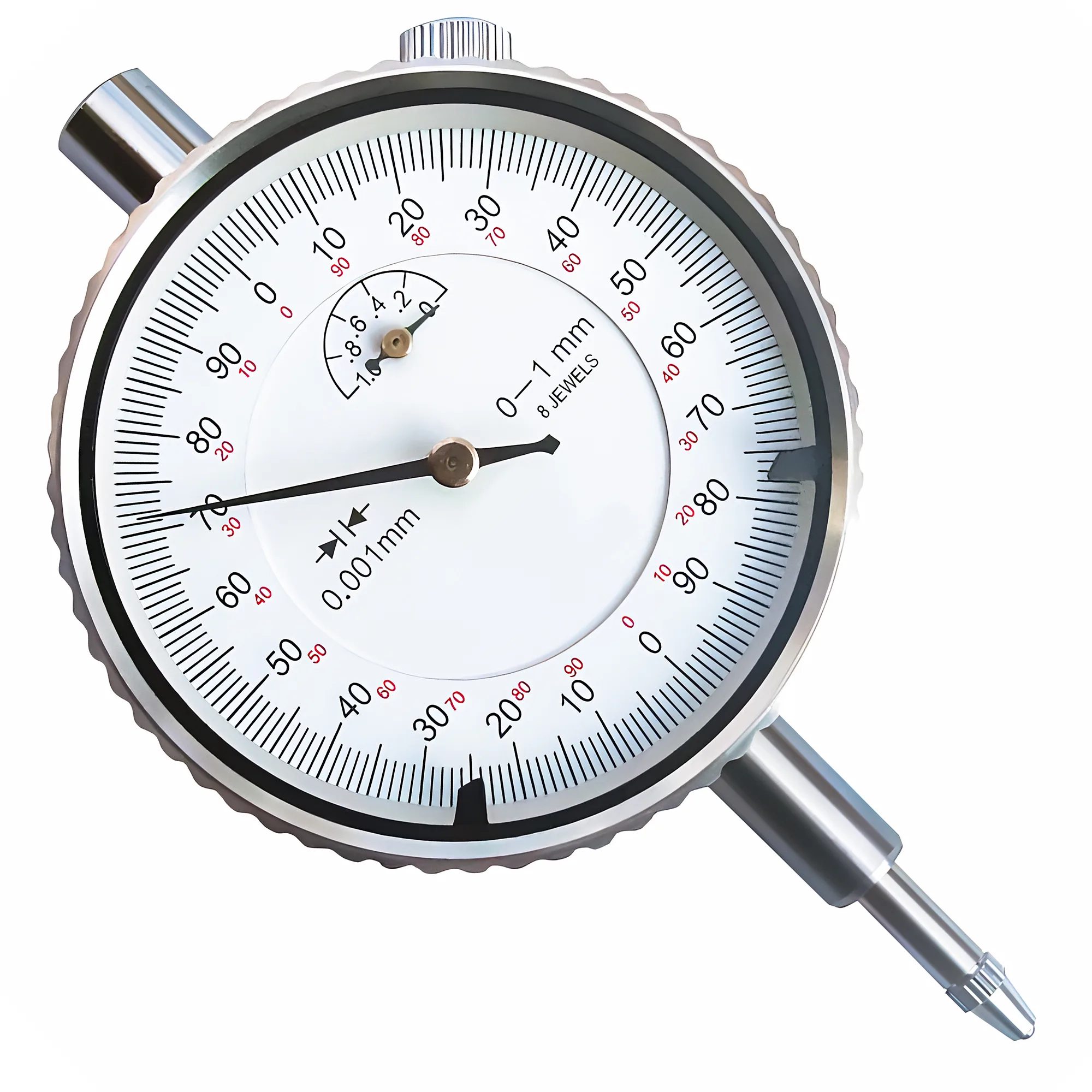
Equipment: a 10× loupe and bright light; a set of gauge pins or ground test mandrels in the nominal sizes (h6-class ground pins are a better reference than drill bodies, which carry back taper and looser diameter tolerance); one dedicated reference holder per ER size, verified with a new collet; a torque wrench and the correct spanner; and a dial gauge graduated in 0.001 mm per ISO 463. ISO 463 dial gauges are used for this check because comparing collets against a 0.015–0.020 mm limit needs repeatable 0.001 mm scale intervals.
Step 1 — Sort and identify (roughly 10 seconds per collet). Group by ER size and nominal bore. Collets with illegible size markings go straight to a measure-or-scrap bin; a collet whose size has to be guessed is a mis-set waiting to happen.
Step 2 — Visual reject (roughly 20–30 seconds). Apply the scrap column of the Section 04 table under the loupe: cracked slot, fingernail-catching score or pitting on either cone or the bore, bent segment, damaged extraction groove. Anything that fails here does not get measured.
Step 3 — Pin fit (roughly 15–30 seconds). In the free (unclamped) state, the nominal-size pin should enter the bore by hand along its full length with light, even drag. A collet that will not accept its nominal pin has been crushed or over-torqued past its elastic range — fail. A pin that rocks noticeably at the nose but not at the rear indicates a bellmouth — fail.
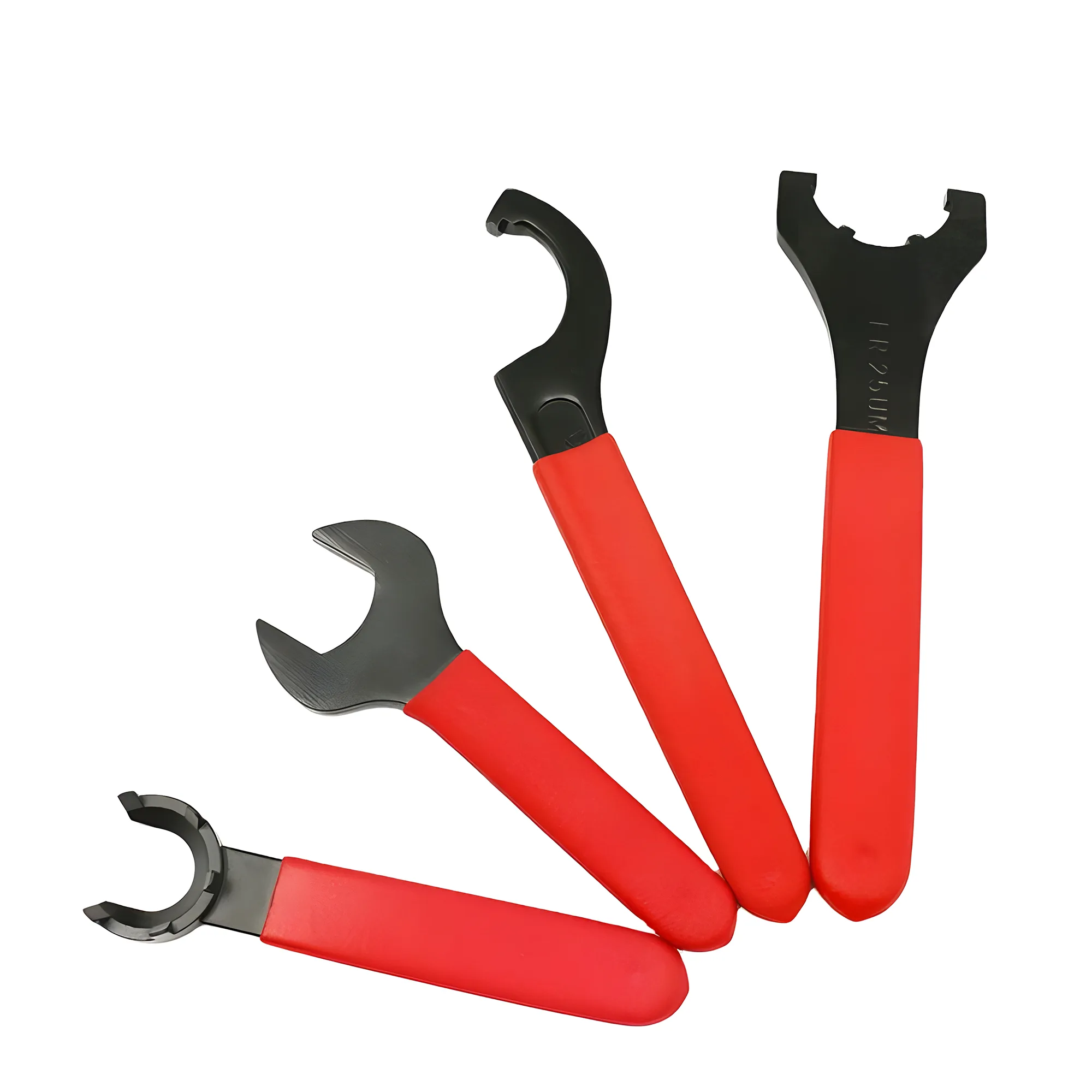
Step 4 — Runout on the reference holder (roughly 2–3 minutes). Snap the collet into the nut, clamp a test pin at the rated torque for the size (for example 136 Nm for a standard ER32 nut per the REGO-FIX recommended tightening torque), and read TIR at the ISO 15488 test projection for that bore — for example 25 mm for 6–10 mm bores and 40 mm for 10–18 mm bores. Compare against the Class 2 limit: ≤0.015 mm for d₁ ≤ 10 mm, ≤0.020 mm for d₁ 10–26 mm. Class 2 is the retirement ceiling, not the target for every collet: manufacturer precision grades (often marked UP or AA) are made to about 0.005 mm TIR, tighter than the standard's Class 1, so hold collets bought to such a grade to their purchase figure for finishing work — provided the reference holder, nut and test pin are equally accurate. For collets used in finishing, repeat after one release-and-reclamp; as a practical shop rule, a reading that changes by more than roughly 0.005 mm between clampings points to taper damage.
Step 5 — Grade, mark and record. Sort survivors into three bins and mark them so they cannot drift back:
Physically destroy scrapped collets — a scrap collet left in a bin returns to a machine the first time a size runs short. Record each surviving collet's reading against a size-and-serial or rack position so the next check is a trend, not a fresh guess. Holder-side QC — inspection cadence, record cards and quarantine tags for the holders themselves — is a separate system that runs alongside this collet cull.
When to Retire an ER Collet
Retire an ER collet on a measured or visible signal, not on age: a ten-year-old collet that still passes the go/no-go check is serviceable, while a new collet that has been through a crash may not be. Standard Class 2 collets typically last 500–1,000 clamping cycles; UP-grade collets last longer, and torque discipline extends both.
Retire the collet when any of the following applies:
- Runout above the ISO 15488 Class 2 limit on two consecutive clean setups in a known-good holder — the runout-based criteria, including torque-to-TIR scatter and collapse-range distortion, are detailed in section 06 of the ER collet torque and runout guide.
- A crack, a bent segment, or a missing slot tip anywhere on the collet.
- A score, galling mark or rust pit you can catch with a fingernail on the 8° taper, the 30° front cone or the bore.
- A bore that no longer accepts its nominal pin, or a bellmouth.
- A tool slip or spun shank that marked the bore — the bore has lost the surface that generates grip.
- An extraction groove that no longer snaps into the nut.
- Accumulated cycles past roughly 1,000 on a Class 2 collet used for finishing, even if it still passes — move it to a roughing or drilling bin rather than holding finishing tolerances on a collet at the end of its typical life.
Downgrading is legitimate, but only in one direction: a collet that leaves finishing work for drilling and roughing should be marked so it does not return to a finishing setup. Collets in the restricted bin still need to pass Steps 2 and 3 of the go/no-go check, because a cracked or bellmouthed collet is unsafe in any operation.
Summary
Treat ER collets as consumables: clean them without abrasives, store them dry, and retire them on evidence.
Wipe both cones at every tool change and do a full solvent-and-brush clean when a collet returns to the crib; keep abrasive pads off the taper, front cone and bore, whose AT3 angle tolerance allows only roughly 1–2.5 µm of deviation depending on collet size. Store collets released, separated in plastic pockets, oiled or VCI-protected, in a cabinet below roughly 50% relative humidity. After a crash, quarantine the collet and nut and scrap anything with a cracked slot, a bellmouthed bore, a fingernail-catching score or a damaged extraction groove. Cull a large fleet in order — visual, pin fit, then reference-holder runout against the 0.015–0.020 mm ISO 15488 Class 2 limit — and physically destroy the rejects.
How do you clean ER collets?
Soak the collet in degreaser or mineral spirits for 5–15 minutes, scrub each slot from both ends with a nylon or brass brush, run a bore brush through the bore, and finish the 8° taper with isopropyl alcohol on a lint-free cloth. Blow dry below 30 psi, then apply a light oil film for storage.
Can I use abrasive pads or emery cloth to remove rust from ER collets?
Avoid abrasive pads and emery on the collet taper, front cone and bore. ISO 15488 holds the collet cone angle to grade AT3, roughly 1.3–2.0 µm of deviation across a 16–25 mm cone, and abrasives remove metal unevenly. Use penetrating oil and a brass brush; retire collets with pits you can feel.
What is the best way to store ER collets long term without rust?
Store collets cleaned, released and separated in plastic pocket trays, with a light oil film or a VCI emitter in a closed drawer, and keep the cabinet below roughly 50% relative humidity. Steel corrosion typically accelerates above about 60% RH, and bare wood racks trap moisture against the collet.
How do I check a large number of ER collets for go/no-go?
Screen in four steps: visual check under a 10× loupe for cracks, scores and pitting; nominal gauge-pin fit in the free state; runout on a verified reference holder at rated torque against the ISO 15488 Class 2 limit of 0.015–0.020 mm; then grade, mark and destroy rejects. Visual and pin checks take roughly 30–60 seconds per collet.
When should an ER collet be thrown away?
Retire an ER collet when it has a cracked slot, a bent segment, a bellmouthed bore, a fingernail-catching score or rust pit on a cone or the bore, a damaged extraction groove, or runout above the 0.015–0.020 mm ISO 15488 Class 2 limit on two clean setups. Class 2 collets typically last 500–1,000 clamping cycles.
Sources
- ISO 15488:2003 — Collets with 8° setting angle for tool shanks
- ISO 463:2006 — Geometrical product specifications — Dimensional measuring equipment — Mechanical dial gauges
- BIG DAISHOWA — The One Tenth = 10% Rule and Effects of Runout
- OSHA 29 CFR 1910.242 — Hand and portable powered tools and equipment, general
- REGO-FIX — Recommended tightening torque for ER and MR clamping nuts