Nine cutting-tool SKUs across four categories — carbide end mills (square, ball, bull nose), drill bits (carbide twist, M35 HSS-Co step drill, center drill), reamers (spiral and straight flute), and spiral point taps — are available in the H2 2026 catalog for late-October ordering. The line targets aerospace titanium machining, EV motor lamination cutting, and medical micro-tooling demand that has continued to dominate cutting-tool consumption through autumn 2026, with multi-layer TiAlN-coated tungsten carbide rated for 40–62 HRC materials and M35 HSS-Co (5% cobalt) for sheet metal step drilling.
What's Available in H2 2026
The autumn 2026 cutting-tool catalog snapshot is organized into four categories: end mills, drill bits, reamers, and taps. Each category holds the same SKU count it shipped through Q1–Q3 2026, with no late-2026 additions or deletions in the SKU footprint — the H2 update is a coating-batch and edge-prep refresh rather than a line expansion.
The autumn 2026 cutting-tool footprint covers nine SKUs across four categories, suitable for general-purpose machining of aerospace alloys, hardened die steels, EV motor laminations, and medical-grade stainless under typical shop conditions.
| Category | SKU Count | Key Geometries | Typical Application Mix in H2 2026 |
|---|---|---|---|
| End mills | 3 | Square / Ball / Bull nose | Aerospace structural, hardened die, mold finishing |
| Drill bits | 3 | Carbide twist / M35 step / Center | Aerospace holes, sheet metal fabrication, setup centering |
| Reamers | 2 | Spiral flute / Straight flute | Through-hole and blind-hole sizing for general machining |
| Taps | 1 | Spiral point | Threading in steel, stainless, and aluminum |
End Mill Line in H2 2026
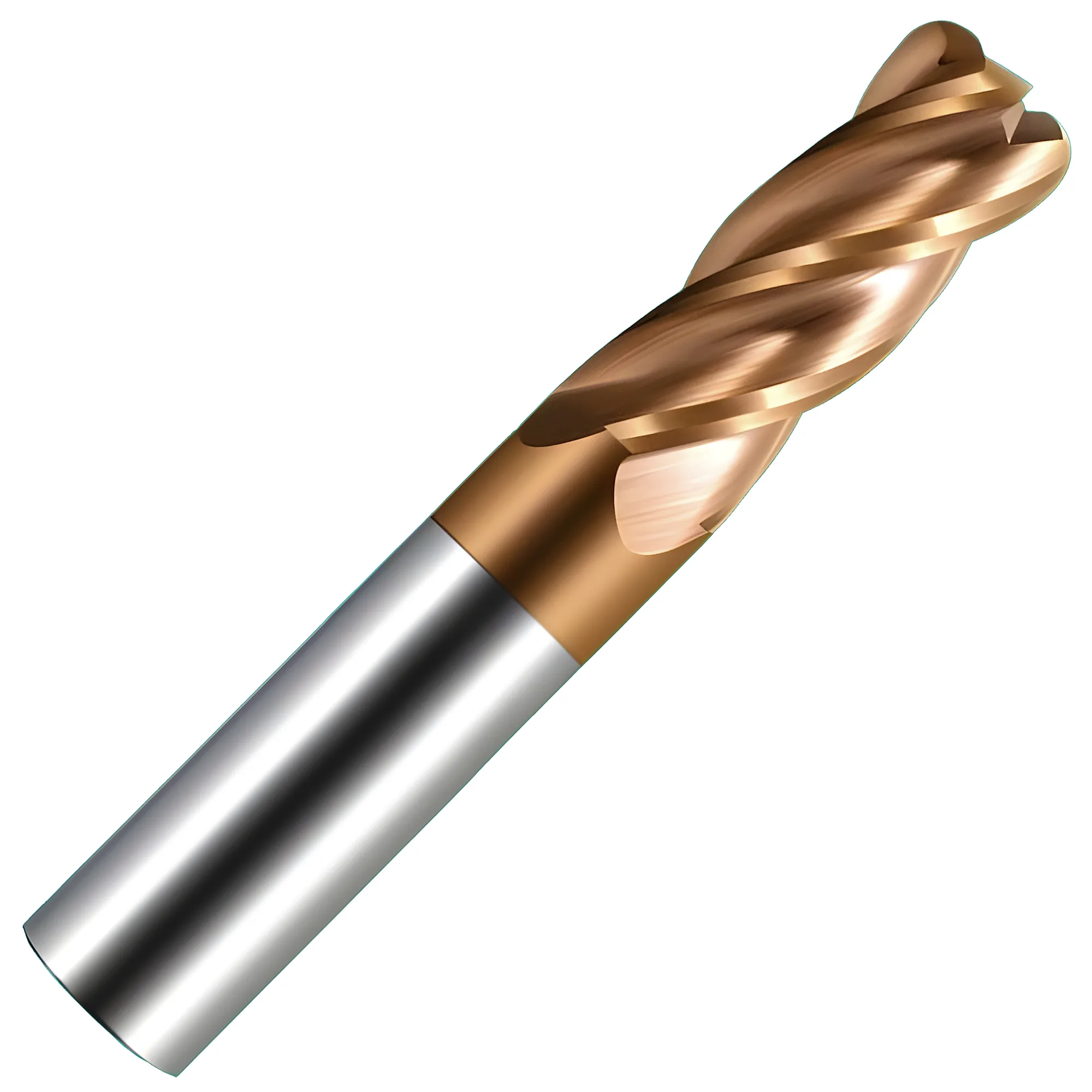
The end-mill category is unchanged in SKU count but every batch shipped after July 2026 carries the multi-layer TiAlN coating run — the previous single-layer TiAlN run was sold through during Q2.
Carbide square end mills are typically chosen for slotting, profiling, and finishing in 40-62 HRC die steels because the four-flute configuration distributes radial cutting force and the TiAlN coating maintains edge integrity under the dominant flank-wear mode. Diameters in the H2 2026 catalog span 1 mm to 12 mm in standard and extra-long reach variants.
Carbide ball end mills are preferred for 3D semi-finishing in hardened tool steel because the ball-radius geometry eliminates the stepped cusps left by flat-end tools and enables Ra targets near 0.4–0.8 µm under typical finishing conditions. Common late-2026 use cases include automotive mold cavity finishing and medical device contour passes.
Carbide bull-nose end mills can reduce corner chipping on interrupted cuts in hardened steel because the corner radius distributes cutting force along an arc rather than concentrating it at a single sharp edge — useful for general-purpose roughing where setups are less than perfectly rigid. The bull-nose geometry sits between square and ball geometries for shops that want a single SKU to cover both flat-floor and modest fillet work.
Drill, Reamer, and Tap Lines
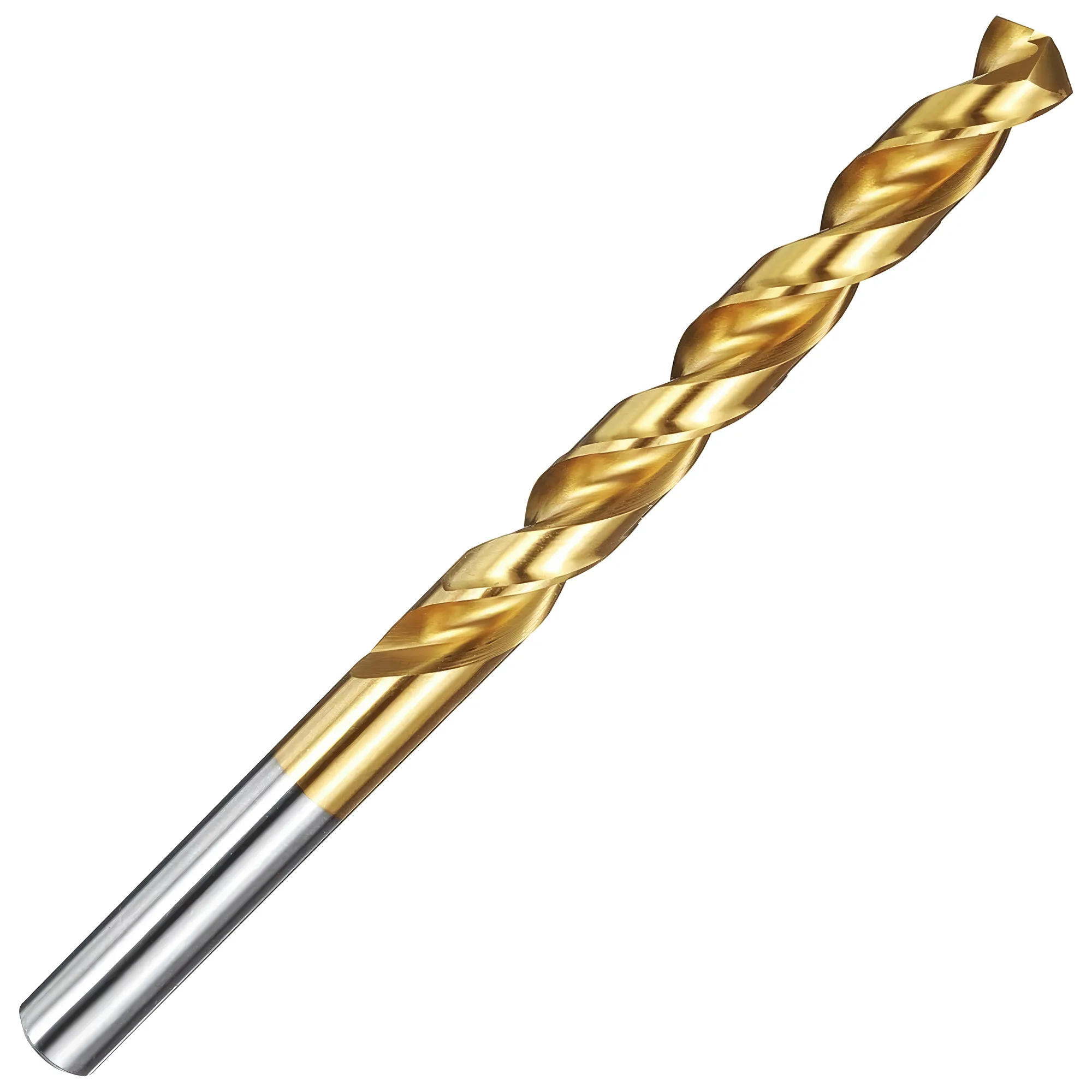
Carbide twist drills with split-point geometry are typically preferred over HSS for hardened and abrasive workpieces because the self-centering point eliminates the separate center-drilling step while maintaining position accuracy under typical setup rigidity. The H2 2026 carbide twist drills run an ultra-fine carbide substrate with through-coolant geometry available on jobber-length variants.
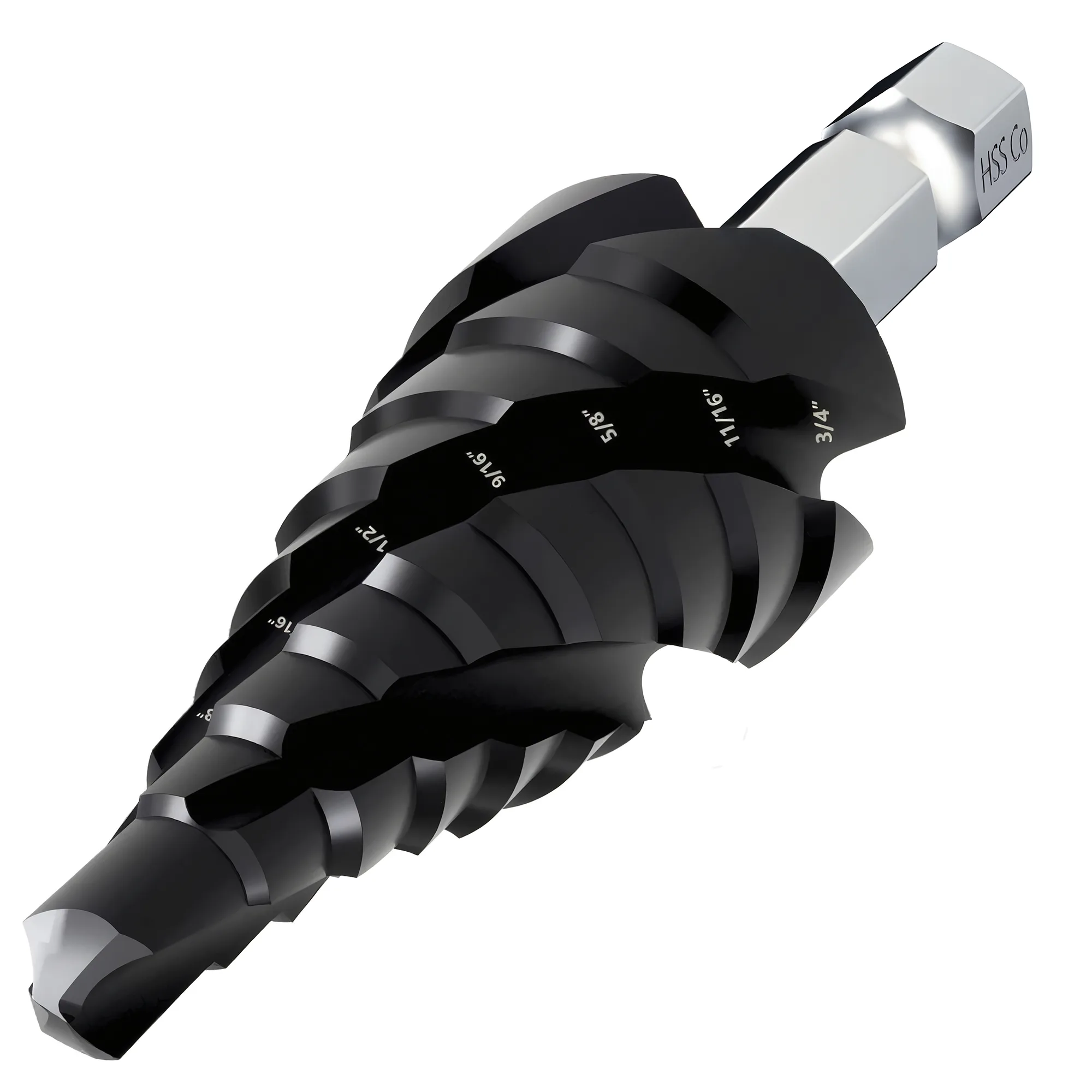
M35 HSS-Co (5% cobalt) is used in step drills for sheet metal and aluminum because the cobalt addition raises red hardness, allowing the cutting edge to survive the elevated temperatures that multi-diameter transitions generate — temperatures that typically blunt standard HSS. Step drills ship with either TiN gold or TiAlN dark-grey coating, hex or 3-flat shank, and straight or spiral flutes — a configuration matrix unchanged since the Q1 2026 release.
Center drill bits are commonly used before twist drilling on hardened or slippery surfaces because they establish a precise cone seat that prevents the larger drill from walking off-center at entry, a step that becomes more important as titanium and Inconel workloads grow.
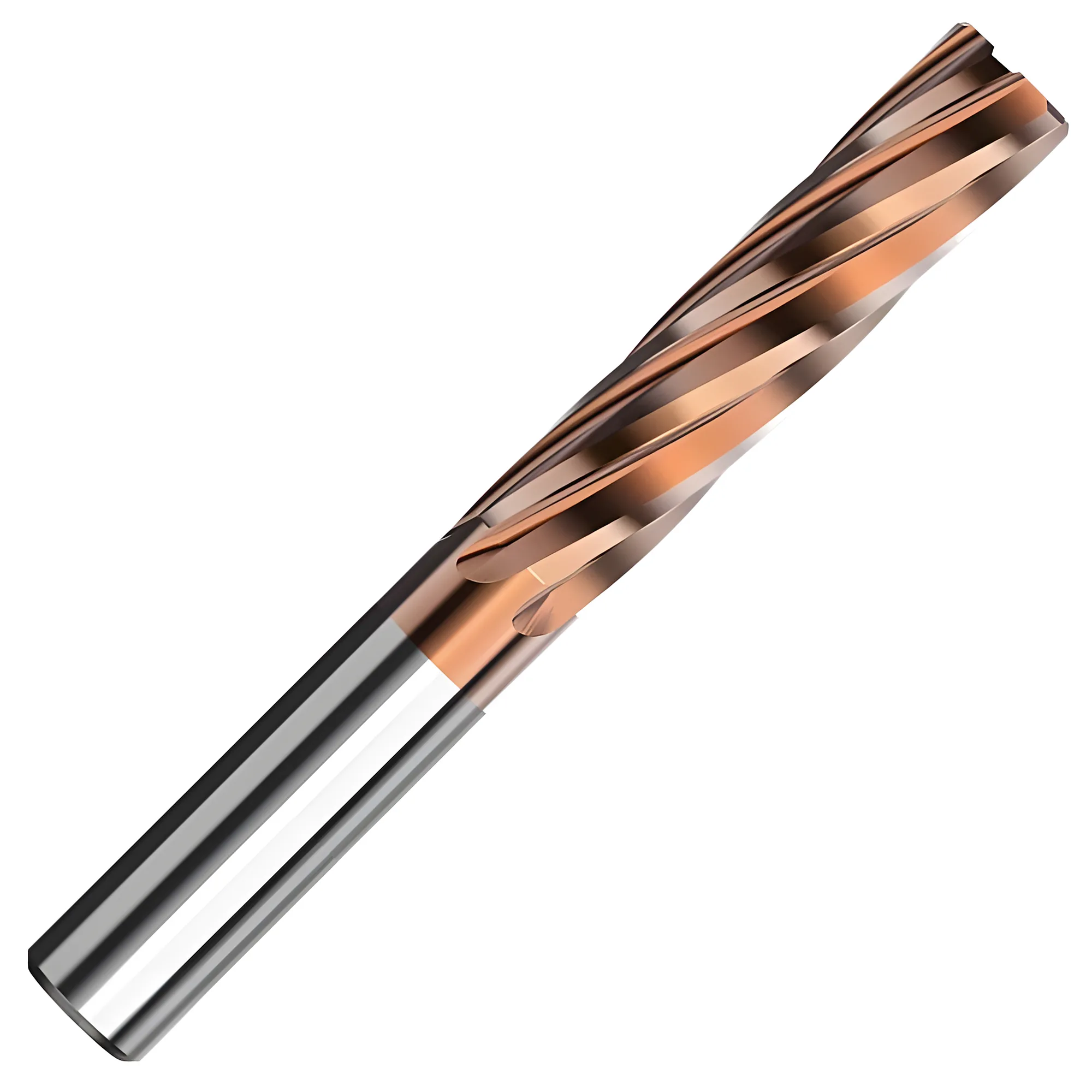
Spiral flute reamers are typically chosen for through-hole sizing in ductile materials because the helix evacuates chips upward out of the bore, while straight flute reamers are preferred for blind holes where cuttings must be pushed forward to a flute relief or air blast. Both geometries ship in the H2 2026 catalog in their original 2026 diameter ranges.
Spiral point taps are commonly used for through-hole threading in steel, stainless, and aluminum because the angled point pushes chips ahead of the tap rather than packing them into the flutes, reducing torque under typical tapping conditions.
Late-2026 Industry Context
Three demand pillars have shaped cutting-tool consumption through autumn 2026:
Aerospace titanium machining demand has remained elevated through H2 2026 because Ti-6Al-4V structural part programs (commercial widebody, defense rotorcraft, eVTOL frames) typically require extended-reach end mill geometries that minimize radial engagement and suppress work hardening. This sustains demand for the AS-style geometries within the carbide end-mill line.
EV motor lamination cutting has emerged as a significant late-2026 demand pillar because high-volume rotor and stator stack production typically requires high-cycle drilling and reaming of thin electrical steels under tight diameter tolerance — workloads where carbide twist drills and straight-flute reamers are commonly applied. Industry analysts reporting through Q3 2026 (Modern Machine Shop, Cutting Tool Engineering) have flagged EV lamination work as a top-three line-item growth driver for cutting-tool consumption.
Medical-device micro-tooling demand for stainless and titanium workpieces continues to grow in autumn 2026 because surgical instrument and orthopedic implant programs typically require the 0.1-6 mm diameter band where ball end mills and small-diameter twist drills with sharp edge prep dominate. Inconel is used in aerospace hot-section components because its creep resistance above 650°C requires high-temperature-stable coatings and sharp cutting edges maintained through the full tool life.
| Industry | Key Materials in H2 2026 | Typical Optimization Focus |
|---|---|---|
| Aerospace | Ti-6Al-4V, Inconel, 7075-T6 | Extended reach, suppressed work hardening |
| Automotive (incl. EV) | Cast iron, electrical steel laminations, aluminum alloys | High cycle counts, tight diameter consistency |
| Medical Device | 316L stainless, titanium, PEEK | Micro diameters (typically 0.1-6 mm), surface finish |
For the deeper coating and substrate engineering behind the H2 2026 end-mill line, see the carbide cutting tools 2026 technical brief. Buyers comparing geometry choices across applications can refer to the end mill selection guide, and shops sizing drill and reamer pairings can use the drill bit and reamer selection guide.
Performance Reference Under H2 2026 Coating Run
Internal validation under the ISO 8688-2 end-milling test protocol against the previous single-layer TiAlN generation shows representative directional improvements observed in controlled runs:
Multi-layer TiAlN in the H2 2026 carbide end-mill batch can deliver up to 60% longer tool life in 316L stainless steel versus the previous single-layer generation, under controlled ISO 8688-2 end-milling conditions. ISO 8688-2 is used as the test protocol for end-mill tool-life evaluations because it standardizes cutting conditions, wear measurement intervals, and the flank wear criterion, enabling reproducible comparisons between coating generations.
- Aluminum 6061-T6 material removal rate: typically up to 35% higher vs the previous generation in controlled runs
- 316L stainless tool life: reported 40-60% longer under controlled ISO 8688-2 conditions
- Ti-6Al-4V finishing surface roughness: Ra around 0.4 µm achievable in finishing passes under typical setup rigidity
- Complex 3D contouring cycle time: reductions in the range of 15-25% with variable-helix end-mill geometries
Availability and Lead Time in H2 2026
Standard catalog items typically ship from in-region stock within 24 hours; special configurations (custom diameters, alternate coating combinations) typically require 3-5 days. Custom geometries fall in the 2-3 week lead-time band. The autumn 2026 SKU count is stable through year-end and the next refresh window is targeted at Q1 2027 (subject to coating partner schedules).
H2 2026 Cutting-Tool Catalog at a Glance
The autumn 2026 cutting-tool catalog spans nine SKUs across four categories — three carbide end mills (square, ball, bull nose), three drill bits (carbide twist, M35 HSS-Co step, center), two reamers (spiral and straight flute), and one spiral point tap — covering aerospace titanium, EV motor lamination, and medical micro-tooling workloads under typical shop conditions. Multi-layer TiAlN coating on the end-mill line can deliver up to 60% longer tool life in 316L versus the prior single-layer generation per ISO 8688-2 protocol.