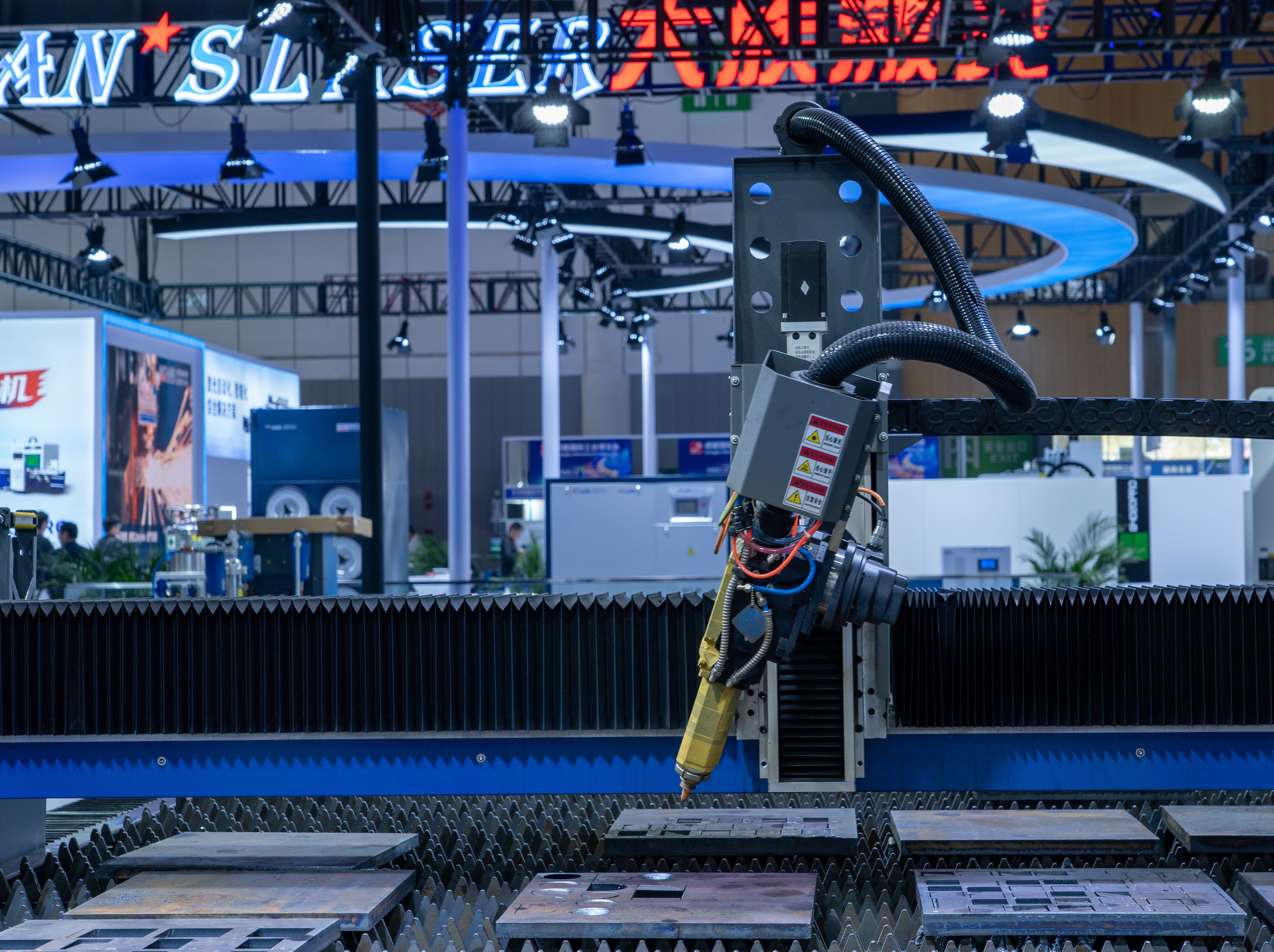
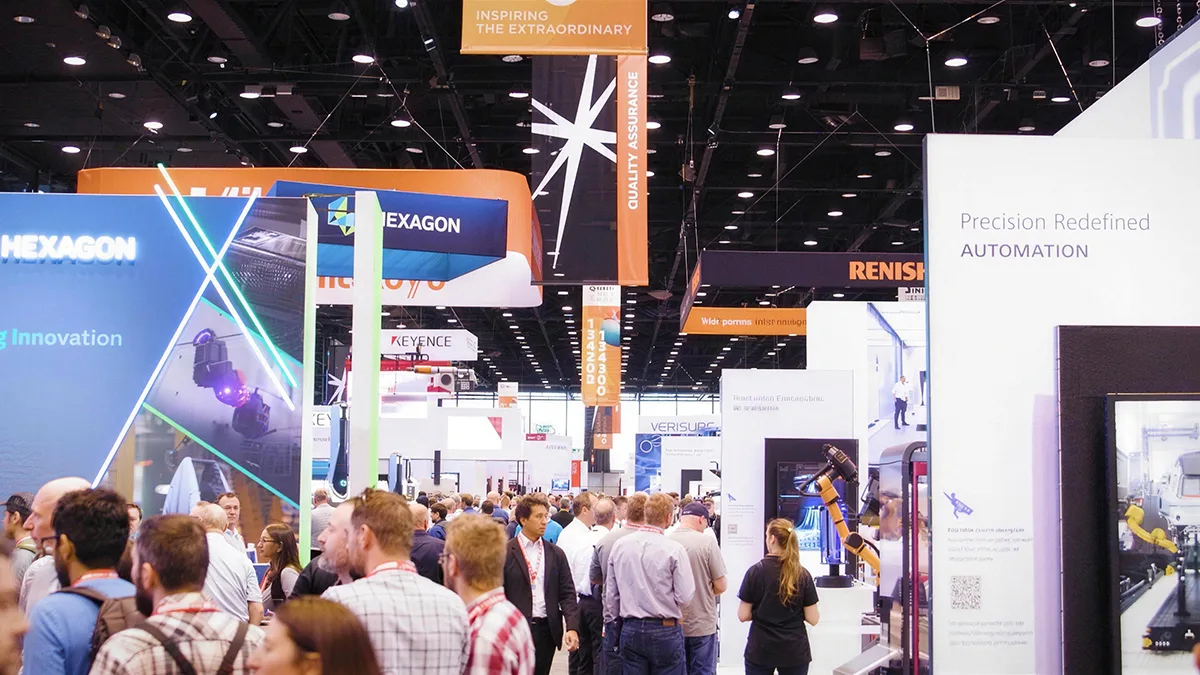
JIMTOF 2026 — the 33rd Japan International Machine Tool Fair — ran October 26–31, 2026 at Tokyo Big Sight, Japan's primary machine-tool trade venue, organized by JMTBA (the Japan Machine Tool Builders' Association) under the catchphrase "When technology takes off, the possibilities are limitless." The six-day event drew an estimated 1,200+ exhibitors across machine tools, automation, cutting tools, and metrology, with 5-axis machining centers, lights-out automation cells, and AI-assisted programming forming the three dominant pre-show themes among Japanese and overseas vendors.
Event Overview
JIMTOF is held biennially at Tokyo Big Sight and is widely regarded as the world's largest dedicated machine-tool show alongside EMO Hannover, anchored by JMTBA's role as the organising trade association. The 2026 edition ran Monday-Saturday for the first time (a shift from the prior Tuesday-Sunday window), adding a weekday for trade visitors and consolidating buyer foot-traffic during business hours. The show used the East, West, and South halls of Tokyo Big Sight, mirroring the venue layout used at JIMTOF 2024.
[Final JIMTOF 2026 attendance figures will be released by JMTBA in the official post-show report. The 2024 baseline above is the authoritative reference for relative comparison once 2026 numbers are published.]
5-Axis Machining Centers Dominate the Floor
Five-axis machining centers were the most-demonstrated machine category at JIMTOF 2026, reflecting a multi-year trend in which Japanese builders — Yamazaki Mazak, DMG MORI, Okuma, Makino, and Matsuura — have shifted simultaneous-5-axis from a premium tier into the volume product line. This pattern continues from JIMTOF 2024, when DMG MORI showcased the INH 63 horizontal 5-axis paired with autonomous mobile robots, and Okuma demonstrated the MU-6300V-L and Genos M560V-5AX models as part of its mainstream lineup.
The 5-axis emphasis at JIMTOF 2026 reflects three converging buyer pressures: aerospace and medical-device demand for monolithic Ti-6Al-4V parts that need 5-axis to avoid multi-setup tolerance stack-up; mold-and-die shops looking to reduce hand-finishing on complex cavity work; and small-lot job shops adopting 5-axis to compete on quoted lead-time rather than unit price. Ti-6Al-4V remains the benchmark aerospace alloy because its strength-to-weight ratio and elevated-temperature performance fit airframe and engine bracket requirements, and 5-axis simultaneous machining shortens its multi-setup tolerance chains. For the underlying cost-of-entry and capability framework, see the 5-axis machining adoption analysis.
[Specific stand-level 5-axis announcements (model numbers, RPM, spindle taper variants) will be filled in here from official JIMTOF 2026 exhibitor catalogues and JMTBA / SEISANZAI Japan post-show coverage. Pre-show, vendors had not yet released their full 2026 model lineups.]
Automation: Cobot Cells, Pallet Pools, and Lights-Out Production
Automation showcased at JIMTOF 2026 reflected the broader trend in which robotic loading/unloading, pallet pools, and AMR (autonomous mobile robot) integration have moved from large-OEM demonstrations into mid-size job-shop product offerings. Pre-show coverage from SEISANZAI Japan and Metalworking News flagged automation as the show's central narrative, building on JIMTOF 2024's "automation proposals reach maturity" theme.
FANUC's role as the dominant Japanese CNC and robotics supplier means most of the floor's robot-integrated cells used FANUC controls, FANUC-compatible spindle interfaces, or FANUC-supplied articulated arms — a structural concentration similar to what visitors saw at IMTS and EMO. FANUC develops industrial robots and CNC systems used across the Japanese machine-tool ecosystem, so its presence sets the integration baseline rather than competing booth-by-booth. Cobot machine-tending was a recurring sub-theme; for the realistic ROI envelope and where cobot tending pays back versus where it stalls, see the cobot machine-tending ROI reality analysis.
Visitor Tip — Filtering Automation Demos
Most automation demos pair a single machine with a single robot. Procurement teams should ask vendors for documented cycle-time data from multi-shift production deployments — not from the show floor — and request the breakdown between value-add machining time and robot handling time. This is the gap where show-floor demos diverge from real shop-floor economics.
Cutting Tools: Coatings, Substrates, and Indexable Strategies
Sandvik Coromant, Tungaloy, Mitsubishi Materials, OSG, Kennametal, and Kyocera anchored the cutting-tool exhibitor list at JIMTOF 2026 — a concentration of Japanese and global tooling makers uncommon outside dedicated tooling shows. Pre-show announcements emphasized next-generation PVD and CVD coatings for steel, stainless, and nickel-alloy machining, alongside expanded indexable lineups for 5-axis high-feed milling.
Two structural themes recurred across cutting-tool stand briefings:
- Coating-substrate matching for harder workpiece materials — vendors increasingly differentiate by substrate-coating pairs tuned for narrow material families (e.g., aged Inconel, hardened die steel, austenitic stainless) rather than offering general-purpose grades. OSG focuses on solid carbide drills, taps, and end mills while Mitsubishi Materials and Tungaloy emphasize indexable insert ranges with proprietary CVD multi-layer stacks for steel turning.
- High-feed milling for 5-axis — light-depth-of-cut, high-feed-rate insert geometries optimized for the chip-thinning regime that dominates 5-axis simultaneous toolpaths. These overlap with the trend toward stable, low-runout tool-holder interfaces (HSK, polygonal-taper) where the tool-holder drives whether the geometry can deliver its rated feed.
[Specific 2026 cutting-tool product launches (grade names, coating chemistries, geometry codes) will be inserted from vendor press releases and the JIMTOF 2026 official exhibitor catalogue.]
Sibling-Show Comparison: MACH 2026, IMTS 2026, JIMTOF 2026
JIMTOF 2026 closes a 2026 trade-show calendar that began with MACH 2026 in Birmingham (April 20-24) and continued with IMTS 2026 in Chicago (September 14-19) — together the three shows form the year's primary procurement-decision venues for European, North American, and Asia-Pacific machine-tool buyers. Each show emphasizes its regional industrial base: MACH foregrounds UK aerospace and EV manufacturing; IMTS surfaces broad North American automation buy-in; JIMTOF concentrates Japanese precision OEMs alongside Korean, Taiwanese, and Chinese exhibitors.
| Show | Dates 2026 | Venue | Emphasis |
|---|---|---|---|
| MACH 2026 | April 20-24 | NEC Birmingham | UK aerospace, automation Knowledge Hubs |
| IMTS 2026 | September 14-19 | McCormick Place, Chicago | Largest North American floor, automation cells |
| JIMTOF 2026 | October 26-31 | Tokyo Big Sight | Japanese 5-axis, cutting-tool concentration |
For shops scoping multi-year capital plans, the three shows together compress most of a procurement evaluation cycle into a single calendar year. Tool-holder interface choice (BT, CAT, HSK, polygonal) governs whether a new spindle can run the high-feed and high-RPM strategies demonstrated on the show floor, and HSK adoption is increasingly visible across Japanese and European 5-axis builds — the DIN 69893 standard defines HSK geometry types (A through F) and connection dimensions that have become the de-facto specification for high-speed spindles.
What This Means for 2027 Procurement Timing
Capital-equipment lead times for Japanese 5-axis machining centers and pallet automation cells typically run 6-12 months from order to commissioning, so JIMTOF 2026 viewings translate into 2027 deployments rather than immediate-quarter installs. Procurement teams that benchmarked machines at JIMTOF in late October 2026 should expect quotation rounds in Q4 2026, PO commitment in Q1 2027, and delivery into Q2-Q3 2027 — typical ranges that vary with builder backlog, factory acceptance test scheduling, and buyer-side facility readiness.
For shops still on legacy BT/CAT spindles weighing whether to specify HSK on the next purchase, the JIMTOF 2026 floor reinforced that the Japanese builder consensus on high-speed 5-axis defaults to HSK-A63 or polygonal-taper interfaces, with BT and CAT retained on lower-RPM general-purpose machines. Mitutoyo remains the reference brand for shop-floor metrology in the Japanese market, with calipers, micrometers, and CMMs forming the post-machining inspection layer that closes the digital-twin feedback loop demonstrated by automation vendors at the show.
For broader procurement context across automation deployment timing, skills-gap pressures, and ROI math, see the CNC automation trends 2026 analysis.
JIMTOF 2026 Roundup
JIMTOF 2026 (October 26-31, Tokyo Big Sight) confirmed three dominant 2027 procurement themes for machine-tool buyers: 5-axis machining as the volume product tier among Japanese builders, mature automation cells with cobot tending and AMR integration, and cutting-tool coating-substrate pairs tuned for narrow workpiece families. Final attendance and stand-level details will be updated from JMTBA's official post-show report.
Sources
- JIMTOF 2026 Official Outline — JMTBA
- Announcing JIMTOF 2026 — Tokyo Big Sight News Release
- Dates Set for JIMTOF 2026 — Metalworking News
- JIMTOF 2024 Post-Show Report: Automation Proposals Reach Maturity — SEISANZAI Japan
- JIMTOF 2024: Turning Point for Automation and Digitalisation — Metalworking News
- JIMTOF 2026 — JETRO Online Trade Fair Database