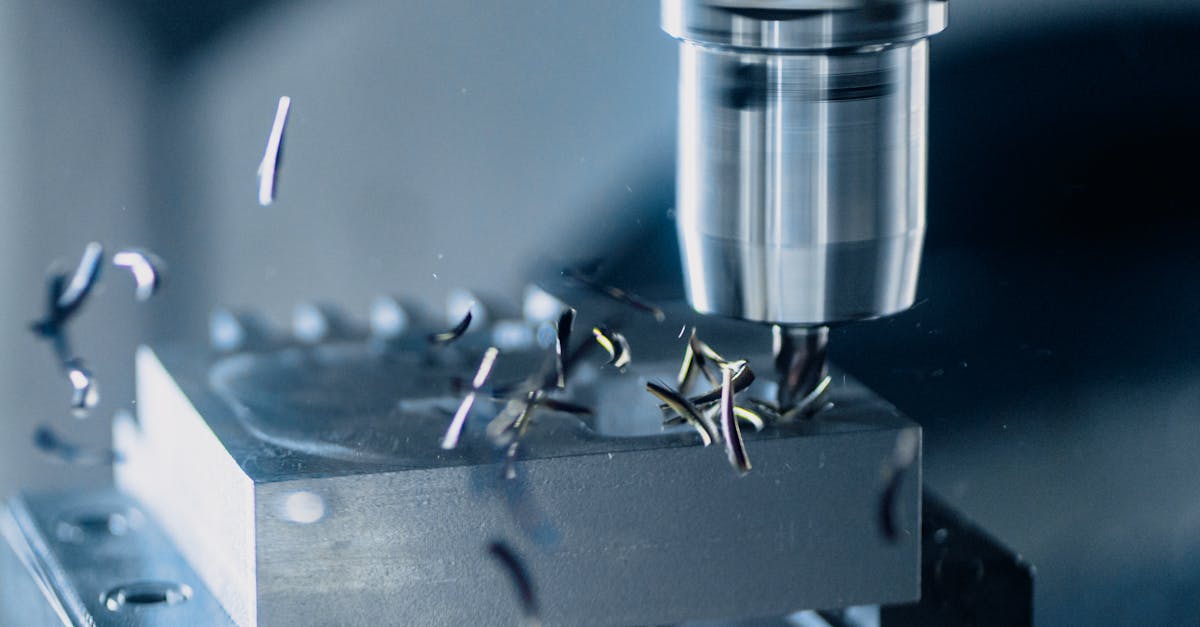
For aluminum, use 2-3 flute uncoated or ZrN-coated carbide end mills at 300+ m/min. For steel, use 4 flute TiAlN-coated carbide (3,000-3,500 HV hardness) at 80-200 m/min. For stainless and titanium, use 4-5 flute (4 for roughing, 5 for finishing) AlCrN-coated tools at 30-80 m/min with through-coolant where possible. Flute count, substrate, and coating must match the workpiece material — a mismatched combination can reduce tool life by 50-80% under typical conditions.
For a complete overview of cutting tool types, grades, and coatings, see the cutting tools complete guide.
Flute Count Fundamentals
The number of flutes on an end mill determines chip load capacity, surface finish quality, and feed rate potential. More flutes is not always better -- the right count depends on material and operation.
| Flute Count | Chip Space | Best For | Typical Feed Multiplier |
|---|---|---|---|
| 2 flutes | Maximum | Aluminum, plastics, slotting | 1.0x baseline |
| 3 flutes | Large | Aluminum at higher feeds, soft alloys | 1.5x |
| 4 flutes | Moderate | Steel, stainless, general purpose | 2.0x |
| 5+ flutes | Minimal | Hardened steel, finishing, high-feed | 2.5x+ |
Why chip space matters: Aluminum produces long, stringy chips. Without adequate flute valleys to evacuate them, chips re-cut and weld to the tool. Steel produces smaller chips that exit more easily, allowing higher flute counts.
Substrate Material Selection
The base material of the end mill determines its hardness, toughness, and heat resistance. Three primary substrates dominate modern machining.
High-Speed Steel (HSS/HSS-E)
- Hardness: 62-65 HRC
- Best for: Low-volume work, manual machines, interrupted cuts in soft materials
- Cost: Lowest, resharpenable
- Max cutting speed: 30-60 m/min in steel
Micrograin Carbide
- Hardness: 89-93 HRA (equivalent to ~73-78 HRC)
- Best for: CNC machining, production runs, most materials
- Cost: 3-5x HSS, but 5-10x tool life
- Max cutting speed: 100-300 m/min in steel
Ceramic and CBN
- Hardness: 93+ HRA
- Best for: Hardened steel finishing (>55 HRC), high-speed cast iron
- Cost: Highest, specialized applications only
✦ Carbide End Mills
- 3-5x longer tool life than HSS
- Higher cutting speeds and feed rates
- Better dimensional consistency over long runs
- Required for modern high-speed machining
✦ HSS End Mills
- Lower cost per tool
- More forgiving in unstable setups
- Can be resharpened multiple times
- Better for manual machines and prototyping
For CNC production work, carbide is the standard choice. HSS remains viable for prototyping, manual machining, and applications where tool breakage risk is high.
Coating Technologies
Coatings extend tool life by reducing friction, increasing surface hardness, and providing thermal insulation at the cutting edge.
| Coating | Typical Hardness (HV) | Max Temp (°C) | Best Application |
|---|---|---|---|
| TiN | ~2,300 | ~600 | General purpose, mild steel |
| TiCN | ~3,000 | ~450 | Stainless steel, abrasive materials |
| TiAlN | 3,000-3,500 | ~800 (oxidation onset) | Dry machining, hardened steel |
| AlCrN | ~3,200 | ~1,100 | High-temp alloys, titanium |
| DLC | 6,000+ | ~350 | Aluminum (prevents built-up edge) |
| Uncoated | — | — | Aluminum with coolant, plastics |
Coating values are typical from manufacturer data (Oerlikon Balzers, CemeCon, IonBond). Actual hardness and oxidation temperature vary with deposition process and substrate.
Coating and Coolant Interaction
TiAlN and AlCrN coatings perform best in dry or MQL (minimum quantity lubrication) conditions. In milling, flood coolant can cause thermal shock cycling that cracks these coatings. In drilling and continuous turning, flood coolant with TiAlN is standard practice. For flood coolant applications, TiN or TiCN coatings are more appropriate.
Geometry Considerations
Beyond flutes and coatings, end mill geometry affects performance significantly.
- Helix angle: 30 degrees is standard. 45-degree high helix improves surface finish in aluminum and soft materials. 35-degree variable helix reduces chatter.
- Corner radius: Even a 0.5mm corner radius can increase tool life by 50% compared to a sharp corner, by distributing cutting forces across a larger area.
- Length of cut (LOC): Use the shortest LOC that clears your feature. Every additional diameter of stickout reduces rigidity and increases deflection.
- Reach vs. stickout: Necked-down designs provide reach without sacrificing core strength.
Deflection Rule of Thumb
Tool deflection increases with the cube of the stickout length. Doubling stickout from 2xD to 4xD increases deflection by 8x. Keep stickout under 3xD whenever possible, and avoid exceeding 5xD without vibration dampening or HSM toolpath strategies.
Practical Selection Framework
Use this decision sequence for any new job:
- Identify workpiece material -- this determines flute count range and coating
- Define the operation -- slotting needs fewer flutes; finishing allows more
- Check machine capability -- spindle speed and rigidity constrain tool choice
- Select substrate -- carbide for CNC, HSS for manual or high-breakage risk
- Choose coating -- match to material and coolant strategy
- Set geometry -- shortest possible length, appropriate helix angle
Match every specification to your material and operation.
Flute count, substrate, and coating work as a system. Two or three flutes with DLC or uncoated for aluminum; four or five flutes with TiAlN for steel; high-flute-count with AlCrN for superalloys. Start with manufacturer recommendations, then optimize based on measured tool wear in your specific conditions.
How many flutes should I use for machining aluminum?
Use 2-3 flutes for aluminum. The large flute valleys are essential for evacuating the long, stringy chips aluminum produces. Higher flute counts cause chip packing and re-cutting.
Is carbide always better than HSS for end mills?
Carbide delivers 3-5x longer tool life and supports much higher cutting speeds (100-300 m/min vs. 30-60 m/min in steel), making it the standard for CNC work. HSS remains viable for prototyping, manual machines, and setups with high breakage risk.
Why does tool stickout matter so much for end mills?
Tool deflection increases with the cube of stickout length -- doubling stickout from 2xD to 4xD increases deflection by 8x. Keep stickout under 3xD whenever possible for dimensional accuracy and chatter prevention.
Which coating should I use for dry machining steel?
TiAlN is widely used for dry machining steel, with typical hardness of 3,000-3,500 HV and oxidation onset around 800°C. It performs best without flood coolant in continuous milling, which can cause thermal shock cracking; flood coolant with TiAlN remains common in drilling and continuous turning where chip evacuation matters.